
Expanded Polystyrene Concrete (EPSC or EPS Concrete) is not a traditional structural concrete, but rather a low-density, cement-stabilized foam designed for specific applications where weight, insulation, and moderate strength are key.
What is Expanded Polystyrene Concrete?
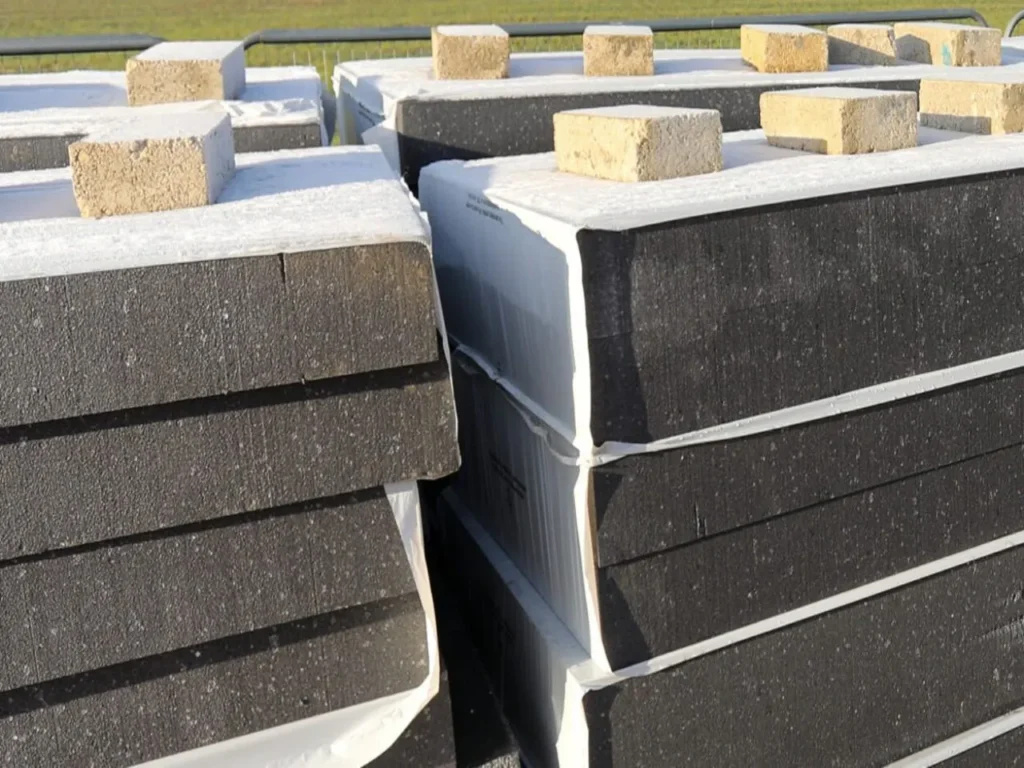
Expanded Polystyrene Concrete (EPSC or EPS Concrete), often called EPScrete or Lightweight Polystyrene Concrete.
It is a composite building material made by combining Expanded Polystyrene beads as the primary lightweight aggregate with a cementitious binder (usually Portland cement, water, and often additives).
Key Components:
- EPS Beads: Tiny, lightweight, closed-cell foam particles (typically 1–6 mm in diameter). They replace dense stone aggregates (gravel and sand), drastically reducing weight.
- Cement Binder: Portland cement (sometimes blended with fly ash or slag) acts as the glue.
- Water: For cement hydration.
- Critical Additive – Bonding Agent: Because EPS is hydrophobic (repels water), a bonding agent (like polyvinyl acetate/PVA glue or acrylic polymer) is essential. It coats the beads so the cement paste can adhere to them.
- Optional Additives: Fibers (for crack control), air-entraining agents, and water-reducers.
Defining Characteristics:
- Extremely Lightweight: Density ranges from 200 kg/m³ to 1600 kg/m³ (versus ~2400 kg/m³ for regular concrete). Density is controlled by the EPS-to-cement ratio.
- Excellent Thermal Insulator: R-values range from R-2 to R-4 per inch (thermal conductivity of ~0.05–0.15 W/m·K). It can serve as both a building element and insulation.
- Moderate Strength: Compressive strength is directly tied to density:
- Low Density (200–600 kg/m³): 0.2–1 MPa – Suitable only for insulation fills.
- Medium Density (600–1200 kg/m³): 1–7 MPa – For non-load-bearing walls, blocks.
- High Density (1200–1600 kg/m³): 7–15 MPa – For some structural applications with engineering.
- Workable & Moldable: Can be poured into forms, pumped, or pre-cast into blocks. It’s easy to cut and shape after hardening.
- Moisture Resistant: Closed-cell EPS beads do not absorb water, but the material still requires proper vapor management in wall assemblies.
How Expanded Polystyrene Concrete Works
The Cement Hydration Process
The strength development in Expanded Polystyrene Concrete begins with cement hydration—the same chemical reaction that gives normal concrete its strength:
- Initial Mixing: Cement particles (tricalcium silicate, dicalcium silicate, tricalcium aluminate) contact water
- Hydration Reaction:
- Calcium silicates react with water → calcium silicate hydrate (C-S-H) gel + calcium hydroxide
- C-S-H gel forms 60-70% of the final paste volume and is the primary binding phase
- Setting & Hardening: C-S-H gel fills spaces between cement particles and coats EPS beads
- Strength Gain: Continues for days/weeks as hydration progresses
Critical Difference: In normal concrete, the strong aggregate carries much of the load. In EPS concrete, the cement matrix must carry all the load—the EPS beads contribute nothing to strength
Expanded Polystyrene Concrete Key Properties/Characteristics
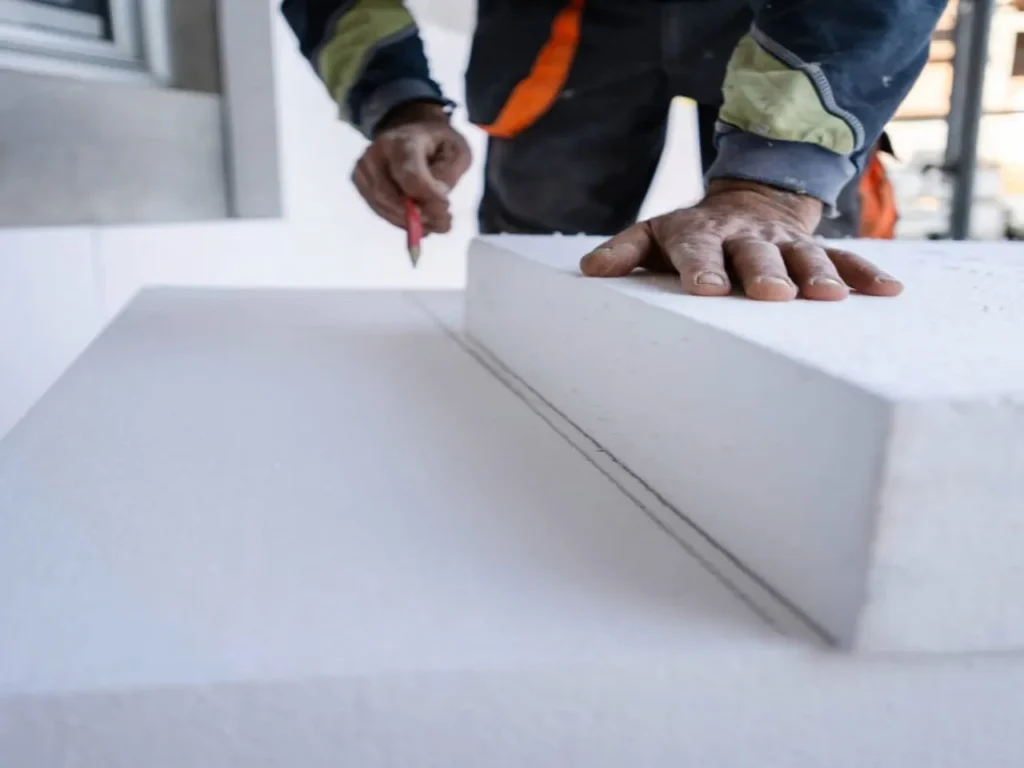
A. Physical & Mechanical Properties:
- Density & Strength: A classic inverse relationship. Low-density mixes (200-600 kg/m³) offer very low compressive strength (0.2-1 MPa) suitable only for insulation fills. Medium-density mixes (600-1200 kg/m³) achieve strengths of 1-7 MPa, adequate for non-load-bearing walls and blocks. High-density mixes (1200-1600 kg/m³) can reach 7-15 MPa, suitable for some structural applications with reinforcement.
- Thermal Conductivity (k-value): This is its standout feature. EPSC is an excellent insulator. k-values range from 0.05 to 0.15 W/m·K, compared to 0.7-1.3 for normal concrete and 0.03-0.04 for pure EPS. An EPSC wall acts as both structure and insulation.
- Fire Resistance: Surprisingly good. While EPS beads alone are flammable, the cement matrix encapsulates them, providing a degree of fire protection. Under heat, the surface cement chars, protecting the inner layers. Mixes with fire retardants and adequate cover perform well in standard fire tests.
- Water Absorption & Durability: The closed-cell EPS beads do not absorb water, and a well-proportioned mix has low capillary action. However, freeze-thaw durability depends heavily on the entrained air void system and can be a concern if not properly designed. It is resistant to rot and pests.
B. Acoustic and Workability Properties:
- Sound Insulation: Provides good sound absorption (due to porosity) but only moderate sound transmission loss (mass law—it’s too light to be a great sound barrier).
- Workability: Easy to pump, pour, and mold into complex shapes. It can be cut, drilled, and shaped with woodworking tools after curing.
- Shrinkage: Exhibits very low drying shrinkage compared to traditional concrete, reducing crack potential.
1. Structure & Matrix
The EPS beads act as space fillers within the cement paste. Unlike traditional aggregates that are strong and rigid, EPS beads are soft and compressible. The concrete’s strength comes from:
- Cement hydration: Forms a rigid matrix around the beads
- Bead-matrix bond: Mechanical and chemical adhesion between cement and EPS surfaces
- Bead distribution: Uniform dispersion prevents weak zones
2. Lightweight Mechanism
Expanded Polystyrene Concrete achieves its low density (typically 300-1,600 kg/m³ vs. 2,400 kg/m³ for normal concrete) because:
- EPS beads are 95-98% air by volume
- Replacing heavy stone (2,600 kg/m³ density) with EPS (15-30 kg/m³) dramatically reduces overall weight
- Higher EPS content = lower density
3. Insulation Mechanism
The thermal performance comes from:
- Trapped air within EPS beads (excellent insulator)
- Discontinuous thermal path through cement matrix
- Result: Thermal conductivity of 0.1-0.7 W/mK (compared to 1.5-2.0 W/mK for normal concrete)
How It Provides Insulation
Thermal Conductivity Physics
Expanded Polystyrene Concrete insulates through two mechanisms:
Mechanism A: The EPS Beads Themselves
- EPS is 98% trapped air in closed cells
- Air has very low thermal conductivity (0.026 W/mK)
- Heat must travel through EPS beads via:
- Conduction through polystyrene cell walls (poor conductor)
- Convection within cells (minimal due to small cell size)
- Radiation across cells (minimal)
- Result: EPS beads have thermal conductivity of 0.03-0.04 W/mK
Mechanism B: The Composite Effect
Heat flow through EPS concrete follows parallel conduction paths:
- Path 1: Through cement matrix (higher conductivity: 0.5-1.0 W/mK)
- Path 2: Through EPS beads (low conductivity)
- Path 3: Through matrix-bead-matrix interfaces
How It Achieves Lightweight Properties
Density Reduction Mechanism
The working principle is simple arithmetic:
| Component | True Density (kg/m³) | Volume in 1 m³ of Concrete |
|---|---|---|
| Cement | 3,150 | 0.1-0.2 m³ |
| Water | 1,000 | 0.1-0.2 m³ |
| Sand (if used) | 2,600 | 0-0.3 m³ |
| EPS Beads | 15-30 | 0.4-0.7 m³ |
| Air Voids | 0 | 0.05-0.15 m³ |
Calculation Example:
For a 600 kg/m³ Expanded Polystyrene Concrete:
- Cement + water + sand = 550 kg (0.25 m³)
- EPS beads = 50 kg (2.5 m³ of bead volume at bead density)
- Result: 600 kg total mass in 1 m³ volume
Buoyancy & Floatation
When Expanded Polystyrene Concrete is placed in water, the working principle changes:
- The composite density may be less than water (1,000 kg/m³)
- If overall density < 1,000 kg/m³, the material floats
- This enables marine applications (docks, pontoons, floating structures)
Critical Consideration: Water absorption over time can increase density, potentially causing sinking if not properly designed.
Material Composition and Manufacturing Process
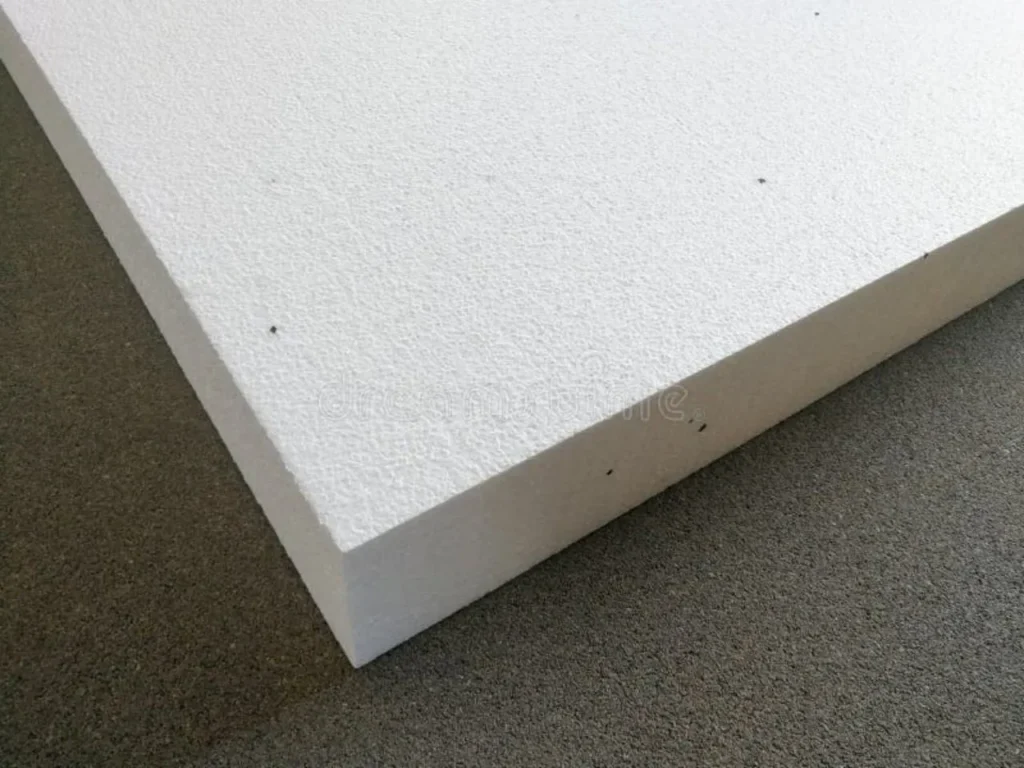
A. Key Components:
- Cement: Usually Ordinary Portland Cement (OPC), acting as the binder.
- EPS Beads: The lightweight aggregate. They are non-absorbent, chemically inert, and hydrophobic. Post-consumer recycled EPS can be used, enhancing sustainability.
- Water: For cement hydration.
- Bonding Agents (Critical): To overcome the natural repulsion between the hydrophobic EPS and hydrophilic cement paste, agents like polyvinyl acetate (PVA) glue, acrylic polymers, or specialized epoxy-based coatings are used. This step is crucial for achieving adequate compressive strength.
- SCMs & Additives: Fly ash (for workability and sustainability), fibers (polypropylene for crack control), air-entraining agents, and setting retarders/accelerators.
B. Mixing Process:
The process is sensitive. A typical sequence is:
- Pre-wet EPS beads with a dilute solution of the bonding agent.
- Mix cement and dry additives.
- Combine pre-wet beads with the dry mix.
- Gradually add water to achieve a uniform, cohesive consistency—often described as “oatmeal-like.”
- Place the mix into forms/molds. It requires minimal vibration (excessive vibration causes EPS beads to segregate and float).
Primary Applications in Construction
Expanded Polystyrene Concrete’s applications are defined by its strength-to-weight and insulation capabilities.
- Insulated Concrete Forms (ICFs) Infill: The most common application. EPSC is poured into the cavity of permanent polystyrene ICF blocks, creating a monolithic, insulated, solid wall in one step.
- Non-Load Bearing Walls & Panels: For partition walls, cladding panels, and infill walls in frame structures. It provides both separation and insulation.
- Roof and Floor Screeds/Toppings: As a lightweight, insulating leveling layer on decks, especially in retrofit projects where weight is a concern.
- Geotechnical Applications: As lightweight fill behind retaining walls, on unstable soils, or over underground utilities to reduce lateral and vertical earth pressure.
- Pre-cast Blocks & Elements: Manufactured into blocks for construction, similar to lightweight autoclaved aerated concrete (AAC) blocks, but often with better insulation.
- Sculptural & Landscape Elements: Its moldability makes it popular for artificial rocks, garden features, and stage sets.
Expanded Polystyrene Concrete Advantages
- Exceptional Thermal Insulation: Drastically reduces heating and cooling loads, leading to significant operational energy savings. Can contribute to achieving Passive House standards.
- Lightweight: Reduces dead load on structures and foundations, allows for easier handling, and can lower construction costs (smaller equipment, faster erection).
- Design Flexibility: Can be formed into curves and complex shapes not easily achievable with traditional masonry.
- Sustainability Potential: Can utilize recycled post-consumer EPS waste (packaging, containers), diverting it from landfills. Also reduces lifetime energy consumption of buildings.
- Good Seismic Performance: The low mass reduces inertial forces during an earthquake, a key advantage in seismic zones.
- Integrated Function: Combines structure, insulation, and fire resistance in a single monolithic element, simplifying the building envelope assembly.
Comparison with Competing Materials
- vs. Autoclaved Aerated Concrete (AAC): AAC has higher strength (for its weight) and better fire ratings, is a factory-controlled product, and is widely code-accepted.
EPSC can be made on-site, has marginally better insulation, and can utilize recycled content more directly. - vs. Wood/Cellulose Insulation: EPSC provides mass, mold resistance, and sound absorption that fibrous insulations do not, but is more expensive and material-intensive.
- vs. Conventional Concrete with External Insulation: EPSC offers a simpler, monolithic build but lacks the sheer load-bearing capacity.
The conventional assembly often allows for higher R-values with advanced external insulation systems.
Conclusion
Expanded Polystyrene Concrete is not a miracle material, but a highly specialized tool in the sustainable builder’s toolkit.
It excels in applications where low weight, high insulation, and moderate strength are simultaneously required.
Final Verdict:
- Ideal For: Energy-efficient, low-rise residential construction (ICF infill, partition walls), lightweight geotechnical fills, and retrofit insulation toppings. It is compelling for owner-builders and projects targeting high green building certifications.
- Not Ideal For: High-rise structural elements, foundations in wet soils without protection, or projects where lowest first-cost is the sole driver and crews are unfamiliar with the material.
Recommendation for Professionals: Before specification, engage with experienced suppliers or mix designers.
Conduct trial batches and small-scale tests. Ensure the structural engineer is comfortable with the material’s properties.