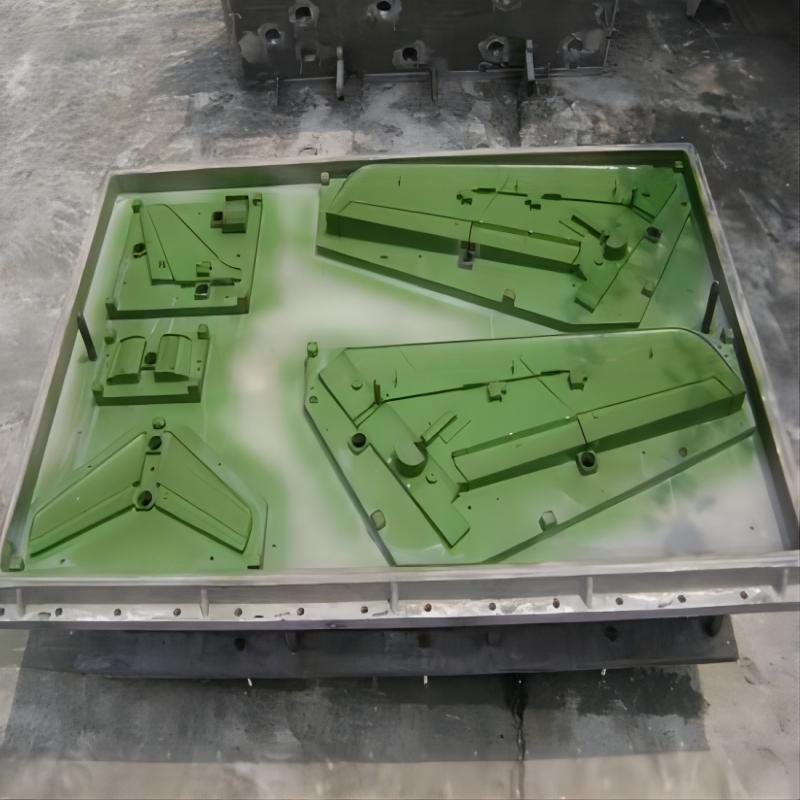
EPP foam airplane molds are used to manufacture highly durable and resilient model airplanes, especially for the Remote Control (RC) hobbyist market.
EPP foam airplane molds are used to manufacture highly durable and resilient model airplanes, especially for the Remote Control (RC) hobbyist market.
Here is a breakdown of EPP foam, its properties, and the molding process:
EPP is a versatile, closed-cell bead foam known for its excellent properties, which make it ideal for RC aircraft:
Exceptional Durability and Resilience: EPP has a “memory” quality, allowing it to absorb multiple impacts (crashes) and return to its original shape without permanent deformation.3 It’s incredibly tough and flexible—it bends without breaking.
Lightweight: It has an exceptionally high strength-to-weight ratio, which is crucial for maximizing flight time and performance in model aircraft and drones (UAVs).
Water and Chemical Resistance: EPP is water-resistant, making it suitable for outdoor flying and providing buoyancy.
Easy Repair: When damaged, the tears match up perfectly and can often be re-glued with an almost invisible repair.
CA Compatibility: EPP is compatible with CA (Cyanoacrylate) glue, which allows for fast, light builds and quick field repairs.
Due to its nature, EPP models are often reinforced with materials like carbon fiber strips/rods to increase stiffness where necessary.
Mass-producing EPP foam airplanes requires specialized molding techniques, typically using aluminum molds designed to handle steam injection and high pressure.
Material: The process starts with polypropylene (PP) plastic pellets, which are pre-expanded to create EPP beads.
Molds: Highly specialized, multi-cavity aluminum molds are CNC-milled to the precise shape of the desired airplane part (wings, fuselage, etc.). These molds are drilled with many tiny holes (vents) and equipped with steam injectors.
Molding:
The pre-expanded EPP beads are injected into the mold cavity.
The mold is closed, and steam is introduced. The heat and pressure from the steam cause the beads to expand further and fuse together, bonding them into a single, cohesive foam part.
The mold is then cooled (often with internal water spray) to solidify the part.
Ejection: A release agent is typically used on the mold surface, and the finished EPP airplane part is ejected from the mold.
This molding process creates parts with a precise shape, smooth finish (if the mold is polished), and consistent density, enabling high-volume production of durable aircraft.
If you are looking for EPP foam airplane molds, you are likely looking for either:
Custom Mold Fabrication Services: Companies that specialize in manufacturing the actual aluminum molds for EPP/EPS/EPO molding machines.
EPP Foam Product Manufacturers: Companies that already own the equipment and can use your existing design or their own molds to produce EPP airplane parts for you.
Many manufacturers and suppliers of both the molds and the final products are located in China, which specializes in foam molding for various industries, including RC hobbies.
We adhere to the quality concept of “keep improving”, and strive to provide customers with the best products and services.
WhatsApp us
We will contact you soon,please pay attention to the email with the suffix”@epsole.com”.