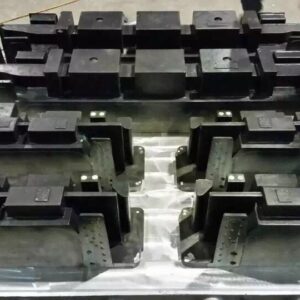
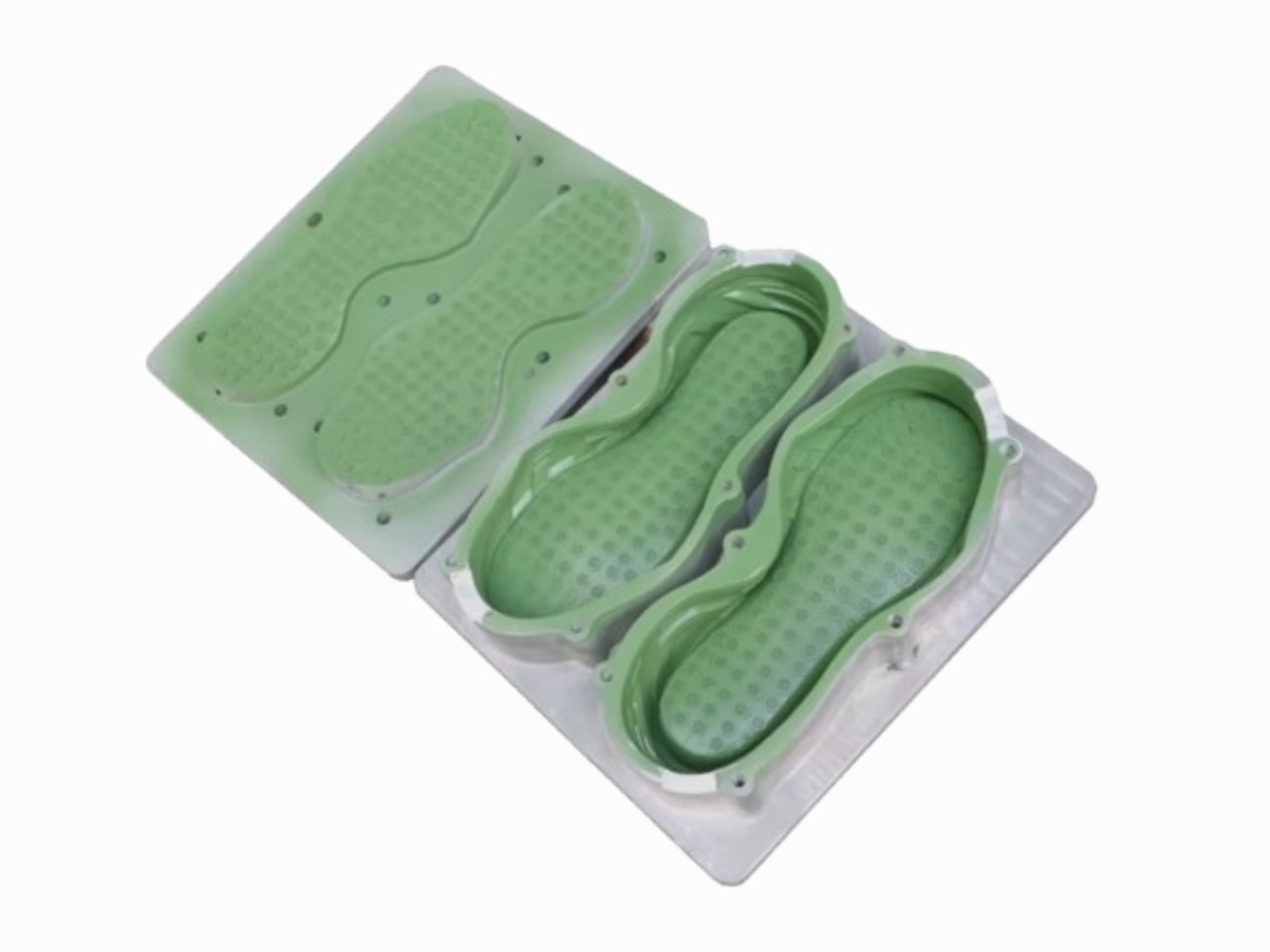
ETPU sole mold is a high-precision, thermally managed system.
ETPU shoe sole mold is a critical piece of technology behind one of the most popular and performance-driven material trends in footwear (think adidas BOOST, etc.).
Let’s break down the key aspects of ETPU mold design, manufacturing, and considerations.
What it is: ETPU starts as TPU (Thermoplastic Polyurethane) raw material in pellet form. These pellets are expanded using steam and high pressure in an autoclave to create tiny, closed-cell foam beads.
Key Property: These expanded beads are then sintered/molded together under heat and pressure. The mold doesn’t just shape the material; it fuses the individual beads into a monolithic but highly resilient foam part.
Mold Implications: This sintering process dictates almost every aspect of the mold design.
A. Part Design & Mold Cavity
Wall Thickness: Must be sufficient for proper bead fusion and structural integrity, but uniform to prevent sink marks and warpage. Typical range is 5-15mm.
Draft Angles: Essential for demolding the flexible foam part. Minimum 1-2° is recommended.
Texture: ETPU soles often have a specific surface texture (matte, slightly rough) which is chemically etched or EDM-textured into the mold cavity. This also helps with demolding.
B. Mold Structure & Type
Injection-Compression vs. Direct Sintering: There are two primary methods:
1. Direct Sintering (Most Common for Midsoles): Pre-expanded ETPU beads are filled into a mold, which is then closed and heated with steam. The beads expand further and fuse. This requires steam channels in the mold.
2. Injection-Compression: Used for hybrid soles or more complex designs. TPU pellets are injected into a slightly open mold, which then closes fully (compression) to shape the part.
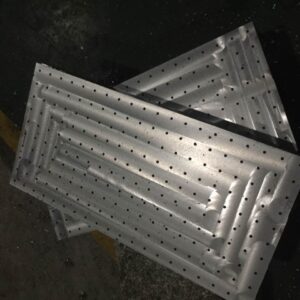
Steam System (Crucial for Sintering Molds): The mold must have an intricate network of steam channels (usually drilled behind the cavity surfaces) to deliver uniform heat for bead fusion. This is the most technically demanding part.
Cooling System: After sintering/injection, efficient water cooling channels are vital to solidify the part quickly and achieve a short cycle time.
Venting: Tiny vents are needed to allow air and steam to escape during filling and sintering, preventing air traps and ensuring complete fusion.
C. Material & Finishing
Mold Steel: Must have:
Excellent Corrosion Resistance: Constant exposure to high-pressure steam demands stainless steels (e.g., 420 Stainless, Stavax) or highly corrosion-resistant tool steels with proper hardening.
Good Thermal Conductivity: For efficient heating and cooling.
High Polishability: For a defect-free sole surface.
Surface Finish: A high-grade mirror polish (often #A1 or better) is required in the cavity to ensure easy demolding and a perfect sole surface. Any pit or defect will be transferred to every sole.
D. Ejection System
ETPU is flexible and can be easily damaged. Ejector pins must be numerous, strategically placed, and sometimes use larger plates or air ejection to ensure a smooth, distortion-free release.
1. CNC Machining: High-precision 3-5 axis machining creates the cavity and core from the hardened steel block.
2. EDM (Electrical Discharge Machining): Used for fine details, deep textures, or sharp corners that are difficult to mill.
3. Texturing & Polishing: The cavity undergoes extensive manual and automated polishing. Specific textures are applied via photo-etching or laser texturing.
4. Drilling of Steam/Cooling Channels: A critical step requiring precise layout to ensure even temperature distribution.
5. Assembly & Trial: The mold is assembled, and trial runs (often called “T1”) are conducted to test bead fusion, part weight, dimensions, and mechanical properties.
Dual-Density Soles: Molds with inserts or overmolding capabilities to combine regular ETPU with a harder TPU rim (e.g., adidas UltraBOOST) or a softer top layer.
Complex Geometries: Using slide actions and lifters to undercuts for advanced sole designs.
Sustainability: Molds designed for use with bio-based or recycled ETPU beads, which may have slightly different flow and fusion characteristics.
Digital Integration: Molds are increasingly designed using CAE simulation software (like Moldex3D or Autodesk Moldflow) to simulate bead filling, fusion, and cooling before metal is cut, saving time and cost.
We adhere to the quality concept of “keep improving”, and strive to provide customers with the best products and services.
WhatsApp us
We will contact you soon,please pay attention to the email with the suffix”@epsole.com”.