
Expanded Polypropylene (EPP) mold is the single most important investment in your foam parts production.
A high-quality EPP mold determines your product’s dimensional accuracy, cycle time, material efficiency, and ultimately your profitability.
Choose the wrong supplier, and you face slow cycles, excessive scrap, poor part quality, and endless troubleshooting.
Choose the right one, and you gain a partner that cuts your per-part cost, speeds up delivery, and scales with your business.
Understanding the EPP Mold Market
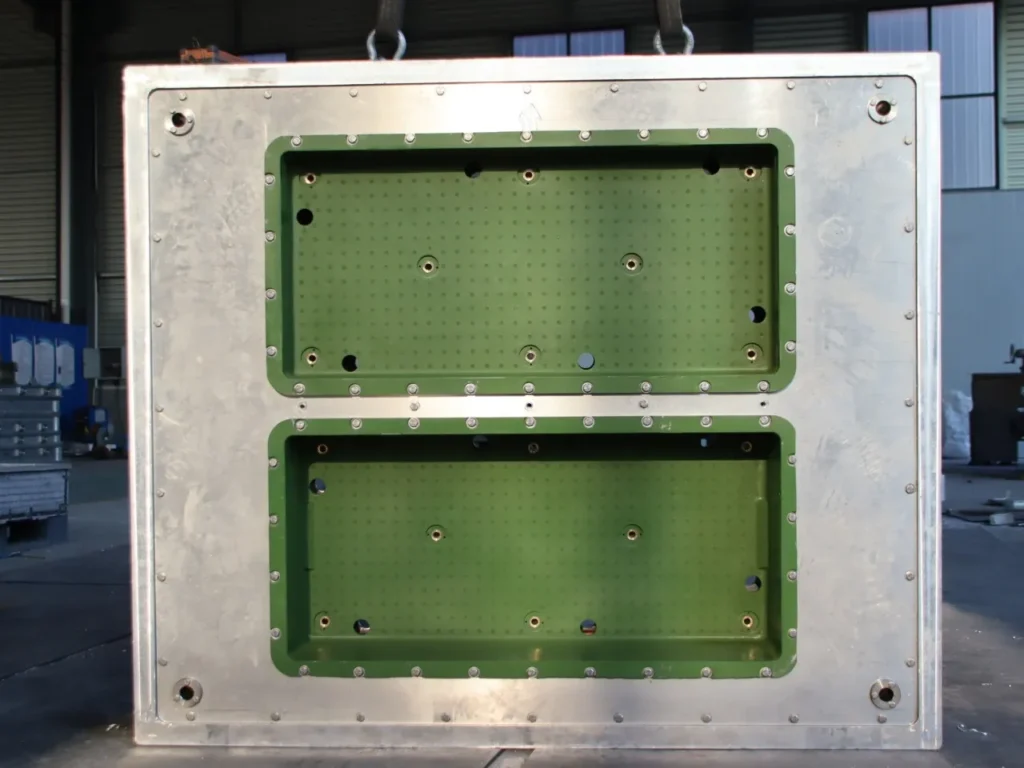
Before diving into supplier selection criteria, it helps to understand the market you’re operating in.
The expanded polypropylene foam market is growing rapidly, driven by automotive lightweighting, sustainable packaging demands, and e-commerce logistics.
In 2026, the global EPP foam market is estimated at $1.29 billion, with projections reaching $1.78 billion by 2031, growing at a 6.66% compound annual growth rate (CAGR).
Automotive alone accounted for roughly $853 million in 2025, projected to hit $1.22 billion by 2032.
What is driving this growth? Stricter vehicle CO2 regulations are pushing automakers to replace metal parts with energy-absorbing EPP foams in bumper systems, seat pads, and trunk liners.
The EU’s Ecodesign for Sustainable Products Regulation (ESPR) now requires reusable packaging with proven recyclability.
E-commerce growth is amplifying demand for protective containers that withstand high-velocity logistics networks.
And EPP’s ability to incorporate over 70% recycled content without compromising mechanical integrity makes it increasingly attractive for companies pursuing ESG goals.
This growth means more suppliers are entering the market—but not all are created equal.
The consolidation among vertically integrated suppliers, exemplified by major acquisitions in the industry, signals that scale, IATF 16949 certification, and recycled-content capabilities are becoming key factors in determining which suppliers win contracts.
Understanding this landscape helps you set realistic expectations for pricing, lead times, and technical capabilities as you evaluate potential partners.
Define Your Requirements Before You Start Searching
The biggest mistake buyers make is contacting suppliers before they know what they actually need.
A vague request for quotation (RFQ) leads to vague responses, mismatched capabilities, and wasted time.
Before reaching out to any EPP mold supplier, get crystal clear on the following factors:
Part Geometry and Complexity
EPP molds range from simple rectangular blocks for packaging inserts to complex multi-contour molds for automotive bumpers or helmet liners.
The more complex your part, the more advanced CNC machining and design capabilities your supplier needs.
Ask yourself: Does your part have undercuts, variable density zones, thin walls, or tight tolerance requirements? Each of these features demands specific mold design approaches.
Production Volume and Mold Life Expectancy
Your production volume directly dictates mold material selection.
For low-volume prototyping (a few hundred to a few thousand parts), aluminum molds offer faster lead times at lower cost.
For high-volume mass production (tens of thousands or millions of parts), hardened steel molds are more economical over the long term despite higher upfront investment because they last longer and require less maintenance.
Aluminum molds cost roughly $1,500–$3,500 for a single-cavity simple mold, while multi-cavity steel production molds can run $25,000–$80,000+.
Density and Performance Specifications
EPP parts can be produced at densities ranging from 15 to 120 g/L, depending on application requirements.
Some applications need consistent density throughout; others require variable density zones (softer zones for comfort, firmer zones for impact absorption) within a single molded part.
Not every EPP mold supplier can deliver variable density molding. Make density control a core specification in your RFQ if your application demands it.
Regulatory and Industry Certifications
Automotive applications often require IATF 16949 certification. Medical and food-contact packaging may require FDA CFR Title 21 or EU Regulation 10/2011 compliance.
Aerospace or high-safety applications may require specific testing protocols. Determine what certifications your final product must meet and ensure your mold supplier can support those requirements.
Sustainability and Recyclability Goals
EPP’s recyclability is a major market driver—but not every supplier handles recycled content equally well.
If your company has specific recycled-content targets or closed-loop material recovery requirements, vet your supplier’s experience with post-consumer recycled polypropylene (PCR-PP) and their ability to maintain consistent part quality with recycled feedstock.
Evaluate the Supplier’s Technical Capabilities
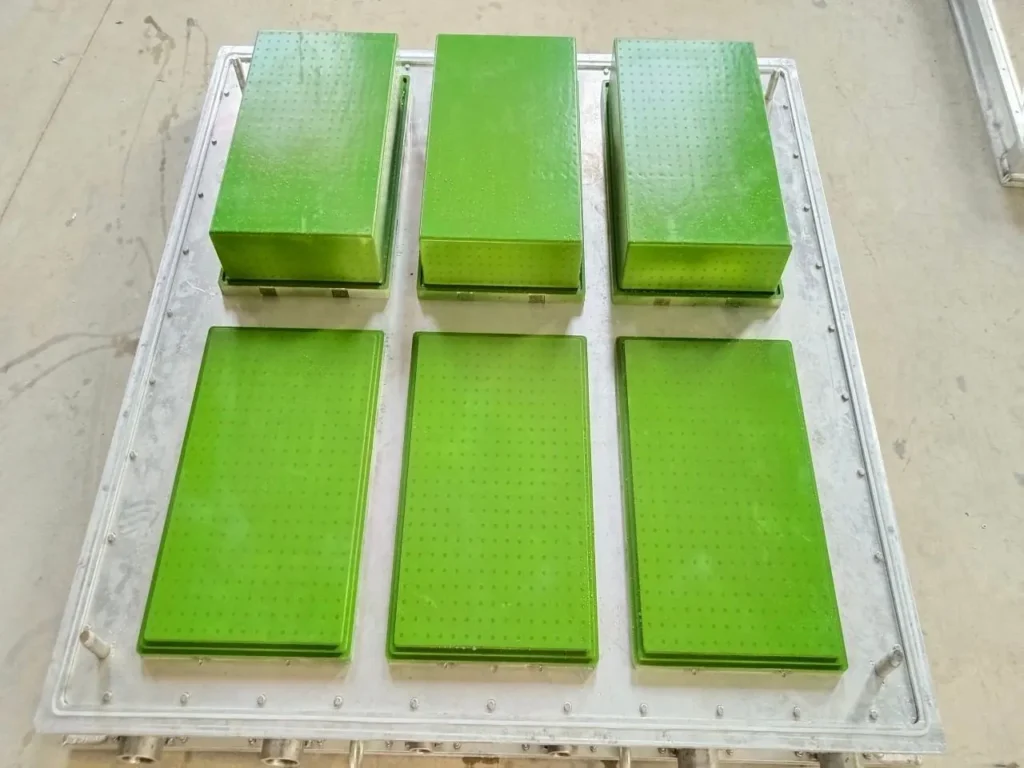
Once you have clear requirements, the next step is assessing whether potential suppliers have the technical expertise to meet them.
Don’t rely on glossy marketing materials—dig into their actual manufacturing capabilities.
Mold Material Selection
The first technical question to ask: What materials does the supplier use for mold bases, cavities, and cores?
Industry standards include aluminum alloys (6061, 7075) for lighter-duty applications requiring fast cycle times, and stainless steel for high-durability, high-volume production.
Premium-grade mold steel (H13, S136) generally accounts for 35–50% of total mold cost, but hardened grades like H13 last 3–5× longer than standard P20 steel under high-volume production.
Ask suppliers about their material sourcing and whether they perform heat treatment in-house or outsource it. In-house heat treatment typically indicates better quality control.
CNC Machining Precision
EPP mold dimensional accuracy directly determines final part quality. The industry standard guideline specifies tolerance within ±0.1mm.
Anything looser than that risks flashing, uneven density distribution, or assembly failures. Ask suppliers about their CNC equipment: Do they use advanced multi-axis machining centers?
What is their typical surface finish quality? Can they achieve consistent tolerances across complex geometries? Suppliers should conduct rough machining followed by fine finishing to maintain dimensional accuracy.
Ventilation and Cooling System Design
Two of the most overlooked yet critical aspects of EPP mold design are the ventilation system and cooling channels. Here is why they matter:
Ventilation: When an EPP mold does not vent properly, trapped air forces operators to use longer fill times, adding 10–15 seconds to every cycle.
That might not sound like much, but over a year of production, those seconds become thousands of lost production hours.
High-quality molds incorporate adequate venting channels with specific depths calculated for EPP material viscosity, allowing air to evacuate instantly during fill.
Cooling: Traditional EPP molds have straight-drilled cooling lines, which cool unevenly and slowly.
Advanced suppliers use conformal cooling channels—cooling lines machined to follow the exact contour of your part.
Conformal cooling cuts cooling time by up to 40%, reduces cycle times dramatically, and improves dimensional stability.
Ask potential suppliers how they design venting and cooling systems.
Do they run mold flow simulations? Can they show you case studies demonstrating cycle time reductions? Do they have documented guidelines for steam distribution testing?
Good suppliers should perform steam chamber tests and trial molding before shipping any mold to verify uniform steam distribution and consistent foaming.
Multi-Cavity and Family Mold Capabilities
If you need high-volume production, multi-cavity molds produce more parts per cycle, lowering your cost per unit.
Doubling cavity count typically adds 40–60% to mold cost but cuts piece price by 30–50%.
However, multi-cavity molds require balanced flow design, advanced cooling, and tighter tolerance control.
Ask suppliers about their maximum cavity count and their experience with family molds (multiple different parts within one mold).
Assess Quality Systems and Manufacturing Processes
Even the most advanced CNC equipment won’t produce consistent quality without robust quality systems. Here is what to look for.
Certifications and Standards
At minimum, your EPP mold supplier should hold ISO 9001:2015 certification for quality management systems.
For automotive applications, IATF 16949 is non-negotiable—major automakers and tier-1 suppliers require it.
For medical or food-contact applications, look for relevant FDA or EU certifications.
Some premium Chinese EPP manufacturers also pursue international certifications such as CE marking for European market access.
Quality Control Equipment
Ask what inspection equipment the supplier uses. Coordinate Measuring Machines (CMM) are essential for precise dimensional validation of molds before delivery.
Suppliers should also perform leakage tests to check for steam or air leakage in venting systems. If a supplier can’t describe their quality control equipment and procedures, consider that a red flag.
Trial Molding and Sampling Process
Before committing to mass production, reputable EPP mold suppliers conduct thorough trial molding to validate the mold’s performance. This process should include:
- Testing steam distribution uniformity
- Measuring cycle times against design targets
- Inspecting sample parts for dimensional accuracy, density consistency, and surface finish
- Identifying and correcting any issues before the mold is shipped or production begins
Request sample parts or witness a trial molding run if possible.
Pay attention to how the supplier responds to any problems identified during trials—their problem-solving approach tells you a lot about how they will handle future issues.
Manufacturing Process Transparency
The five mainstream EPP mold cavity manufacturing processes each have different trade-offs:
- Solid Aluminum CNC Machining – Highest precision, best for complex geometries requiring tight tolerances; moderate lead time
- 3D Printed Sand Casting – Fastest prototyping iteration, ideal for complex internal structures; lower upfront tooling investment
- Traditional Sand Casting – Lower cost for simple geometries; longer lead time
- Lost Foam Casting – Best for extremely complex geometries; highest upfront tooling cost
- Foam Pattern Sand Casting – Good balance of cost and complexity for medium-volume runs
Ask each supplier which processes they use and why. A good supplier can justify their process selection based on your specific part geometry and production volume.
Evaluate Supplier Experience and Industry Focus
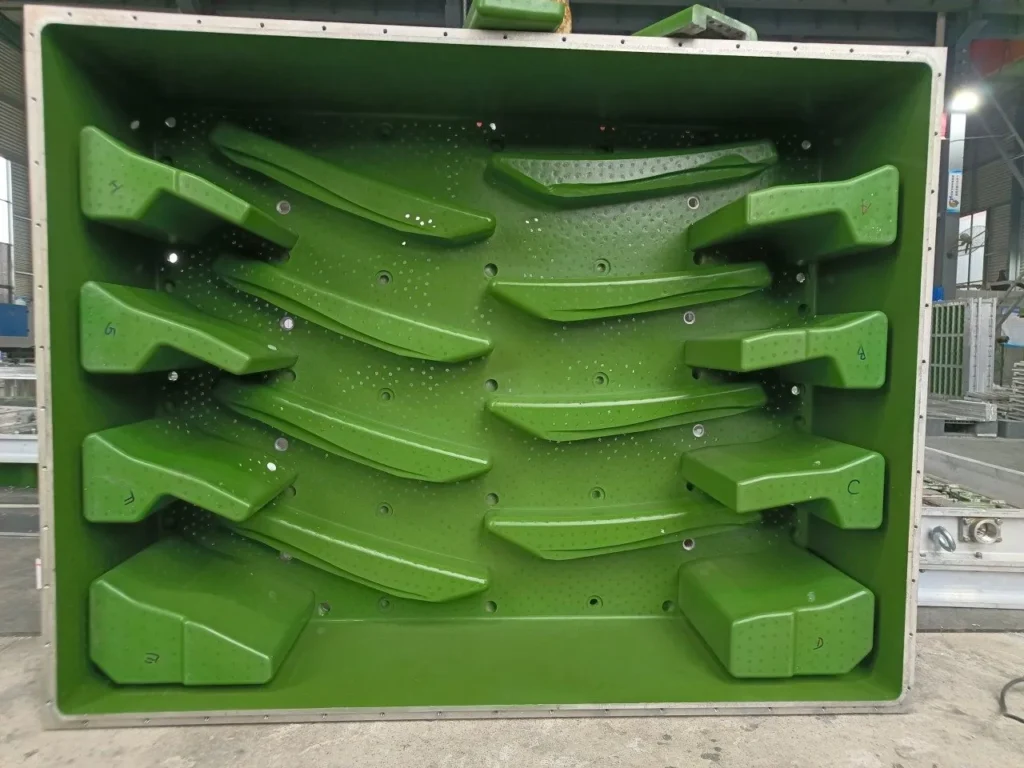
EPP molds for automotive structural components require very different expertise than molds for consumer packaging or sports equipment.
Look for a supplier with proven experience in your specific industry.
Automotive Industry Suppliers
If you are producing EPP parts for automotive applications—such as bumper cores, seat pads, battery pack components, or trunk liners—you need a supplier familiar with JIT (Just-In-Time) delivery, automotive-grade material specifications, and strict quality standards.
Leading Chinese automotive EPP suppliers can achieve compression strength improvements of 25–30% over standard EPP through proprietary material formulations, and they support single-shift capacities of 1.2 million parts per month.
They also meet automotive odor standards like VDA 270 (odor grade <3) and offer -40°C to +110°C thermal stability.
Packaging Industry Suppliers
For EPP protective packaging, look for suppliers that understand multi-impact protection requirements and can optimize mold design for material efficiency.
Top suppliers maintain product yield rates above 98.5% and can compress sample lead times to as little as 3–5 days for urgent prototyping.
Packaging-focused suppliers should also understand sustainability requirements, as EPP’s recyclability is a major selling point for eco-conscious brands.
Sports Equipment Suppliers
Sports equipment demands EPP molds capable of variable density molding (different hardness zones within a single helmet liner or pad), anatomical precision (using 3D-scanned human body data to match real contours), and integrated attachment points for straps and buckles.
Suppliers with experience in this sector understand that safety-critical applications require rigorous quality control at every step.
One-Stop Solution Providers
Increasingly, buyers prefer suppliers offering integrated services—from material development and mold design to precision molding, secondary processing, and finished product delivery.
This “one-stop” approach reduces coordination overhead, ensures quality consistency across the entire production chain, and typically lowers total landed cost.
Some Chinese EPP manufacturers have established themselves as full-chain integrators, serving major customers in consumer electronics (Huawei, ZTE, TCL), appliances (Gree, Midea), and new energy vehicles (XPeng).
Quality Inspection and Testing Before Production Commitments
Even the most impressive supplier profile needs real-world validation. Here are concrete steps to verify quality before signing any long-term agreements.
Request Material and Product Certifications
Ask suppliers to provide documentation of quality certifications—ISO 9001, IATF 16949, relevant industry-specific certifications.
For EPP specifically, check for certifications related to FDA compliance, EU Regulation 10/2011 (food contact), or automotive-grade approvals depending on your application.
Reputable suppliers should also provide test reports showing dimensional accuracy, density consistency, compression strength, and other performance metrics.
Request Sample Parts for Testing
Never commit to large-scale production without testing sample parts. Ask potential suppliers to produce sample parts from a trial mold run, then have those samples independently tested for:
- Dimensional accuracy against your CAD specifications
- Density distribution (consistent or variable as required)
- Compressive strength and energy absorption
- Surface finish quality
- Environmental compliance (VOC emissions, recyclability)
If the supplier cannot or will not provide sample parts for independent testing, move on to another candidate.
Conduct a Factory Audit or Third-Party Inspection
Whenever possible, conduct an on-site factory audit to assess equipment, workforce conditions, environmental compliance, and quality management systems in person.
If an in-person visit isn’t feasible, hire a third-party inspection agency to conduct the audit on your behalf. Pay particular attention to:
- The condition and age of CNC machining equipment
- The supplier’s maintenance logs for critical machinery
- Cleanliness and organization of the production floor
- Employee training records
- Inventory management systems
Run Small-Batch Trials
After sample validation, run a small-batch trial production before moving to full-scale manufacturing.
This allows you to verify real-world performance—including dimensional stability across multiple production cycles, ejection consistency, and long-term mold durability—before making large financial commitments.
Small-batch trials can catch issues that sample testing alone might miss, such as gradual mold wear or inconsistent material behavior over extended runs.
Analyze Cost and Tooling Economics
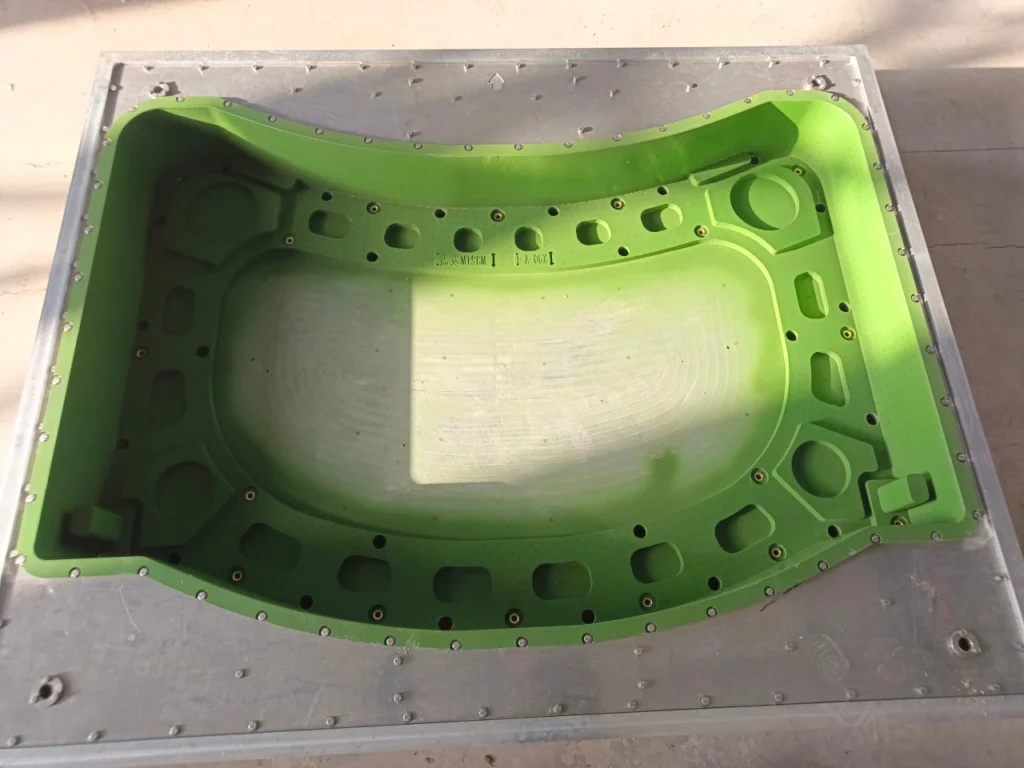
Price is always a consideration, but focusing solely on the lowest quote often leads to higher total costs over the mold’s lifecycle. The true economics of EPP tooling involve multiple factors.
Understanding the Cost Components
EPP mold costs break down into several distinct components:
| Cost Component | Factors That Influence It | Impact on Total Cost |
|---|---|---|
| Mold material | Steel vs. aluminum; hardened grades like H13 vs. standard P20 | 35–50% of total mold cost |
| Cavity count | Single-cavity vs. multi-cavity design | Doubling cavities adds 40–60% to cost |
| Complexity | Undercuts, side actions, tight tolerances, conformal cooling | Each feature adds $800–$2,500 |
| Surface finish | SPI finish grade vs. standard texture | Mirror polish adds $3,000–$8,000 |
| Lead time | Standard vs. expedited delivery | Rush orders typically add 25–50% |
Upfront Cost vs. Long-Term Value
Here is where many buyers go wrong: The mold is a non-recurring engineering (NRE) cost—a one-time investment amortized over the production run. Consider a $20,000 mold.
Over 100,000 parts, that mold adds just $0.20 per part. Even a $50,000 mold adds only $0.50 per part at 100,000 units.
By contrast, a poorly designed mold will increase your per-part material cost through overpacking, increase your energy cost through longer cycle times, and increase your labor cost through troubleshooting and rework.
Higher-quality tooling consistently delivers better ROI over the long term.
A well-designed mold with conformal cooling cuts cooling time by 40%, which directly translates to more parts produced per machine hour.
A mold with proper venting eliminates the 10–15 seconds of extra fill time that bad molds require. These savings add up quickly.
Cost-Effectiveness of Chinese EPP Mold Suppliers
China remains the dominant global hub for EPP mold manufacturing, particularly for mold fabrication and tooling.
China’s dense supplier ecosystem excels at engineering depth, tooling iteration, and absorbing design changes without stalling production.
Chinese EPP mold suppliers offer significant cost advantages compared to Western or Japanese suppliers, with typical mold fabrication costs 30–50% lower for comparable quality levels.
This cost advantage is especially pronounced for:
- Complex multi-cavity molds that require advanced CNC machining and careful balancing
- Automotive-grade molds with tight tolerances and IATF 16949 compliance
- High-volume production molds where scale matters
The key is finding a Chinese supplier that combines competitive pricing with Western-quality standards—many top-tier Chinese manufacturers now hold IATF 16949 and ISO 9001 certifications and export globally to automotive OEMs, electronics brands, and logistics companies.
Cost Optimization Strategies
- Ask for split quotes: Separate tooling cost from per-unit production cost so you can compare apples-to-apples
- Consider aluminum for prototyping: Aluminum molds cost much less and can be produced faster; use them for product validation before committing to steel production molds
- Amortize intelligently: Factor tooling cost into your product pricing model across the expected production run
- Lock design early: Design changes after tooling starts are expensive; freeze your part design before mold fabrication begins
- Negotiate mold ownership terms: Ensure your agreement specifies who owns the mold, where it is stored, and what happens if you switch suppliers
Verify Delivery Capabilities and Logistics
Even the best mold won’t help you if delivery delays hold up your production line.
Lead Time Expectations
EPP mold lead times vary widely based on complexity and supplier capacity:
- Simple aluminum molds (single-cavity): 2–4 weeks
- Standard steel production molds: 4–8 weeks
- Complex multi-cavity steel molds: 8–12 weeks
- Rush orders: 2–4 weeks (typically at 25–50% premium)
Top Chinese EPP mold suppliers often offer faster lead times than Western counterparts due to integrated production processes and dedicated mold-making facilities.
Some suppliers can complete mold design, fabrication, and testing within 7–10 days for standard automotive components.
Production Capacity Assessment
Ask potential suppliers about their:
- Maximum monthly output (number of molds or molded parts)
- Number of molding machines and their specifications
- Spare capacity for rush orders or unexpected demand spikes
- Shift structure (single-shift vs. multi-shift operations)
Suppliers should be able to provide transparent data on their production capacity and demonstrate how they manage capacity during peak demand periods.
Quality Consistency at Scale
A mold that produces perfect parts in sample runs but falls apart under high-volume production is a liability.
Ask for references from long-term customers who have used the supplier’s molds for sustained high-volume production. Look for suppliers who maintain stable yield rates above 98.5% in mass production.
Logistics and International Shipping
If you are sourcing from China, factor shipping time, customs clearance, duties, and freight costs into your total landed cost calculation.
Partner with a supplier that has experience exporting to your region, understands Incoterms, and can provide clear documentation for customs.
Many top Chinese EPP mold suppliers handle international shipping regularly and can advise on the most cost-effective logistics options.
Evaluate Post-Sales Support and Maintenance
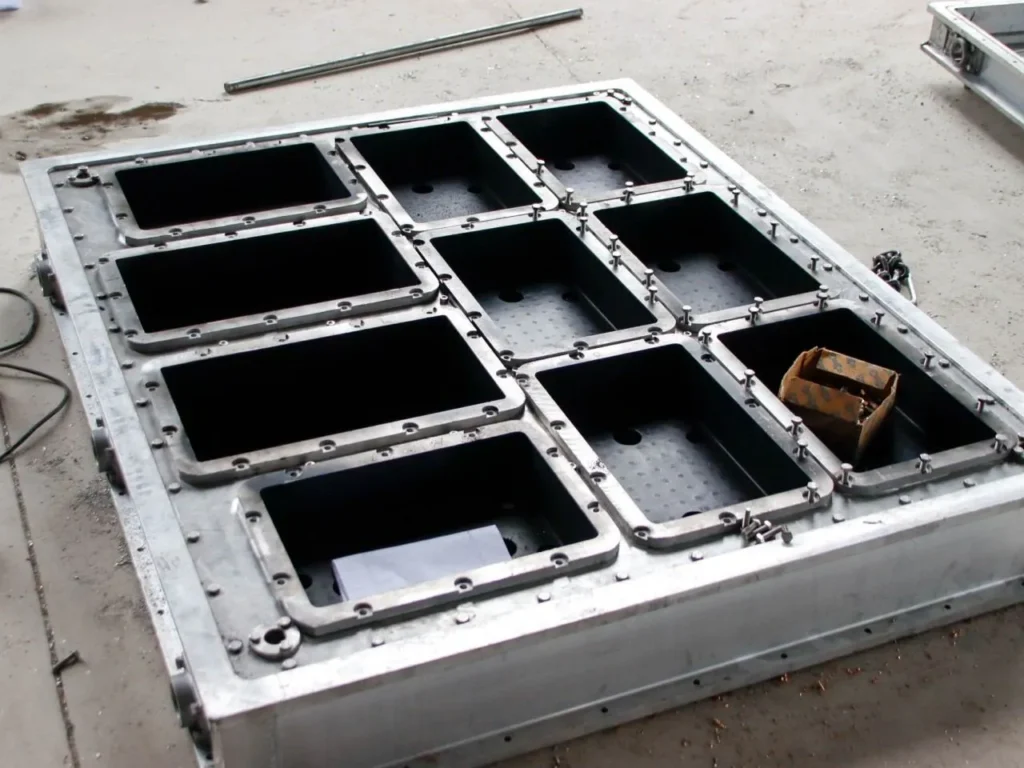
The relationship doesn’t end when the mold is delivered. Long-term mold performance depends heavily on proper maintenance and responsive technical support.
Maintenance Requirements
EPP molds require regular care to maintain performance and extend service life:
- Clean molds after each production run to remove foam residue and dust
- Inspect and lubricate moving parts (ejector pins, guide pillars) regularly—unlubricated ejector pins seize and stop production
- Check cooling channels for scale, rust, and debris buildup, which reduce heat exchange and increase cycle times
- Store molds properly in dry, cool, dust-free environments with anti-rust protection applied
Ask potential suppliers if they provide:
- Detailed maintenance manuals with specific procedures and schedules
- Recommended spare parts lists for critical components (ejector pins, guide pillars, springs, seal kits)
- Training for your technicians on proper mold operation and care
- Emergency repair services for unexpected failures
Technical Support Commitment
Post-sales technical support is critical. Evaluate suppliers based on:
- Response time guarantees for technical inquiries
- Availability of support channels (phone, email, video calls)
- Experience of support staff (engineers vs. sales representatives)
- Warranty terms and what they cover
- Policies for design modifications after mold delivery
The best EPP mold suppliers offer 24-hour response times for technical issues and provide lifetime technical consultation at no additional charge.
Some even maintain dedicated customer support channels staffed by senior engineers who can resolve issues without delays.
Consider Global Sourcing Options—China vs. Alternative Markets
While China dominates EPP mold manufacturing globally, alternative sourcing markets are emerging.
Understanding the trade-offs helps you make the right choice for your specific needs.
Why China Remains the Top Choice for EPP Molds
China excels precisely where EPP mold manufacturing is most demanding—scenarios requiring engineering depth, supplier coordination, and the ability to absorb changes without stalling production.
For EPP mold fabrication, this manifests in several ways:
- Tooling depth: China has extensive experience with complex, multi-cavity molds and tight tolerance requirements
- Change tolerance: Chinese suppliers can accommodate design iterations and engineering changes mid-stream more effectively than almost any alternative market
- Supplier density: Industrial clusters in Guangdong, Zhejiang, and Jiangsu provinces mean upstream and downstream suppliers are located close together, enabling faster prototyping and shorter lead times
- Cost advantage: Chinese EPP mold fabrication costs remain 30–50% below Western equivalents for comparable quality
China is most effective when your production is expected to flex and evolve—not when everything goes exactly to plan from day one.
Emerging Alternatives: Vietnam and Southeast Asia
Vietnam has emerged as an alternative sourcing destination, particularly for labor-intensive industries. Labor costs in Vietnam run 10–15% below China for many categories.
However, Vietnam works best when production success depends on discipline, repetition, and labor-driven execution—not on complex engineering and tooling iteration.
For EPP mold manufacturing specifically, Vietnam currently lacks the depth of ancillary suppliers needed for complex assemblies. Tooling depth remains limited, and change tolerance is low. Vietnam is a better fit for:
- Simple molds with stable, locked-in designs
- Labor-intensive assembly after molding
- Products where design changes mid-production are unlikely
Vietnam struggles when specifications change late, engineering support is required mid-production, or QC systems need to adapt dynamically.
Dual Sourcing Strategy
For risk management, consider a dual sourcing strategy—keeping existing China suppliers active while simultaneously qualifying suppliers in Vietnam or other markets.
This approach gives you supply chain redundancy, allows you to compare performance across regions, and protects against disruptions in any single market.
Build a Long-Term Partnership, Not Just a Transaction
The most successful EPP mold supplier relationships are true partnerships, not one-off transactions. Here is how to build that foundation.
Early Supplier Involvement
Involve your mold supplier early in the product development cycle—ideally during the part design phase.
Experienced EPP mold suppliers can identify potential manufacturability issues, recommend design optimizations for faster cycle times or lower material usage, and suggest alternative material grades that better match your performance requirements while reducing cost.
Suppliers who participate in DFM (Design for Manufacturing) reviews typically deliver molds that perform better and last longer because potential problems are caught before tooling begins.
Transparent Communication
Establish clear communication protocols from the start. For international sourcing, language barriers can cause costly misunderstandings.
Work with suppliers who provide English-speaking technical support (or your local language) and who document all specifications, modifications, and agreements in writing.
Regular video calls, shared project management platforms, and detailed meeting minutes help keep everyone aligned.
Intellectual Property Protection
When outsourcing mold manufacturing, protect your intellectual property. Use non-disclosure agreements (NDAs) with clear penalty clauses.
For critical designs, register design patents in relevant jurisdictions before sharing CAD files. Ensure your contract specifies mold ownership, storage terms, and rights to transfer the mold to alternative suppliers if needed.
Performance Review and Continuous Improvement
Establish regular performance reviews with your mold supplier. Track key metrics including:
- On-time delivery rate
- First-pass yield on trial runs
- Post-delivery defect rates
- Technical support response times
- Mold lifecycle cost vs. projections
Use these reviews to identify areas for continuous improvement. A supplier that welcomes constructive feedback and proactively suggests improvements is a partner worth keeping.
Conclusion
Choosing the right EPP mold supplier requires careful evaluation across multiple dimensions—technical capabilities, quality systems, production capacity, cost economics, and post-sales support.
The best supplier for your needs will depend on your specific application (automotive, packaging, sports equipment), production volume (low-volume prototyping vs. high-volume mass production), and performance requirements (standard density vs. variable density, standard tolerances vs. tight ±0.1mm specifications).
Remember these key takeaways:
- Define your requirements clearly before contacting suppliers—part geometry, volume, density specs, and certifications.
- Prioritize technical capabilities—CNC machining precision (±0.1mm), ventilation design, conformal cooling, and multi-cavity experience.
- Verify quality systems—look for ISO 9001 and IATF 16949 certifications, CMM inspection equipment, and thorough trial molding processes.
- Look for industry-specific experience—automotive, packaging, and sports equipment each require different expertise.
- Never skip validation—sample testing, small-batch trials, and factory audits are non-negotiable.
- Think lifecycle cost, not just upfront price—a $50,000 mold that cuts cycle time by 40% beats a $25,000 mold that adds 15 seconds per cycle.
- Evaluate post-sales support—maintenance guidance, spare parts availability, and technical response times matter.
- Consider dual sourcing—combine China for complex tooling with alternative markets for risk diversification.
EPP materials are transforming industries from automotive lightweighting to sustainable packaging and protective sports equipment.
With the global EPP market poised to reach $1.78 billion by 2031, now is the time to secure a reliable, high-quality EPP mold supplier who can grow with you.
Start your supplier selection process today. Request detailed RFQs, ask tough technical questions, validate through samples and trials, and build partnerships based on trust and mutual success.
The right EPP mold supplier won’t just deliver a mold—they will help you produce better products, faster, at lower cost, for years to come.
If you have any questions regarding EPS/EPP/ETPU molds, please feel free to contact us at Transfoam; we will provide you with the perfect solution.