When it comes to foam molding production, few decisions have as much impact on your product quality, production costs, and overall profitability as the choice between a custom foam mold and a standard foam mold.
Both options have their place in manufacturing, but selecting the wrong one can lead to unnecessary upfront costs, compromised part performance, or production bottlenecks that eat into your margins.
By providing a comprehensive overview of all key information regarding custom versus standard foam molds—covering cost comparisons, lead times, part complexity considerations, production volume requirements, and long-term value assessments.
We hope to assist you in making the most informed decision for your specific application.
What Are Custom and Standard Foam Molds?
Before diving into the comparison, it helps to understand what each type of mold actually represents in the foam manufacturing ecosystem.
What Is Custom Foam Mold?
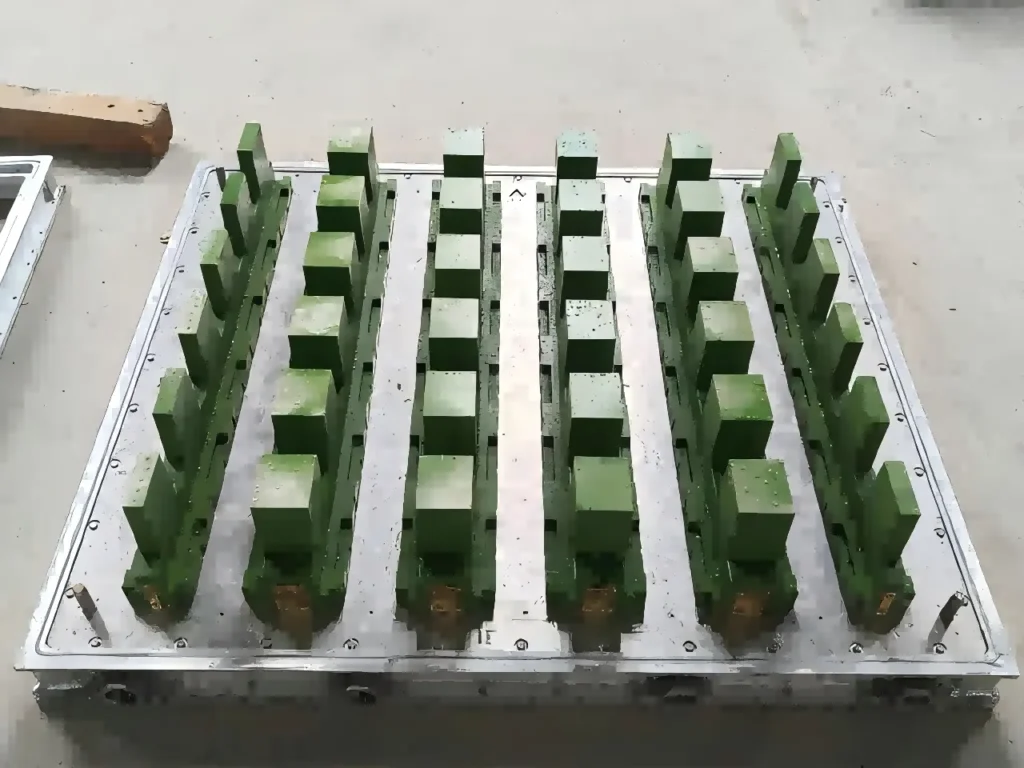
A custom foam mold is a tool designed and manufactured specifically for one unique part geometry.
Every dimension, contour, surface texture, and internal feature is tailored to your exact specifications.
Custom molds are built from scratch based on your CAD model, incorporating optimized cooling channel layouts, venting systems tailored to your material, and ejector systems designed for your part’s specific geometry.
Custom molds are the default choice for applications with unique shapes, tight tolerances, multi-density requirements, or specialized performance needs.
What Is Standard Foam Mold?
A standard foam mold—sometimes called an “open mold” or “stock mold”—refers to pre-designed tooling that produces commonly shaped parts without custom engineering.
Standard molds are typically used for simple geometries like rectangular blocks, standard-sized sheets, basic trays, or other shapes that do not require precise contouring.
However, the foam industry does not have widely available “off-the-shelf” molds in the way that industries like metal stamping or woodworking do.
When industry professionals refer to a “standard foam mold,” they are generally speaking about a simple, proven mold design built around common part shapes—a mold that does not require the same level of engineering investment as a fully custom tool.
The Broader Context: Molded Foam vs. Die-Cut Foam
For many applications, the real alternative to custom molded foam is not another type of mold at all, but die-cut foam.
Die-cut foam involves cutting parts from flat foam sheets using steel rule dies—a fundamentally different approach that requires no custom three-dimensional mold tooling.
Die-cut foam has long been a standard choice due to its low initial costs and fast turnaround times.
Die-cutting requires minimal setup investment, making it budget-friendly for smaller production runs or prototype applications.
It works effectively on simple, uniform surfaces where precise contouring is not critical.
But die-cut foam has significant limitations when parts require complex geometries. Standard die-cutting processes can only produce flat or two-dimensional shapes.
For parts that need to wrap around engine compartments, contour to human anatomy, or incorporate three-dimensional features, die-cut foam falls short.
Gaps between die-cut pieces create potential failure points in thermal barriers, allow heat and noise to penetrate, limit vibration damping effectiveness, and lead to accelerated wear requiring more frequent replacement.
Custom molded foam, by contrast, is precision-engineered to fit complex geometries. It forms a continuous barrier without gaps, eliminates hot spots, provides superior thermal and acoustic protection, and significantly reduces engine noise (15-20 decibels) compared to die-cut alternatives.
A single integrated custom-molded part outperforms die-cut alternatives in durability, installation efficiency, and long-term performance.
Cost Comparison of Custom Foam Mold and Standard Foam Mold
The most immediate and obvious difference between custom and standard foam molds is cost.
But comparing prices directly without considering production volume and mold lifespan leads to flawed decisions.
Initial Tooling Costs
Custom foam molds represent a significant upfront investment. Tooling costs generally range from $3,000 to $19,000 depending on part complexity, mold material, cavity count, and dimensional requirements.
For highly complex parts with undercuts, multiple cavities, or variable density zones, costs can exceed $80,000—particularly for hardened steel production molds designed for millions of cycles.
Standard or simple foam molds cost considerably less. For basic die-cut tooling, the investment is minimal.
For simple two-piece foam molds without complex cooling or venting, costs typically run $1,500 to $5,000—roughly 50-75% lower than comparable custom solutions.
However, these figures must be understood in context. Foam molding generally has lower mold costs than conventional injection molding due to lower injection pressures (500-800 psi compared to 3,000-5,000 psi for standard injection molding), which allows for lighter, less expensive tooling materials.
This means that even custom foam molds are often more affordable than custom injection molds of similar complexity.
Material Choice Affects Cost Significantly
The choice between aluminum and steel for your mold—whether custom or standard—has enormous cost implications.
Aluminum molds have excellent thermal conductivity, making them ideal for rapid cooling and heating cycles, and are suitable for high-volume production runs.
Aluminum can reduce initial production costs by approximately 30-50% compared to steel molds of the same volume.
Due to lower processing costs and lighter weight, aluminum is also suitable for small and medium-sized enterprises.
Steel molds are extremely durable and can withstand heavy usage, often used for long-term production but may require higher initial investment.
P20 steel, although considered a soft steel, is stronger and more durable than aluminum and will certainly endure a higher number of injection cycles as a result.
The Surprising Economics of China-Sourced Molds
Here is a crucial insight that changes the cost calculus: If you source a mold from a quality overseas mold maker in China, there is little difference in the cost between an aluminum and steel mold.
Chinese manufacturers achieve economies of scale that compress the price gap between materials, making steel molds far more accessible than their Western counterparts.
This means that for global buyers willing to work with reputable Chinese suppliers, the traditional trade-off between aluminum affordability and steel durability becomes less stark.
You can often obtain hardened steel custom molds at prices comparable to aluminum molds from domestic suppliers.
Long-Term Value Analysis: The Per-Part Calculation
Comparing upfront costs alone misses the point. The true economic measure is total cost of ownership—how the mold’s cost amortizes across your production run.
Consider a $15,000 custom steel mold. Over 100,000 parts, that mold adds only $0.15 per part. Even a $50,000 complex custom mold adds only $0.50 per part at the same volume.
By contrast, a $2,000 simple mold that produces parts with higher scrap rates (5% vs. 2%) or requires more frequent replacement (every 20,000 cycles instead of 200,000) can actually cost more per part over time.
The most cost-effective choice depends entirely on your production volume:
| Production Volume | Recommended Approach | Rationale |
|---|---|---|
| < 5,000 parts | Standard/simple mold or die-cut | Minimize upfront investment; per-part cost differences negligible |
| 5,000-50,000 parts | Aluminum custom mold | Balanced upfront cost with adequate durability; aluminum withstands 1-2 million cycles with faster heat removal |
| > 50,000 parts | Steel custom mold | Higher initial investment justified by 5-10× longer mold life and lower per-part cost |
Steel molds last 5-10 times longer than aluminum molds (up to 500,000+ parts) and resist wear from repeated cycles, making them more cost-efficient for mass production.
For projects requiring parts numbering in the hundreds of thousands, steel tooling becomes not just desirable but economically essential.
Production Volume of Custom Foam Mold and Standard Foam Mold
Production volume is arguably the single most important factor in choosing between custom and standard foam molds.
Low-Volume Production (Prototypes to 5,000 Units)
For low-volume applications, standard or simple molds are almost always the smarter choice.
The upfront investment is low, and if your design changes during development, you have not written off an expensive custom tool.
Prototype applications benefit from quick-turnaround die-cutting processes that allow for faster production and delivery compared to custom molding.
Field modifications are easier—parts can be trimmed or adjusted on-site if needed for minor fitting adjustments.
Medium-Volume Production (5,000-50,000 Units)
This is the gray area where the decision becomes nuanced. A simple aluminum custom mold often provides the best balance: affordable upfront cost, adequate durability for medium runs, and the precision needed for consistent part quality.
Aluminum’s excellent thermal conductivity enables rapid cooling and heating cycles, making it suitable even for high-volume production runs when properly maintained.
Modern aluminum alloys can now withstand one million to two million cycles, while still offering much faster heat removal leading to lower cycle times.
High-Volume Production (50,000+ Units)
For high-volume mass production, custom steel molds are not just better—they are necessary.
The higher upfront cost amortizes across millions of parts, while the mold’s durability ensures consistent quality year after year.
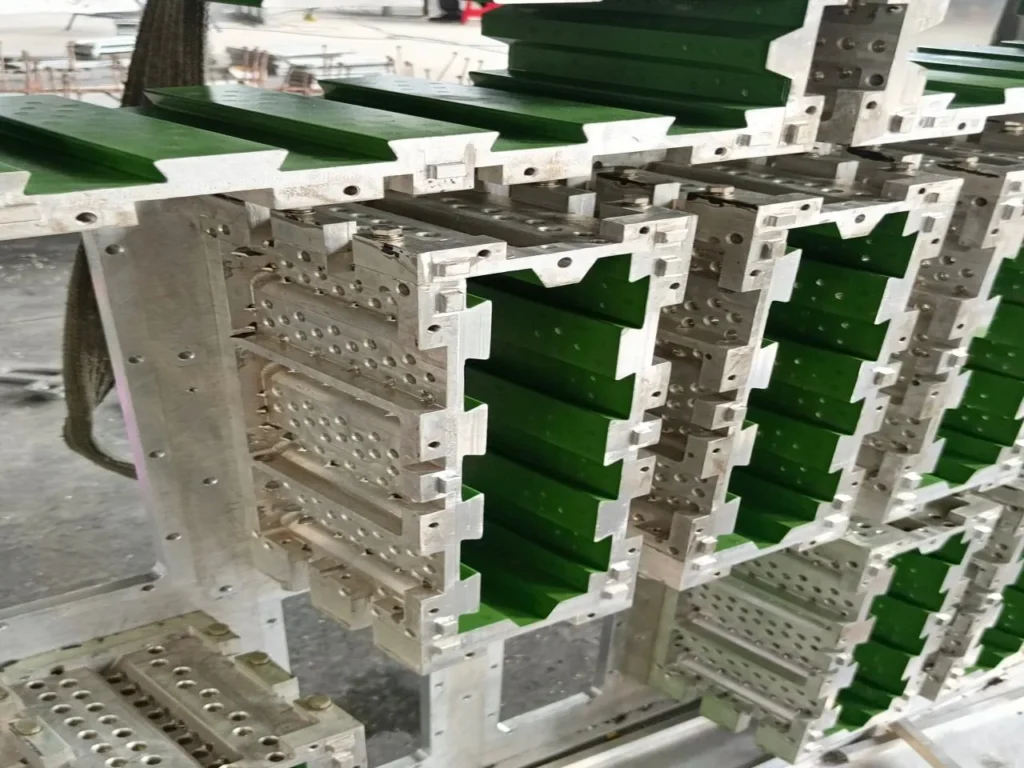
Custom molds for high-volume applications can incorporate advanced features that drive down per-part costs: conformal cooling channels that reduce cycle times by 30-50%, optimized venting that eliminates fill delays, and balanced multi-cavity designs that multiply output per machine hour.
Lead Time and Development Timeline
Time-to-market pressures often drive mold selection as much as cost does.
Standard/Simple Mold Lead Times
| Mold Type | Typical Lead Time |
|---|---|
| Die-cut tooling | 1-3 weeks |
| Simple two-piece aluminum mold | 2-4 weeks |
| Basic steel mold | 4-6 weeks |
Standard processes allow for faster production and delivery compared to custom molding.
For urgent prototyping or low-volume runs where speed matters more than precision, simpler tooling gets parts in hand faster.
Custom Mold Development Timeline
Custom foam molds require significantly more time, primarily because of the engineering and validation phases that precede manufacturing.
The correct custom mold process follows a structured sequence:
Phase 1: DFM (Design for Manufacturing) Analysis
Before any steel is cut, engineers analyze your part design for manufacturability. DFM analysis can identify potential molding problems early, such as complex geometries, deep undercuts, uneven wall thickness, or sharp corners—all of which increase molding difficulty or require expensive mold modifications.
By proactively optimizing wall thickness, adding draft angles, and eliminating unnecessary features, DFM reduces the risk of sink marks, warpage, or incomplete fills.
Phase 2: Tooling Design and Material Selection
After DFM approval, the mold is designed in full 3D CAD, including all structural components, vents, cooling channels, ejector pins, cavities, cores, parting lines, and gating systems.
Material selection is finalized based on expected production volume.
Phase 3: CNC Machining and Manufacturing
Most mold components undergo computer-controlled milling and drilling to achieve necessary dimensions and surface finishes.
For complex geometries that CNC cannot handle, electrical discharge machining (EDM) provides precision for intricate shapes, tiny details, undercuts, or hardened steel molds.
Phase 4: Heat Treatment and Assembly
Steel mold components are heat-treated to harden the steel and improve wear resistance.
All components are then assembled with extreme precision, as even minor surface defects or misalignment can cause flash, demolding difficulties, or reduced mold life.
Phase 5: Trial Molding and Validation
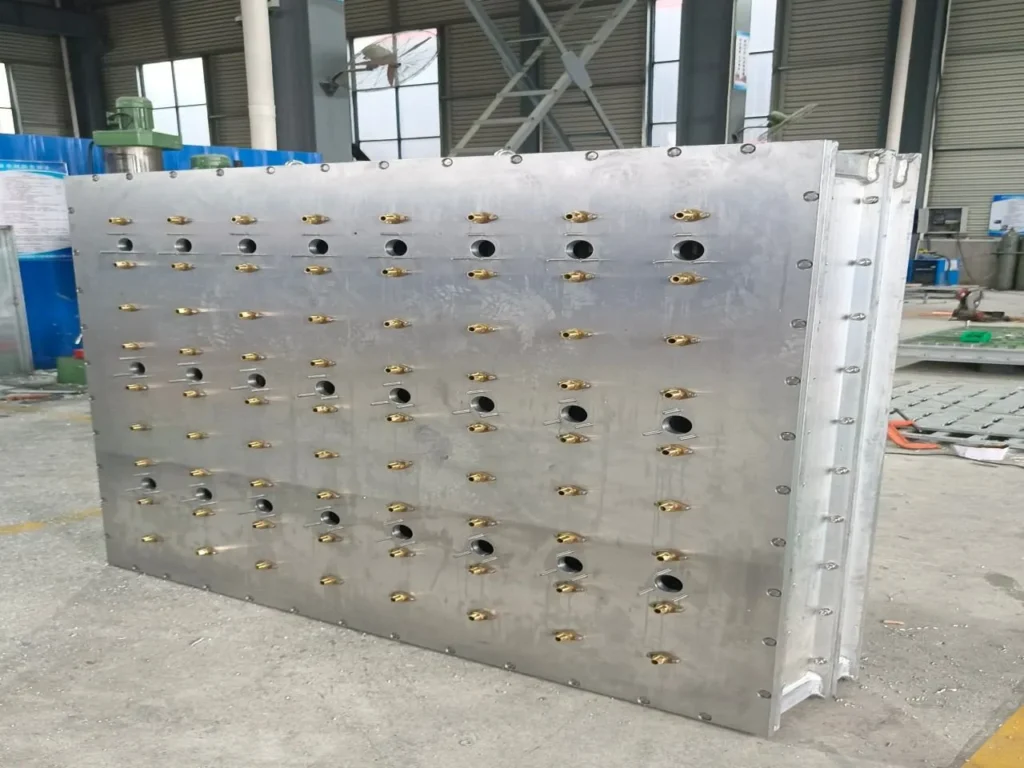
The completed mold undergoes trial runs to verify performance, including steam distribution uniformity, cycle time achievement, and part quality. Any issues are identified and corrected before the mold ships.
Total timeline for a custom foam mold typically ranges from 6-12 weeks for aluminum to 10-16 weeks for complex steel molds.
For buyers working with Chinese suppliers, the lead time for standard products with standard packaging is approximately 45-60 days after receiving order deposit.
Part Complexity and Design Requirements
The geometry of your foam part is the ultimate determinant of whether a standard approach can work at all.
When Standard Molds Suffice
Standard/simple molds work well for:
- Rectangular or square blocks and sheets
- Simple trays with straight walls
- Basic cylindrical or tubular shapes
- Parts where surface finish is not critical
- Parts without undercuts or side actions
- Applications where ±1-2mm tolerances are acceptable
If your part fits these descriptions, a simple mold will likely meet your needs at a fraction of the cost of a custom solution.
When Custom Molds Are Non-Negotiable
Custom molds become mandatory when:
Complex geometries are required. Molded foam is suggested for challenges that require more intricate and complex designs, where a flat piece of foam would not enhance the functionality and efficiency of the equipment.
Intricate designs may require advanced manufacturing techniques, which can add to cost and time.
Tight tolerances are specified. When dimensional accuracy is critical for assembly or performance, only a custom mold precision-machined to your exact specifications can deliver consistent results.
Variable density zones are needed. Many advanced applications—automotive seat cushions with soft centers and firm perimeters, protective packaging with reinforced corners—require different foam densities within the same part.
Achieving variable density molding demands custom-designed steam distribution and cavity geometry.
Multi-material or insert molding is required. Custom molding can accommodate unique requirements such as integrated mounting points, service access panels, and multi-material constructions that standard tooling cannot handle.
Surface aesthetics matter. For consumer-facing products where appearance is important, custom molds with polished cavities and optimized gate placement produce far superior surface finishes.
Quality,Performance of Custom Foam Mold and Standard Foam Mold
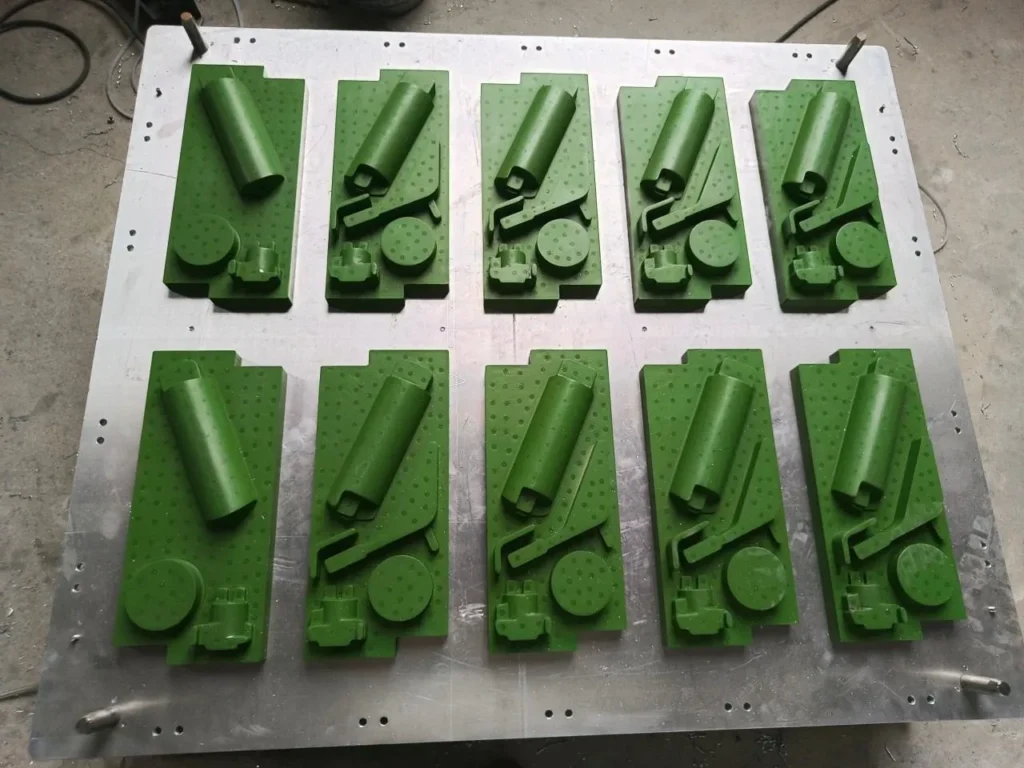
The quality gap between custom and standard/simple molds widens as production scales up.
Part-to-Part Consistency
Standard molds produce acceptable parts, but variability between cavities and across production runs is higher.
Custom molds, with their precision-machined surfaces, balanced gating, and optimized cooling, deliver dramatically better consistency.
For high-volume production where every part must be identical, custom molds with CNC-machined cavities ensure repeatability that simpler tooling cannot achieve.
Tight tolerances between mold components—cores, cavities, ejector systems, and guides—minimize flash and prevent dimensional drift over time.
Material Properties and Density Control
Custom molds enable precise control over final part properties. With standard molds, density distribution is largely determined by the mold’s inherent geometry and filling pattern.
Custom designs allow engineers to engineer density gradients intentionally—creating softer zones for comfort, firmer zones for structural support, all within a single molding cycle.
Surface Finish
The surface finish of foam parts matters for both aesthetics and functionality.
Custom molds can be polished to specific SPI (Society of the Plastics Industry) finish grades, ranging from matte textures to mirror-polished surfaces.
Standard molds typically produce standard surface textures without this level of refinement.
Mold Life and Durability
Well-maintained custom molds made from appropriate materials last for hundreds of thousands—or millions—of cycles.
Steel molds can endure up to 500,000+ parts, while properly processed aluminum molds withstand 1-2 million cycles.
Simpler molds, particularly those designed for short runs, have correspondingly shorter service lives.
Design for Manufacturing (DFM): The Custom Mold Advantage
The DFM process is perhaps the strongest argument for custom molds—not because of what the mold does, but because of the engineering expertise that comes with it.
A proper custom mold development process follows a structured DFM methodology:
Step 1: 3D design and technical confirmation. Your concept, sample, or drawing is converted into detailed 2D/3D designs, with clear product structure and specifications established.
Step 2: Manufacturing optimization. The design is optimized to ensure it can be efficiently produced at scale, focusing on material efficiency, cost control, and production stability.
Step 3: Prototype development. Using 3D printing, CNC machining, or sample molds, physical prototypes allow evaluation of fit, comfort, structure, and dimensions before tooling investment.
Step 4: Tooling development. Necessary molds and fixtures are developed, including base molds for key sizes and custom fixtures for consistency.
Step 5: Sample testing and compliance. Initial samples undergo internal testing for material compliance with regulations such as REACH or RoHS, with optional third-party labs for performance verification.
Step 6: Final approval and production preparation. After full-size tooling completion, final “golden sample” approval establishes a clear reference standard for mass production, with standardized workflows, quality control standards, and packaging requirements.
This systematic approach delivers stable tooling for consistent production and better control over product quality—benefits that simple molds, manufactured without this rigorous process, simply cannot provide.
Which Mold Is Right for You?
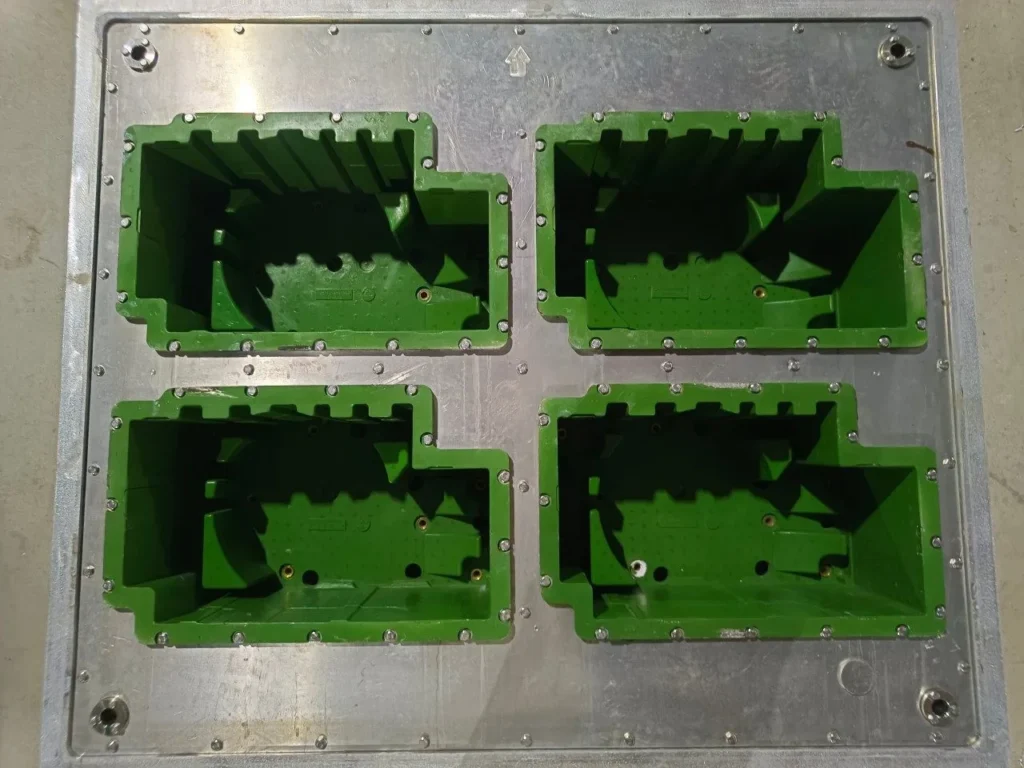
Use this systematic framework to evaluate your specific situation:
What is your annual production volume?
- < 5,000 parts: Start with standard/simple tooling. Custom molds are overkill.
- 5,000-50,000 parts: Consider aluminum custom molds. The upfront investment is manageable and the quality improvements matter.
- 50,000-500,000+ parts: Custom steel molds are your most cost-effective option. The per-part cost advantage is decisive.
How complex is your part geometry?
- Simple rectangles, blocks, basic trays: Standard/simple mold can work.
- Curved surfaces, undercuts, organic shapes: Custom mold required.
- Variable density zones: Custom mold required.
- Tight tolerances (±0.1mm or tighter): Custom mold required.
What is your quality requirement?
- Cosmetic surfaces critical: Custom mold with appropriate surface finish.
- Dimensional consistency across millions of parts: Custom mold required.
- Basic functionality with visible defects acceptable: Standard mold may suffice.
What is your time-to-market?
- Rapid prototyping needed now: Standard/simple tooling or die-cut.
- 6-12 weeks acceptable: Custom aluminum mold.
- 3-6 months acceptable: Custom steel mold with full validation.
What is your budget?
- Limited upfront capital; low volume: Standard/simple mold.
- Able to invest in tooling for long-term savings: Custom mold.
- Leveraging global sourcing: Consider Chinese suppliers who offer steel custom molds at aluminum prices.
Conclusion
The choice between a custom foam mold and a standard foam mold ultimately depends on four interconnected factors: production volume, part complexity, quality requirements, and available timeline.
Choose a standard or simple mold when you are in low-volume production, prototyping, or budget-constrained; when part geometries are simple and tolerances are loose; and when speed-to-market matters more than part perfection.
Choose a custom mold when high-volume mass production requires consistent quality across millions of parts; when complex geometries, undercuts, or variable density zones are non-negotiable; when tight tolerances and aesthetic surface finishes matter; and when you can accept longer development timelines for superior long-term economics.
The true cost of a mold is not its purchase price—it is the purchase price divided across the number of good parts it produces, plus the operating costs (cycle time energy consumption, scrap rates, maintenance requirements) incurred over its lifetime.
By this measure, custom molds often prove not just better, but cheaper—particularly for medium-to-high volume production where their precision, efficiency, and durability translate directly into lower per-part costs.
For buyers willing to work with reputable Chinese suppliers, the economics tilt even further toward custom molds.
When steel custom molds are available at prices comparable to aluminum molds from domestic sources, the traditional trade-offs between upfront cost and long-term durability collapse.
You can get both—affordable tooling and production-ready durability—by sourcing strategically.
Ultimately, the best mold is the one matched to your specific production reality. Use the decision framework above, engage suppliers early in the DFM process, and let the numbers guide your choice.
The right mold will serve you for years—delivering consistent parts, predictable costs, and reliable production.
The wrong mold will create problems that no amount of process optimization can fully overcome. Choose wisely.
If you have any questions regarding EPS/EPP/ETPU molds, please feel free to contact us at Transfoam; we will provide you with the perfect solution.