
EPS mold industry trends is undergoing a transformative period in 2026.
Driven by evolving environmental regulations, technological breakthroughs, shifting market dynamics, and material innovation, the landscape for EPS mold manufacturing—and the broader EPS industry it serves—is changing faster than at any point in the past decade.
For mold makers, EPS product manufacturers, and downstream users across packaging, construction, automotive, and casting sectors, understanding the 2026 trend landscape is not optional; it is essential for strategic planning, competitive positioning, and long-term survival.
What is EPS Mold?
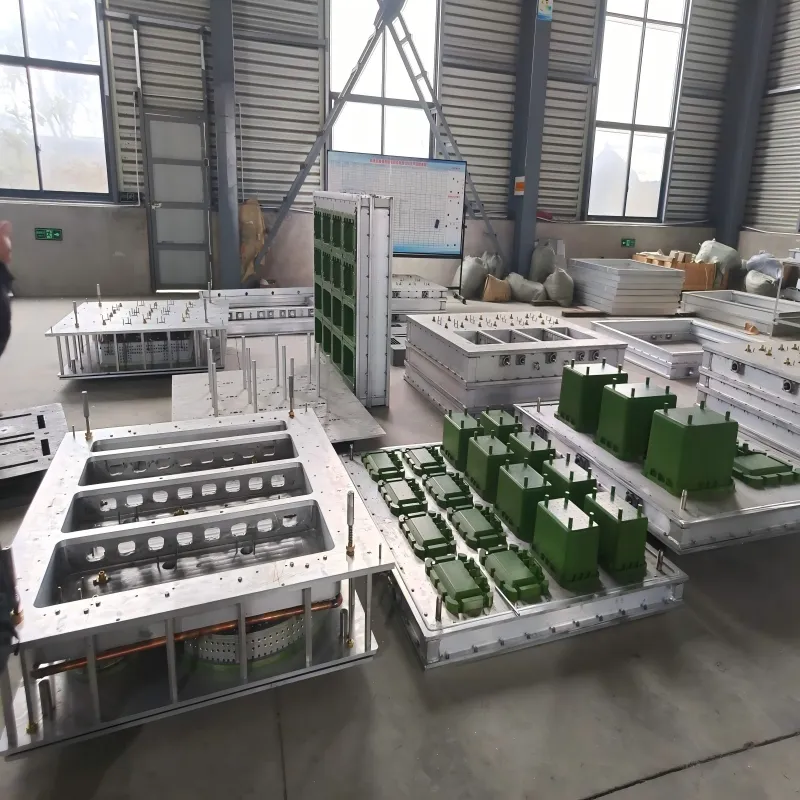
EPS mold, refers to a mold used for shaping expanded polystyrene (EPS) foam. EPS is a lightweight, rigid foam material commonly used in packaging, insulation, and construction.
An EPS mold is typically made of metal or aluminum and consists of two or more parts that come together to form a cavity in the shape of the desired product.
During production, EPS beads are placed inside the mold and expanded using steam, causing them to fuse and take the shape of the mold.
How EPS Mold Works
The EPS molding process is a three-stage method that turns raw plastic beads into solid foam parts. Each stage is critical for quality and consistency.
| Stage | Description | Key Purpose |
|---|---|---|
| Pre-Expansion | Raw EPS beads are heated with steam in a pre-expander, causing them to expand to 20-50 times their original size. | To determine the final density, material consumption, and cell structure of the foam. |
| Aging (Stabilization) | Expanded beads are stored in silos for several hours to days to allow air to replace the blowing agent inside, which stabilizes internal pressure and moisture. | To ensure the beads are stable and will fuse properly during molding. |
| Molding | The aged beads are blown into an EPS mold. Steam is then forced into the mold cavity through narrow vents, causing the beads to expand further and fuse together into the shape of the cavity. | To form the final product or a large block that will be cut later. |
After molding, the process concludes with a cooling phase where air, vacuum, or water is used to cool the mold so the part maintains its shape.
For large blocks, a cutting phase follows, using hot wires to slice the block into sheets or custom shapes.
Main Applications
EPS molds are essential equipment across multiple industries due to the material’s unique properties of being lightweight, shock-absorbent, and an excellent thermal insulator.
- Protective Packaging: The most common use, creating custom, form-fitting cushions to protect electronics, appliances, and medical devices during shipping. The mold ensures a perfect fit, preventing damage from impacts.
- Construction: Used to produce insulation boards, lightweight concrete forms (ICFs), and decorative architectural elements that help improve a building’s energy efficiency.
- Lost-Foam Casting: This is a specialized industrial application. An EPS pattern is formed using a mold and then embedded in sand. When molten metal is poured in, the EPS vaporizes, leaving a highly accurate metal casting with a smooth surface finish.
- Automotive & Consumer Goods: Creates lightweight interior components like dashboards and headrests, as well as various products like toys and flotation devices.
Design & Material Considerations
Designing an EPS mold requires careful planning to ensure the final product can be easily and precisely manufactured.
- Key Design Features: Molds are designed with draft angles of 1° to 1.5° on interior and exterior surfaces to ensure the part can be easily ejected without damage.
- Shrinkage Factor: Because EPS shrinks as it cools and solidifies, the mold cavity must be made slightly larger than the desired final product. This compensation size is typically 1-5‰ (0.1%-0.5%) larger.
- Material Choice: EPS molds are almost exclusively made from aluminum.
- Aluminum Alloys: The standard choice because they are cost-effective, lightweight, and offer excellent thermal conductivity. This allows for fast heating and cooling cycles, which is crucial for production efficiency.
- Steel Molds: While available, steel molds are less common for EPS. They offer greater durability but are more expensive and have slower heat transfer, making them only economical for extremely high-volume, long-run production.
Types of EPS Molds
Depending on the product and production needs, there are different types of molds.
- Block Molds: Used to produce large, solid blocks of EPS foam, which are then cut into standard-sized sheets or boards.
- Customized (Shape) Molds: Designed for a specific, finished product, like a protective electronics insert.
- Multi-Cavity Molds: Produce multiple identical parts in a single molding cycle, which greatly increases production efficiency and lowers the cost per part.
- Hot Wire Molds: Not a mold in the traditional sense, but a tool that uses heated wires to cut shapes from EPS blocks.
In summary, an EPS mold is a precision aluminum tool that uses steam and pressure to fuse expanded polystyrene beads into a vast array of products.
Its design, from draft angles to material properties, is optimized for this unique process, making mass production of custom foam shapes highly efficient.
Market Growth and Scale
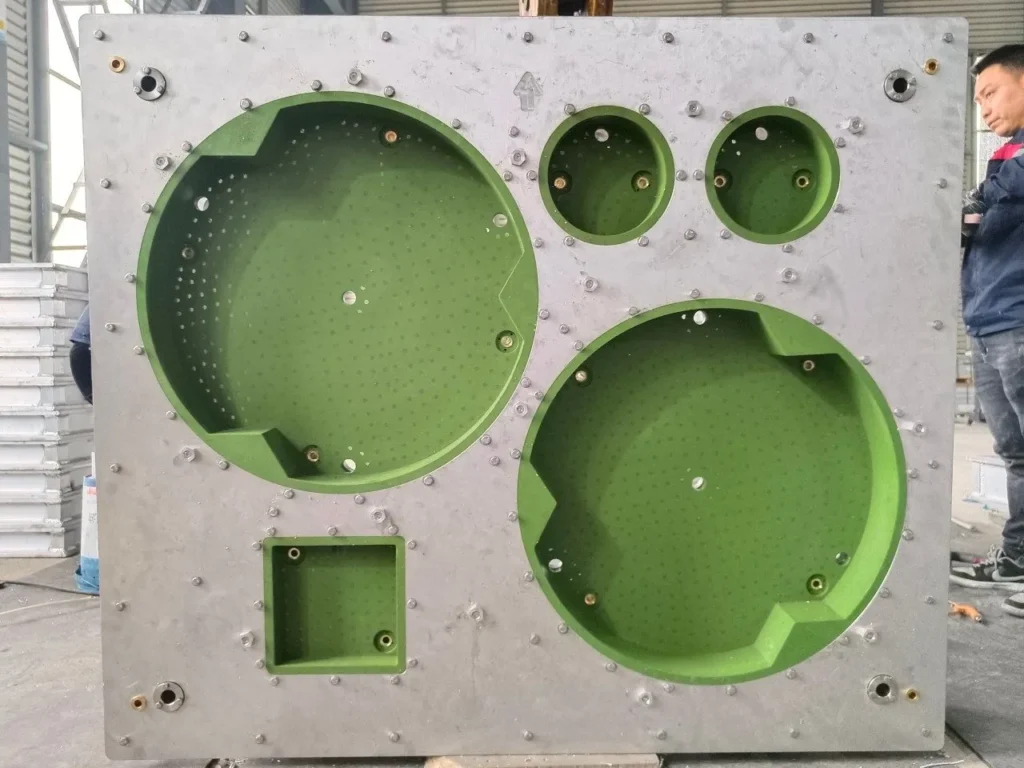
The expanded polystyrene market—the material that EPS molds produce—continues its steady global expansion.
In 2026, the global EPS market is estimated at 13.23 million tons, up from 12.84 million tons in 2025, with projections to reach 15.35 million tons by 2031, representing a 3.01% compound annual growth rate (CAGR).
In value terms, the global expanded polystyrene market was valued at $6.00 billion in 2025 and is projected to reach $7.30 billion by 2036, growing at a 1.8% CAGR.
The United States, a key regional market, shows stronger growth momentum.
The U.S. EPS industry was valued at $1.85 billion in 2025, projected to reach $2.35 billion by 2036 at a 2.2% CAGR—outpacing the global average.
In the expandable polystyrene segment, which directly feeds the molding industry, demand is estimated to grow to $19.85 billion in 2026 and $34.2 billion by 2036.
These growth figures directly translate into increased demand for EPS molds.
Every new EPS product requires tooling, and as global EPS consumption rises—particularly in emerging markets for construction insulation and logistics packaging—the EPS mold manufacturing sector expands in lockstep.
The Chinese EPS molding machinery market is a significant driver of this growth. One major Chinese manufacturer expects to guarantee production of at least 15,000 tons of EPS materials per month upon the completion of its facility expansion in 2026.
This scale of production requires substantial mold-making capacity, positioning Chinese suppliers at the center of the global EPS mold supply chain.
Beyond EPS itself, the broader molding industry is also expanding. Industry data shows that the domestic mold market in China exceeded RMB 380 billion in 2025, with the precision mold market alone expected to surpass RMB 280 billion in 2026, with high-end precision molds increasing their share to over 45%.
Global mold manufacturing output is projected to reach $3.768 billion by 2032, growing at a 6.9% CAGR through the forecast period.
Technological Innovation in EPS Molding Machinery
Servo Drives and Intelligent Control Systems
Energy efficiency has emerged as a primary competitive differentiator in EPS molding technology.
Traditional hydraulic molding machines experience significant energy losses during standby, pressure-holding, and cooling phases.
In 2026, the industry has largely transitioned to servo-driven and frequency-conversion control technologies.
Servo systems adjust pump speed and output flow based on actual load requirements, reducing energy consumption to near zero during standby.
This evolution is part of a broader shift where modern molding machines are no longer single-purpose production equipment but integrated, intelligent solutions combining precision control, energy conservation, and automated production.
Steam Recovery Systems
Steam remains the primary energy input for EPS molding, and its efficient use directly impacts production costs. In 2026, steam recovery systems have become standard on advanced EPS molding machines.
Manufacturers operating multiple EPS molding machines around the clock routinely report reductions of 20-30% in primary fuel consumption for steam generation after implementing robust steam recovery systems.
This technology, a hallmark of European-standard EPS machines, is increasingly being adopted by manufacturers worldwide as energy costs remain volatile and environmental stewardship becomes a business imperative.
High-Precision Temperature Control
Quality EPS products require precise thermal management throughout the molding cycle.
New-generation EPS board molding machines feature high-precision temperature sensors that provide real-time feedback of mold cavity temperature, ensuring EPS beads fully fuse within the optimal temperature range.
The result is smoother surfaces, better bead-to-bead welding, and elimination of over-melting or under-cured defects. This level of control is increasingly non-negotiable for customers in automotive, electronics packaging, and medical applications.
European-Type Block Molding Machines
Large-format EPS blocks remain essential for the construction insulation market. In 2026, European-type block molding machines represent the state of the art for mass production of large, uniform EPS blocks.
These specialized machines transform pre-expanded EPS beads into solid, dense blocks through controlled expansion, fusion, and cooling processes.
Unlike vertical molding machines, European-type machines optimize material flow and density distribution across large cross-sections, directly impacting the thermal performance of the final insulation boards.
Automated Integration Solutions
Beyond individual machine upgrades, 2026 sees widespread adoption of fully automated EPS packaging lines.
These systems integrate high-stability molding cores with intelligent material handling, post-processing, and data management systems.
The foundation of successful automated lines is not the robot itself, but the seamless integration of all components into a manufacturing asset delivering superior productivity, reliability, and profitability.
Environmental Regulations Reshaping the Industry
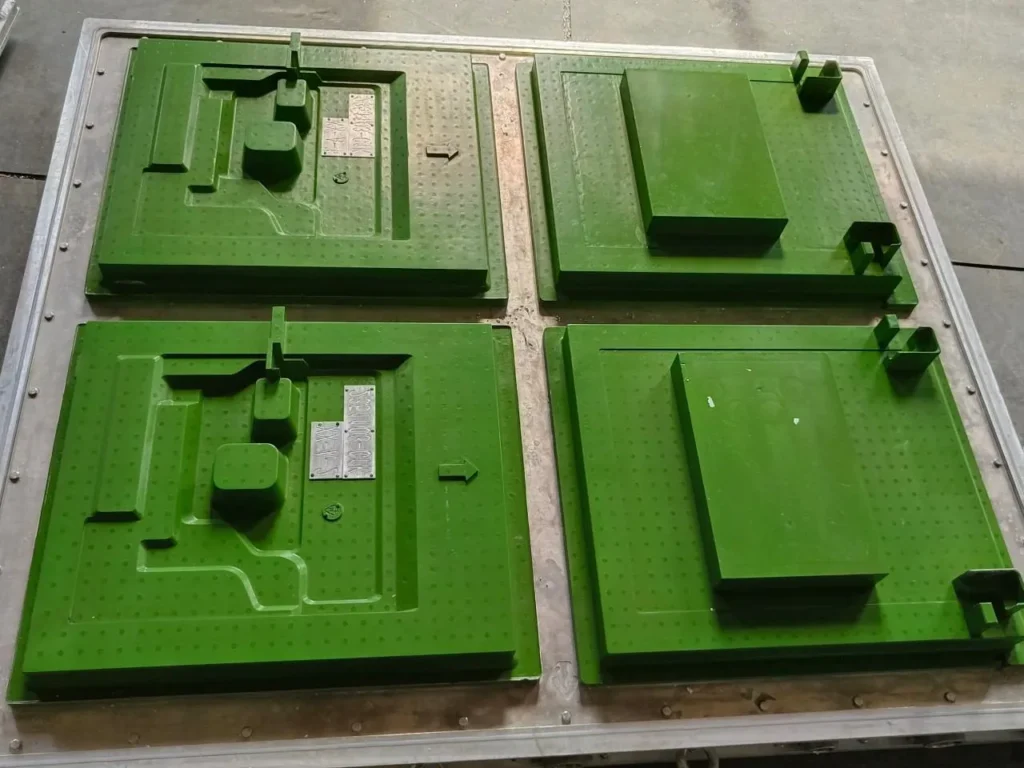
Regulatory pressure is arguably the most disruptive force affecting the EPS industry in 2026.
New regulations in the European Union and tightening standards in China and other major markets are forcing fundamental changes in how EPS products are made, used, and disposed of—with direct implications for mold manufacturers.
EU Packaging and Packaging Waste Regulation (PPWR)
On August 12, 2026, the European Union’s Packaging and Packaging Waste Regulation (PPWR) enters into full implementation.
This regulation, officially designated Regulation (EU) 2025/40, replaces the nearly thirty-year-old Packaging Directive and introduces sweeping changes affecting EPS packaging.
The most consequential provision for the EPS industry is the phased restriction on EPS in food-contact packaging. Beginning February 2029, food containers and beverage cups made from EPS and XPS will face market restrictions in the EU.
While this restriction does not apply immediately, the 2026 implementation date triggers a three-year transition period during which packaging manufacturers and their mold suppliers must adapt or lose access to the European market.
Additionally, PPWR imposes constraints on e-commerce packaging: effective from August 12, 2026, all packages entering the EU market must have void volume—the empty space inside the package—not exceeding 50% of the total package volume.
For EPS packaging mold manufacturers, this means designing shapes and cavities that maximize product-to-package density, minimizing wasted space.
EU Recycled Content Mandates
Complementing PPWR, the EU has mandated that all plastic packaging must contain at least 30% recycled material by 2030.
This creates a massive market opportunity for recycled EPS (rEPS) while simultaneously challenging mold makers to design tooling that can handle variable material properties between virgin and recycled feedstocks.
EPS achieves a recycling rate of approximately 40% today, predominantly through converting EPS packaging waste into construction products, but meeting the 30% recycled content mandate will require further infrastructure and technology development.
Carbon Border Adjustment Mechanism (CBAM)
The EU’s Carbon Border Adjustment Mechanism (CBAM) is driving European manufacturing toward accelerated decarbonization and narrowing the cost gap between sustainable materials and conventional alternatives.
For non-European EPS mold makers exporting to Europe, understanding and documenting the carbon footprint of their manufacturing processes will become increasingly important for maintaining market access.
China’s Revised EPS National Standards
China, the world’s largest EPS producer and mold manufacturer, is not standing still on environmental regulation.
The implementation of revised EPS national standards in China will have profound effects on domestic industry: elimination of obsolete production capacity, increased investment in R&D, and improved product quality levels that provide solid support for building energy conservation and green building materials development.
The “Dual Carbon” Impact on Mold Materials
China’s carbon peaking and carbon neutrality (“Dual Carbon”) targets are creating rigid constraints on mold material selection.
Mold steel manufacturing—a high-energy-consumption activity—faces stricter limitations. Simultaneously, this policy environment is spurring development of specialized molds for recycled plastics, opening new market segments.
Advances in EPS Recycling Technology
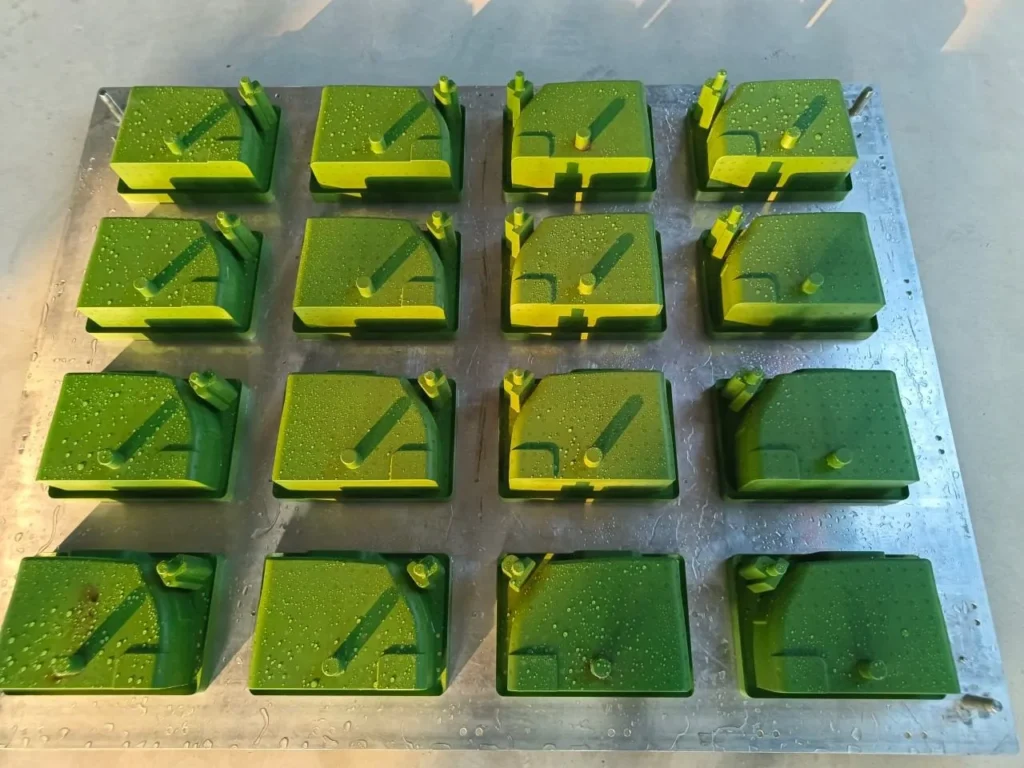
The circular economy is not merely a regulatory compliance issue—it is an economic opportunity. EPS recycling technologies advanced significantly in 2025-2026, with implications for EPS mold design.
Mechanical Recycling for Clean Streams
EPS already achieves a recycling rate of approximately 40% today, primarily through converting packaging waste into construction products.
Municipal recycling programs, such as the Foam Cycle systems already deployed across multiple U.S. states, enable efficient collection and densification of EPS waste, turning a global waste challenge into local recycling solutions.
In Europe, companies like Austrotherm have fully commissioned EPS and XPS recycling plants, expecting to return around 100 tonnes of insulation waste to the production cycle in 2026 after a €1.2 million investment.
Chemical Recycling for Contaminated Streams
For contaminated EPS waste—particularly from external thermal insulation composite systems (ETICS)—mechanical recycling is unsuitable.
Emerging chemical recycling technologies, particularly depolymerization via pyrolysis and solvent-based processes, offer promising alternatives for handling contaminated waste streams.
Reuse of EPS Insulation
A 2026 study on reusing EPS insulation from buildings and infrastructure found that reuse provides greater greenhouse gas emission reduction potential than recycling alone, primarily through avoided virgin EPS production and reduced processing requirements.
For mold makers, the growth of reuse markets implies longer product lifecycles and potentially lower long-term demand for new tooling—but also opportunities in designing for disassembly and recycling.
Competitive Landscape and Regional Dynamics
China’s Dominance in EPS Mold Manufacturing
China remains the undisputed global hub for EPS mold manufacturing. Chinese manufacturers combine competitive pricing—typically 30-50% lower than Western counterparts for comparable quality—with technical sophistication and the ability to absorb design changes mid-production.
Major Chinese suppliers have built extensive patent portfolios: one leading manufacturer holds 48 utility model patents and 6 invention patents, with products exported to over 50 countries including Russia, India, Vietnam, and Brazil.
Another established Chinese manufacturer reports annual output of approximately 2,200 sets of machinery and 2,000 sets of EPS molds, with exports to more than 103 countries.
The scale and global reach of Chinese EPS mold manufacturers position them as indispensable partners for international buyers.
Vertical Integration as a Competitive Strategy
The EPS industry in 2026 sees increasing vertical integration, with mold manufacturers expanding into related equipment and materials.
The trend toward stronger links between material suppliers, mold makers, and end users reflects the industry’s recognition that EPS block molding machines will become more efficient, smarter, and cleaner, with interdependent supply chains driving mutual advancement.
Emerging Manufacturing Destinations
Vietnam and other Southeast Asian countries are gradually emerging as alternative manufacturing destinations for EPS molding.
Labor costs in Vietnam run 10-15% below China, and the country is increasingly participating in regional exhibitions such as VietnamPlas, which in 2026 featured multiple EPS molding machine and mold suppliers from across Asia.
However, Vietnam currently lacks the depth of ancillary suppliers required for complex EPS mold manufacturing, making China the preferred choice for technically demanding projects.
European and North American Markets
European and North American manufacturers continue to hold advantages in certain high-end EPS molding applications, particularly those requiring the most stringent quality certifications and regulatory compliance.
The shift toward steam recovery systems, which are hallmarks of European-standard EPS machines, reflects the premium placed on energy efficiency and environmental performance in these markets.
Material Science Advancements for High-Performance EPS Molds
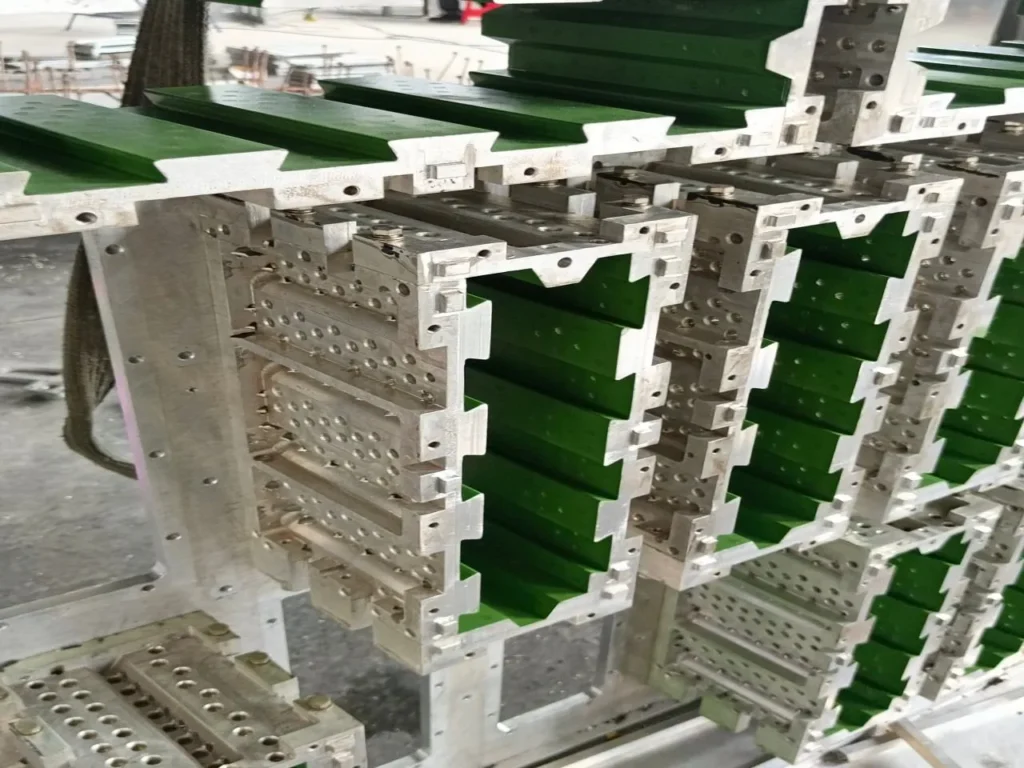
The materials used to manufacture EPS molds directly determine tooling performance, longevity, and cost-effectiveness.
High-Performance Mold Steels
The mold steel market in 2026 sees continued development of high-performance grades specifically optimized for plastic molding applications.
Modified H13 steels, powder metallurgy (PM) steels, and high-conductivity steels offer improved thermal resistance and superior abrasion performance, particularly valuable for demanding productions such as high-speed, high-volume EPS molding.
Corrosion-Resistant and Polishable Steels
Recent development trends focus on corrosion-resistant plastic mold steels with improved characteristics for the plastic processing industry.
Steels that combine polishability to mirror finish with improved thermal conductivity, high toughness and hardness, and very good corrosion resistance are increasingly specified for the most demanding EPS mold applications.
Aluminum vs. Steel for EPS Molds
The trade-off between aluminum and steel for EPS molds remains application-dependent.
High-quality molds are typically made from aluminum or steel, materials that offer excellent heat conductivity, robustness, and resistance to wear and tear, ensuring longer mold lifespan.
Molds with good thermal conductivity prevent inconsistencies and warping in EPS products.
Aluminum molds offer faster heat transfer and lower cost but shorter service life; steel molds have higher upfront cost but dramatically longer life, making them more economical for high-volume production.
Conclusion
The EPS mold industry in 2026 presents a complex landscape of opportunity and challenge.
For mold manufacturers, the path forward requires investment in digital technologies, commitment to sustainability, and strategic positioning in global markets.
For EPS product manufacturers, choosing the right mold partner is more critical than ever—a decision that affects not just product quality and cost but regulatory compliance and access to key markets.
The three overriding themes of 2026 are clear: digitalization through digital twins and smart manufacturing; sustainability through energy efficiency, recycling, and regulatory compliance; and globalization with China as the central manufacturing hub complemented by emerging regional suppliers.
EPS molds remain essential tools across packaging, construction, automotive, lost foam casting, and beyond.
If you have any questions regarding EPS/EPP/ETPU molds, please feel free to contact us at Transfoam; we will provide you with the perfect solution.