
Foam Concrete Blocks have become increasingly popular in modern construction because they combine lightweight performance, thermal insulation, durability, and cost efficiency.
Unlike traditional concrete blocks, foam concrete blocks contain a large number of small air bubbles, which significantly reduce their weight while maintaining sufficient strength for many building applications.
With growing demand for energy-efficient and sustainable construction materials, many builders, manufacturers, and DIY enthusiasts are interested in understanding how to make foam concrete blocks.
What Are Foam Concrete Blocks?
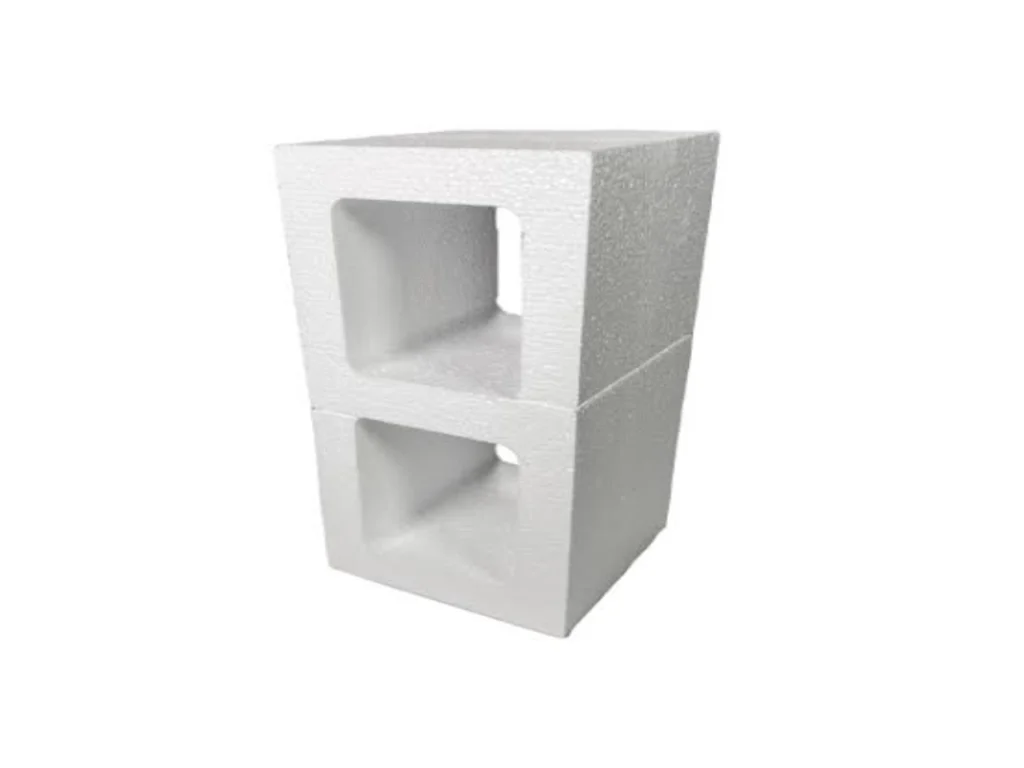
When people refer to foam concrete blocks, they are usually talking about one of two completely different construction technologies. Because the terminology overlaps, it is helpful to look at both:
- Cellular Lightweight Concrete (CLC) Blocks: Actual concrete that contains microscopic air bubbles, making the concrete itself foamy and lightweight.
- Insulated Concrete Forms (ICF): Hollow blocks made of expanded polystyrene (EPS) foam that are stacked like Legos and then filled with standard liquid concrete.
Here is a breakdown of how both technologies work, their properties, and their common uses.
1. Cellular Lightweight Concrete (CLC) Blocks
Often referred to directly as foam concrete blocks, these are solid masonry blocks where traditional heavy aggregates (like gravel or crushed stone) are replaced by stable air voids.
Key Properties
- Density: Typically ranges between $800 \text{ kg/m}^3$ and $1200 \text{ kg/m}^3$ for masonry blocks, which is less than half the density of standard concrete.
- Workability: Unlike dense concrete, CLC blocks can be easily drilled, nailed, or sawed using standard woodworking tools.
- Insulation: The trapped air pockets act as excellent thermal and acoustic barriers, significantly reducing heating and cooling costs.
- Fire Resistance: They are highly fire-resistant and non-combustible.
Common Uses
- Interior partition walls in high-rise buildings (to reduce the overall dead load of the structure).
- Lightweight outer wall envelopes in residential construction.
- Soundproofing and thermal barrier walls.
2. Insulated Concrete Forms (ICF)
Often called “foam blocks for concrete,” ICFs are structural building blocks made of rigid plastic foam. Instead of the block being made of concrete, the block is made of foam, which acts as a permanent mold for poured concrete.
Key Properties
- Exceptional Energy Efficiency: The double-layer of foam insulation eliminates thermal bridging, making the building incredibly airtight and energy-efficient.
- Structural Strength: Because the core is solid reinforced concrete, ICF walls are highly resistant to natural disasters like hurricanes, tornadoes, and earthquakes.
- Speed of Construction: Stacking lightweight foam blocks is faster and less labor-intensive than erecting traditional wood or metal concrete formwork.
Common Uses
- Foundations and basements (where moisture and thermal control are vital).
- Entire exterior wall systems for energy-efficient homes and commercial buildings.
- Safe rooms and disaster-resistant structures.
Advantages of Foam Concrete Blocks
Before learning how to make foam concrete blocks, it is important to understand why this material is widely used.
1. Lightweight Construction
The biggest advantage of foam concrete blocks is their low weight.
Compared with traditional concrete blocks, foam concrete blocks are:
- Easier to transport
- Easier to install
- Less demanding on building structures
- Faster to handle on construction sites
Lower weight can significantly reduce labor and transportation costs.
2. Excellent Thermal Insulation
The air bubbles inside foam concrete create natural insulation.
Benefits include:
- Reduced heat transfer
- Improved indoor comfort
- Lower energy consumption
- Better building efficiency
This makes foam concrete suitable for energy-efficient construction projects.
3. Fire Resistance
Foam concrete is a cement-based material and provides excellent fire resistance.
It can help:
- Slow heat transmission
- Improve building safety
- Protect structural components
4. Good Sound Insulation
The porous structure of foam concrete helps reduce sound transmission.
Applications include:
- Apartment partitions
- Office buildings
- Commercial construction
5. Environmentally Friendly
Foam concrete can incorporate recycled materials such as:
- Fly ash
- Industrial by-products
- Recycled mineral materials
Its lightweight nature also reduces transportation energy consumption.
Materials Needed to Make Foam Concrete Blocks
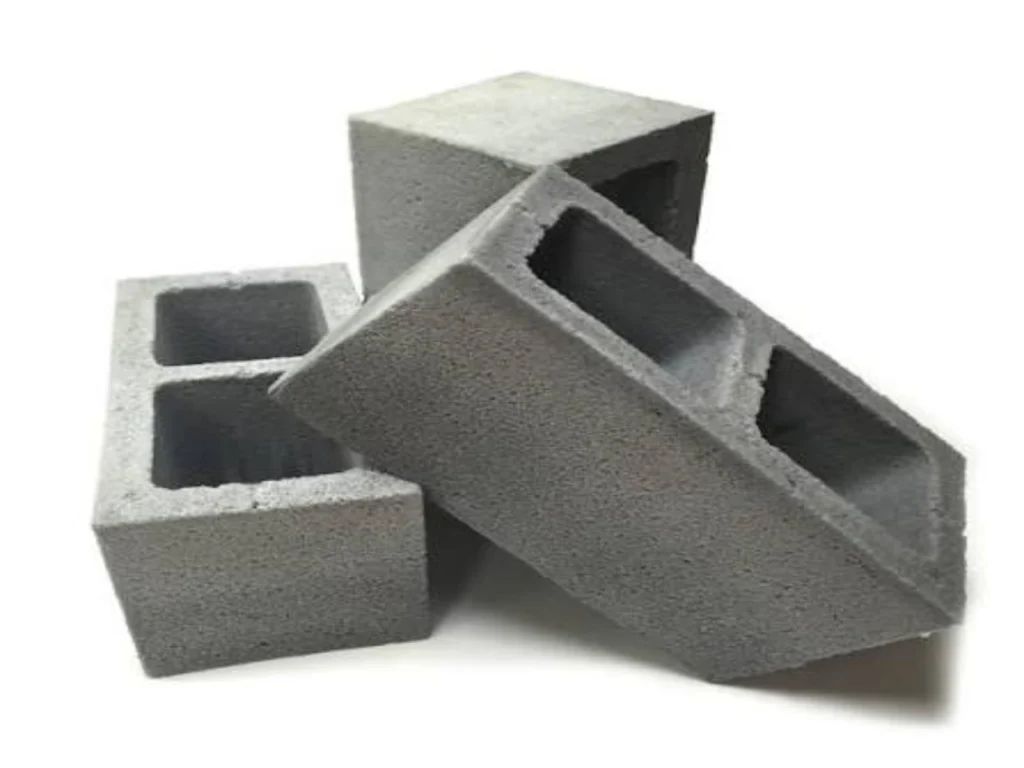
The quality of foam concrete blocks depends heavily on material selection.
1. Cement
Cement acts as the main binding material.
Common choices include:
- Portland cement
- General-purpose cement
The cement content affects:
- Strength
- Durability
- Density
2. Sand or Fine Aggregate
Fine materials provide structure and improve strength.
Common materials include:
- Fine sand
- Fly ash
- Limestone powder
Some lightweight foam concrete products use little or no sand to achieve lower density.
3. Water
Water activates the cement reaction.
The water-to-cement ratio affects:
- Strength
- Workability
- Drying time
Too much water can reduce strength, while too little makes mixing difficult.
4. Foam Agent
The foam agent is the key ingredient that creates the lightweight structure.
A foam generator mixes the foaming agent with water and air to produce stable foam.
Common foam agents include:
- Protein-based foaming agents
- Synthetic foaming agents
A good foam agent should provide:
- Stable bubbles
- Uniform distribution
- Long-lasting foam structure
5. Additives (Optional)
Additional additives may improve:
- Strength
- Drying speed
- Water resistance
- Workability
Examples include:
- Fibers
- Plasticizers
- Waterproofing agents
Equipment Required for Making Foam Concrete Blocks
The equipment depends on whether you are making blocks manually or operating industrial production.
Basic Equipment
For small-scale production:
- Cement mixer
- Foam generator
- Block molds
- Measuring containers
- Trowels
- Curing area
Industrial Equipment
For commercial production:
- Automatic foam concrete mixer
- Foam generator system
- Concrete block molding machine
- Hydraulic press
- Curing system
- Automated handling equipment
Manufacturers producing large quantities usually use automated systems to ensure consistent quality.
Step-by-Step Process: How to Make Foam Concrete Blocks
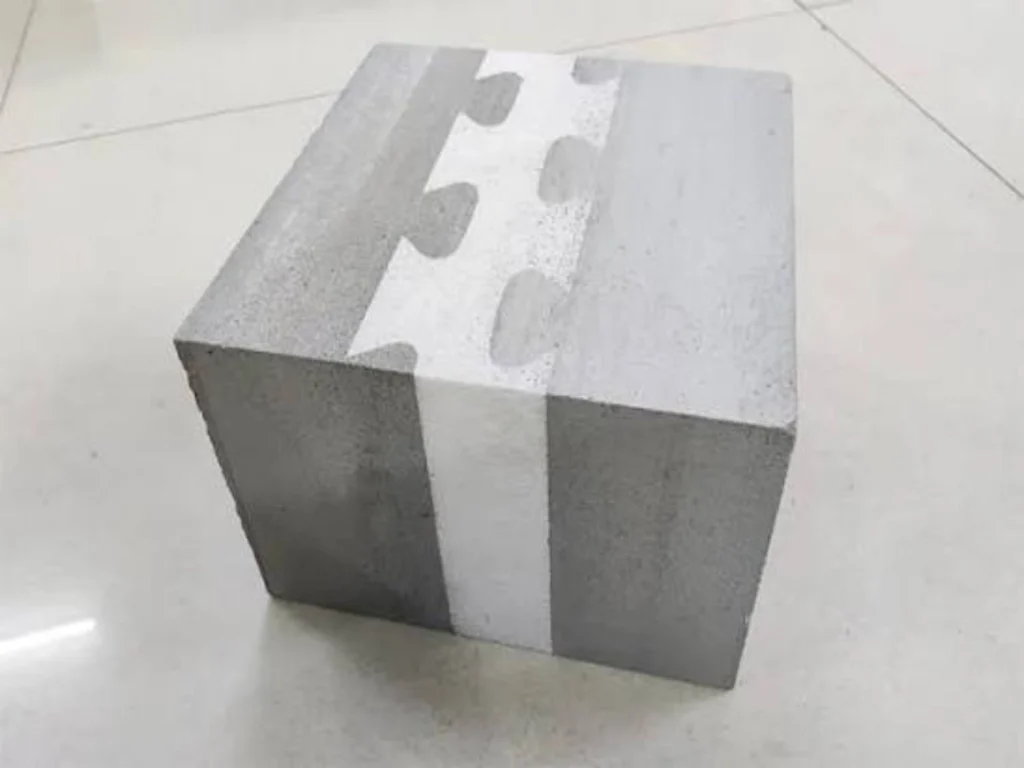
Step 1: Prepare the Foam
The first step is creating stable foam.
The foam generator mixes:
- Water
- Foaming agent
- Compressed air
The result should be lightweight foam with uniform bubbles.
The quality of foam directly affects:
- Density
- Strength
- Stability
Poor foam quality can cause uneven block structure.
Step 2: Mix Cement and Other Materials
The dry materials are prepared first.
Typical sequence:
- Add cement
- Add sand or filler
- Mix dry materials
- Add water gradually
The mixture should become smooth and consistent.
Step 3: Add Foam Into the Concrete Mixture
The foam is carefully added into the cement mixture.
The goal is to distribute air bubbles evenly without destroying them.
Mixing too aggressively may collapse the foam.
The final mixture should have:
- Uniform texture
- Stable foam structure
- Good flowability
Step 4: Pour the Mixture Into Molds
The foam concrete mixture is poured into molds.
Molds determine:
- Block size
- Shape
- Surface quality
Common block sizes vary depending on regional construction standards.
For commercial production, manufacturers often use precision molds to achieve consistent dimensions.
Step 5: Allow Initial Setting
After pouring, the blocks remain inside molds until they gain enough strength.
The setting time depends on:
- Cement type
- Temperature
- Mixture design
Step 6: Demolding
Once the blocks are stable, they are removed from molds.
Care must be taken to avoid:
- Edge damage
- Cracking
- Surface defects
Step 7: Curing Process
Proper curing is essential for achieving final strength.
Common curing methods include:
Natural Curing
Blocks are stored in controlled conditions and allowed to harden naturally.
Advantages:
- Simple
- Low equipment cost
Steam Curing
Steam curing accelerates strength development.
Advantages:
- Faster production
- Better consistency
Foam Concrete Block Manufacturing Quality Control
Producing high-quality foam concrete blocks requires careful control of several factors.
Density Control
Density affects:
- Strength
- Insulation performance
- Weight
Too much foam:
- Lower density
- Reduced strength
Too little foam:
- Higher weight
- Reduced insulation
Foam Stability
Stable foam ensures:
- Uniform pores
- Consistent quality
- Better durability
Strength Testing
Manufacturers test:
- Compressive strength
- Water absorption
- Dimensional accuracy
Foam Concrete Blocks vs Traditional Concrete Blocks
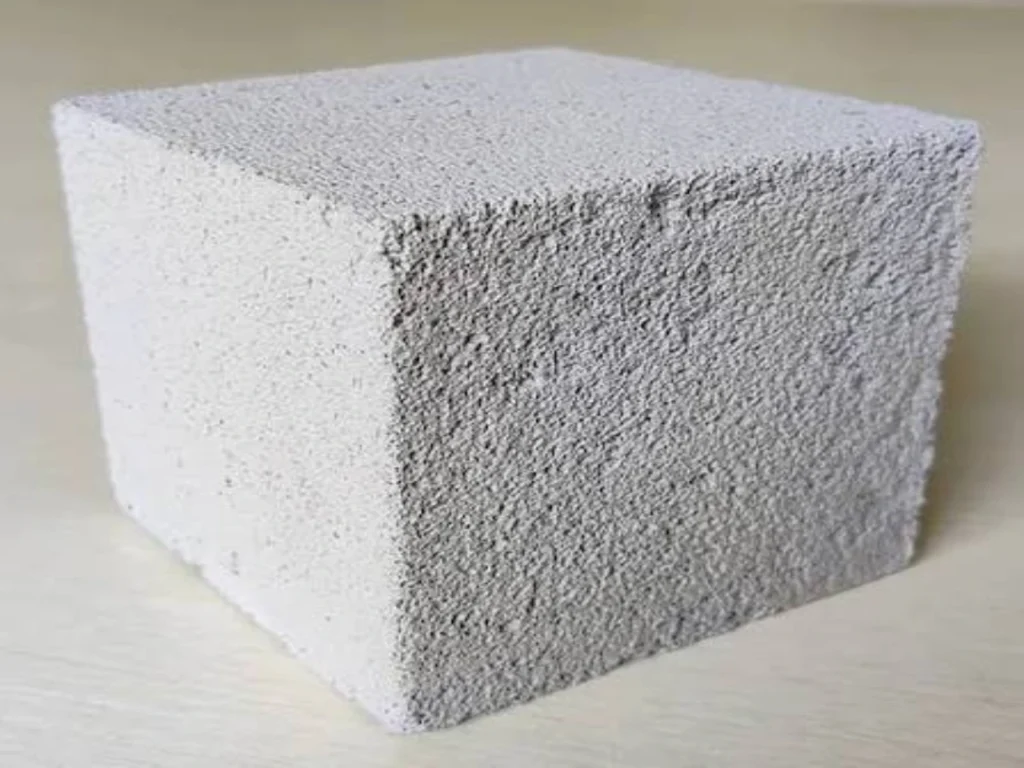
Quick Comparison Table
| Aspect | Foam Concrete Blocks (CLC) | Traditional Concrete Blocks |
|---|---|---|
| Also known as | Cellular lightweight concrete | Dense aggregate concrete blocks |
| Structure | Contains many closed, independent air pores (foam-like) | Dense and compact with little to no air voids |
| Density | Lightweight – typically 400–1,800 kg/m³ (about ⅛ to ½ that of traditional concrete) | Heavy – usually ≥ 1,950 kg/m³ |
| Compressive strength | Low – generally 2.95–6.4 MPa; not for structural loads | High – can reach 30 MPa or more; suitable for load‑bearing |
| Thermal insulation | Excellent – thermal conductivity ≈ 0.06–0.20 W/(m·K), up to 20× better than traditional concrete | Poor – conducts heat readily; requires additional insulation |
| Sound insulation | Good – porous structure absorbs sound waves | Moderate – relies mainly on mass (density) |
| Water absorption | Low – closed pores resist water penetration; can be used for water tanks | Relatively higher, especially in hollow blocks |
| Construction efficiency | High – lighter, faster to carry, cut, nail, and lay | Low – heavy, difficult to handle, slower installation |
| Environmental impact | Lower – less energy to produce, can use industrial waste, lower carbon footprint | Higher embodied energy and CO₂ emissions |
| Primary use | Non‑load‑bearing infill walls, partition walls, roof insulation | Load‑bearing walls, foundations, columns, beams, and structural floors |
Detailed Analysis
1. Weight & Structural Implications
- Foam concrete contains millions of tiny closed air bubbles, making it as light as a “foam bread.” This reduces the overall dead load of a building, lessening the burden on foundations, beams, and columns – a major advantage for high‑rise structures. It also makes on‑site handling much easier.
- Traditional concrete is dense and heavy – like “solid stone.” Its weight provides stability but also increases seismic forces during earthquakes, requiring stronger structural design.
2. Strength & Function (Non‑load vs. Load‑bearing)
- Foam concrete blocks have limited compressive strength, so they cannot be used for load‑bearing purposes. They are ideal for infill walls, partitions, and curtain walls in framed structures.
- Traditional concrete blocks are the backbone of construction – they are used for load‑bearing walls, columns, beams, foundations, and any part that must carry heavy vertical loads.
3. Thermal Performance & Energy Efficiency
- Foam concrete is an excellent thermal insulator because trapped air is a poor conductor of heat. Walls built with it keep interiors cooler in summer and warmer in winter, significantly reducing HVAC energy consumption.
- Traditional concrete has high thermal conductivity, so it acts as a “thermal bridge” – heat flows through easily. Extra insulation layers are usually required to meet energy codes.
4. Other Key Properties
- Water resistance: The closed‑cell structure of foam concrete blocks makes them highly water‑resistant – even suitable for building water storage tanks (unlike aerated autoclaved concrete, which may have interconnected pores).
- Workability: Foam concrete blocks can be sawed, nailed, and grooved easily, making plumbing/electrical chases and post‑installation modifications simple. Traditional blocks are very hard and require cutting tools.
- Mortar bonding: The slightly rough surface of foam blocks provides good adhesion with thin‑bed mortars.
Common Problems When Making Foam Concrete Blocks
1. Foam Collapse
Cause:
- Poor foam agent
- Excessive mixing
- Incorrect proportions
Solution:
- Use quality foam agents
- Control mixing speed
2. Low Strength
Possible causes:
- Too much foam
- Incorrect cement ratio
- Poor curing
Solution:
- Optimize mixture design
- Improve curing conditions
3. Cracking During Drying
Causes:
- Rapid moisture loss
- Improper curing
Solutions:
- Maintain humidity
- Use proper curing methods
Industrial Production of Foam Concrete Blocks
Large manufacturers use advanced systems to produce foam concrete blocks efficiently.
A typical industrial process includes:
- Automated material weighing
- Computer-controlled mixing
- Continuous foam generation
- Automatic mold filling
- Controlled curing
- Quality inspection
Automation improves:
- Production speed
- Product consistency
- Cost efficiency
Applications of Foam Concrete Blocks
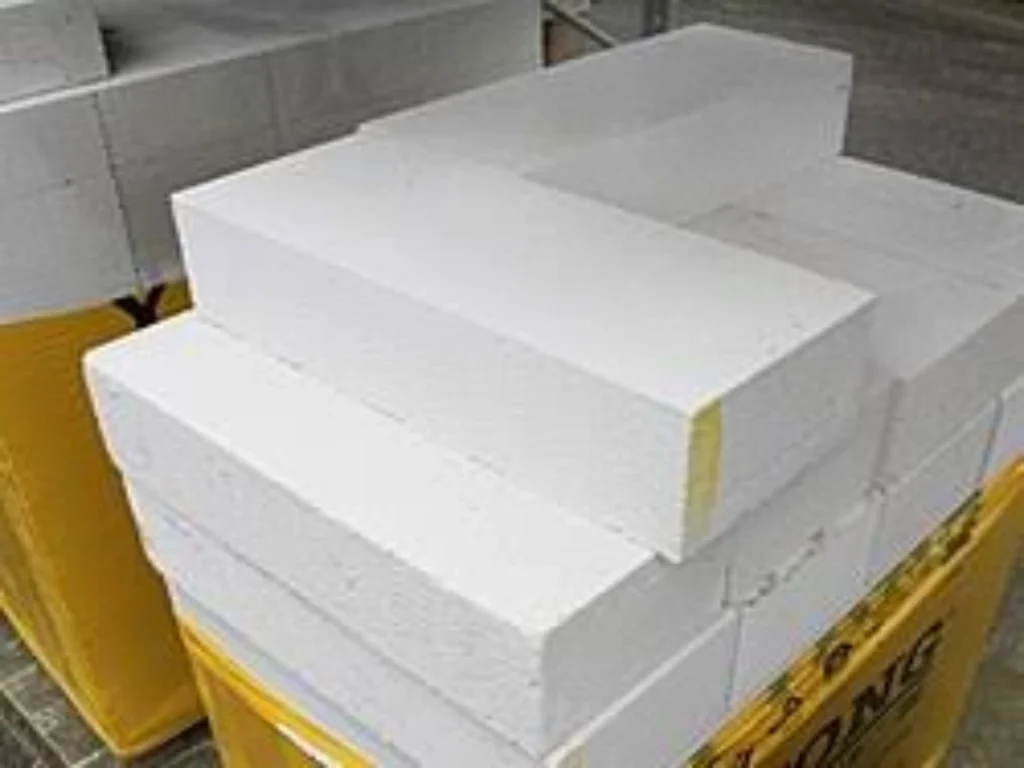
Foam concrete blocks are widely used in:
Residential Construction
Applications include:
- Exterior walls
- Partition walls
- Insulated structures
Commercial Buildings
Used for:
- Office partitions
- Lightweight walls
- Energy-efficient construction
Decorative Construction
Foam concrete can also be used for:
- Landscape structures
- Architectural decoration
- Lightweight decorative elements
Conclusion: Making Foam Concrete Blocks for Modern Construction
Learning how to make foam concrete blocks involves understanding the relationship between materials, foam technology, mixing processes, molds, and curing methods.
As the construction industry continues moving toward energy-efficient and environmentally friendly solutions, foam concrete blocks will remain an important material for modern building applications.
If you have any questions regarding EPS/EPP/ETPU molds, please feel free to contact us at Transfoam; we will provide you with the perfect solution.