
Craft foam is often understood as a soft, flexible sheet used for handmade models, cosplay props, school projects, toy parts and decorative shapes.
In industrial manufacturing, how to mold craft foam includes the controlled forming of EVA foam, PE foam, PU foam, EPS foam and EPP foam into repeatable products with functional shape, cushioning performance, accurate dimensions and stable surface quality.
What Craft Foam Means in Industrial Manufacturing
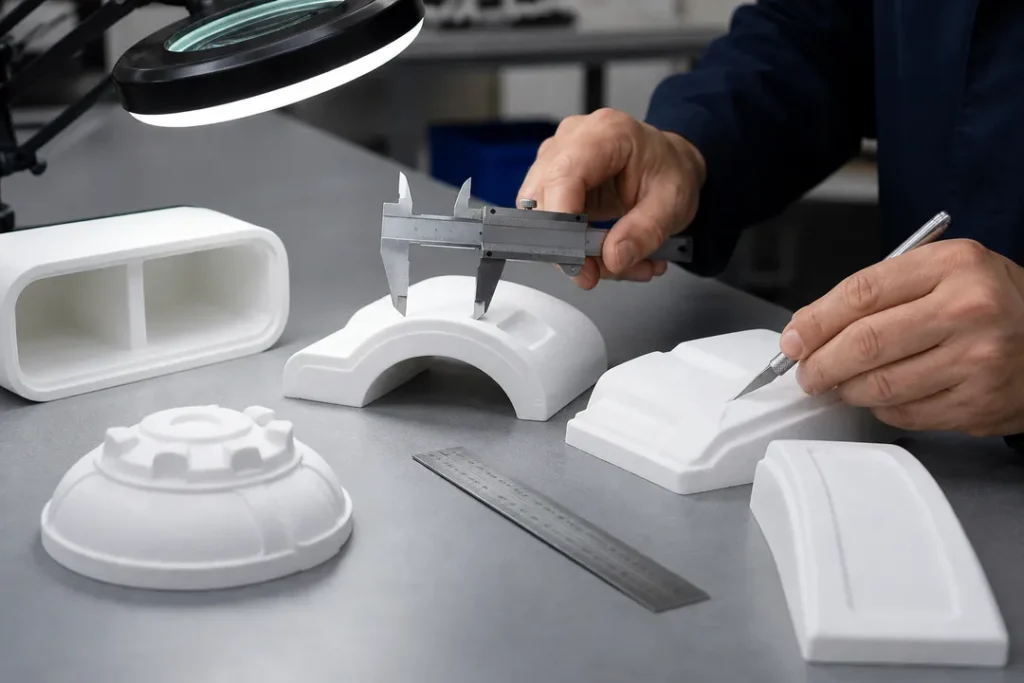
In a hobby or craft context, craft foam usually refers to EVA foam sheets that can be cut with scissors, heated with a heat gun and shaped by hand.
In manufacturing, the definition becomes broader and more technical.
Craft foam can refer to a family of foam materials that are processed into custom products through thermoforming, compression molding, steam molding, CNC cutting, die cutting, lamination or combined fabrication.
The final product may be soft and decorative, but it may also be functional and performance-driven.
Examples include protective packaging inserts, molded trays, tool organizers, medical support pads, sports protectors, helmet liners, automotive absorbers, cold-chain boxes, insulation boards and reusable transport components.
These products are not made by guesswork. They require controlled materials, accurate tooling and repeatable process parameters.
The most important difference between handmade foam shaping and industrial foam molding is repeatability.
A single handmade part only needs to look acceptable once. A commercial foam product must meet the same requirements across hundreds, thousands or even millions of units.
This requires control over foam density, material thickness, heating temperature, compression depth, mold geometry, cooling time, cutting accuracy and inspection standards.
For foam mold manufacturers, the challenge is not simply shaping foam into a form.
The real challenge is designing a process that produces the right mechanical behavior.
A packaging foam must protect the product. A molded pad must feel comfortable.
An EPP component must recover after impact. An EPS insulation board must maintain thermal performance. The shape is only one part of the result; the internal foam structure is equally important.
Choosing the Right Foam Material for Molding
Material selection determines the success of foam molding before the mold is even built.
Different foam materials react differently to heat, pressure, steam, cutting and compression.
Choosing the wrong material can lead to tearing, collapse, shrinkage, poor shape retention or weak product performance.
EVA foam is one of the most common materials for craft foam molding. It is flexible, resilient, easy to cut, easy to heat form and available in multiple densities and thicknesses.
EVA is widely used for protective pads, sports products, cosplay armor, shoe components, tool inserts, floor mats and soft cases.
It is suitable when the product requires flexibility, cushioning and clean surface appearance.
PE foam, especially cross-linked polyethylene foam, offers good toughness, chemical resistance and closed-cell performance.
It is often used for packaging, insulation, industrial pads, flotation parts and protective layers.
Compared with EVA, PE foam can provide stronger chemical resistance and sometimes better dimensional stability, but forming behavior depends on material grade and density.
PU foam is often selected when softness, comfort and cushioning are more important than precise shape definition.
It is common in seating, medical pads, acoustic products and comfort layers.
PU foam can be molded through chemical foaming or fabricated from blocks and sheets, but it may not be the best option when sharp molded edges or high dimensional stability are required.
EPS and EPP are bead foams rather than typical sheet craft foams.
EPS is lightweight, rigid and cost-effective, often used for insulation, protective packaging and shaped blocks.
EPP is tougher, more resilient and more durable, making it suitable for reusable packaging, automotive components, safety products and impact absorbers.
These materials are usually formed by steam molding in aluminum tools, not by simple heat bending of sheets.
The best material is the one that matches the product’s function.
Before choosing foam, manufacturers should define load requirements, impact performance, surface expectations, temperature exposure, chemical contact, production volume and target cost.
Foam material selection should always serve the final application.
Understanding the Main Craft Foam Molding Methods
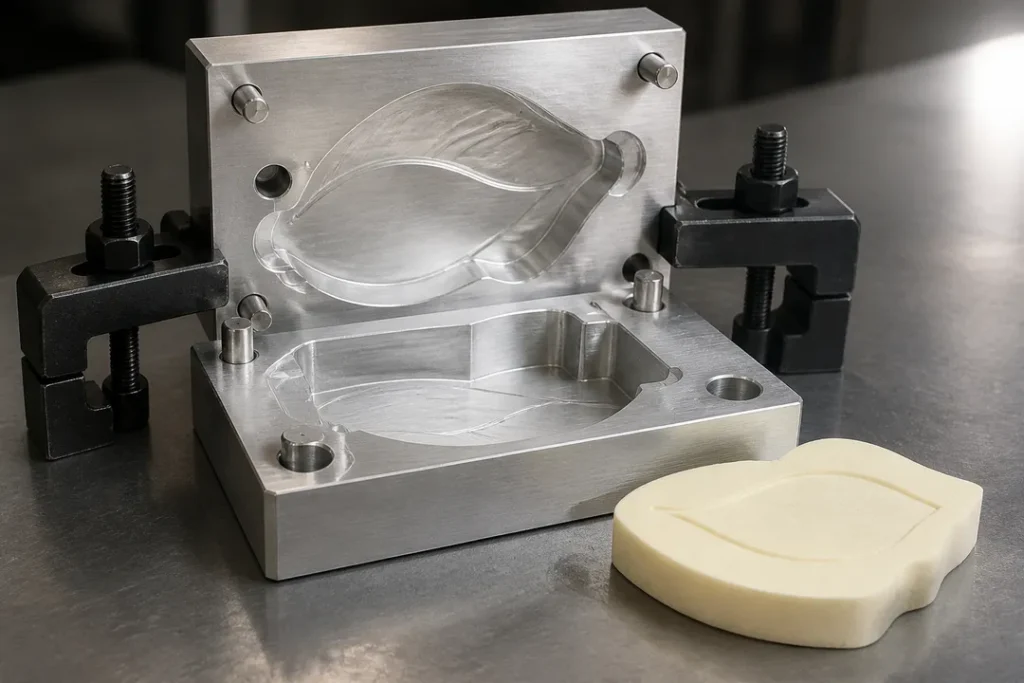
Craft foam can be molded through several methods, depending on material form and product requirements.
The most common methods include thermoforming, compression molding, steam molding, CNC shaping, die cutting and lamination-based fabrication.
Thermoforming is commonly used for EVA and PE foam sheets. The foam is heated until it becomes flexible, then pressed into or over a mold.
After cooling, the foam holds the new shape. This method is suitable for shallow trays, soft shells, pads, protective covers and products that need smooth curves rather than deep three-dimensional cavities.
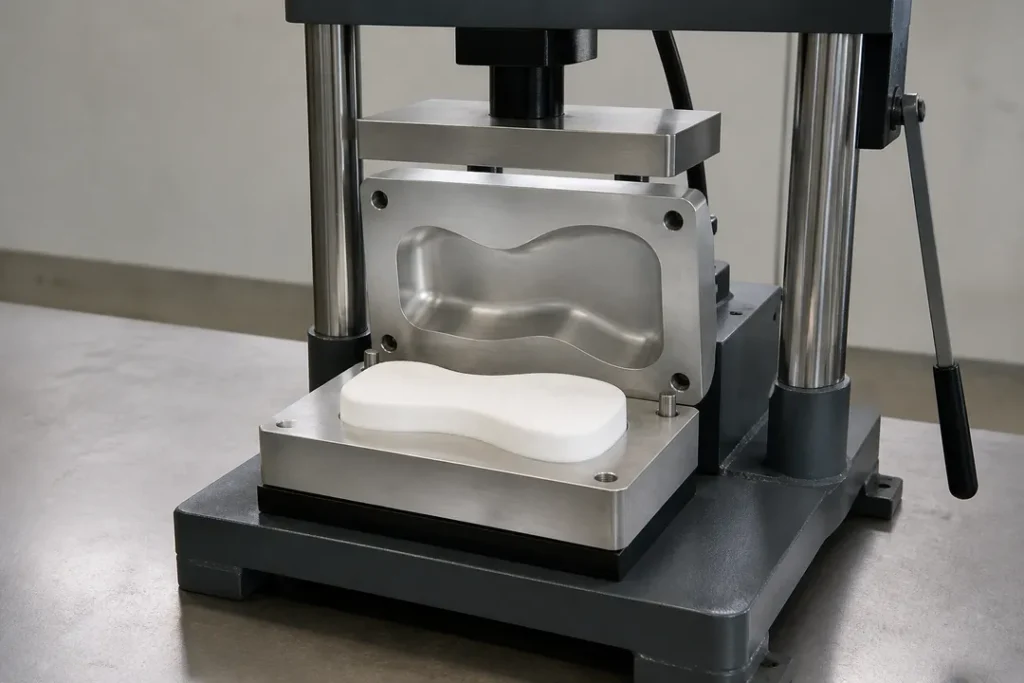
Compression molding uses pressure to force heated foam into a defined cavity. It is useful when the product requires clearer detail, controlled thickness and stronger surface definition.
Matched male-female molds are often used to control geometry and reduce variation. Compression molding is common for EVA pads, protective components, shoe parts, embossed foam and shaped inserts.
Steam molding is used for EPS and EPP. Pre-expanded beads are filled into a mold cavity, then steam is introduced to soften and fuse the bead surfaces.
Cooling stabilizes the part before demolding. This process is essential for molded packaging, insulation parts, automotive EPP components and thick three-dimensional foam products.
CNC cutting and die cutting are often secondary or alternative processes. CNC is suitable for prototypes, low-volume parts and complex cavities.
Die cutting is efficient for flat outlines, gaskets, pads and layered components. In many projects, molding and cutting are combined to achieve both three-dimensional shape and accurate final edges.
Product Design Before Foam Molding
A successful molded foam product begins with design for manufacturability.
Foam is not metal or solid plastic. It compresses, recovers, shrinks, expands, absorbs heat and responds to pressure.
A design that looks perfect in CAD may fail in production if it ignores material behavior.
Wall thickness must be carefully planned. Thin areas may tear, overheat or lose cushioning performance.
Thick areas may be difficult to heat evenly or may cool slowly, causing deformation. Consistent wall thickness improves repeatability, especially for thermoformed and compression-molded products.
Corners should include proper radii. Sharp corners create stress concentration and make it harder for foam to flow or stretch smoothly.
Rounded corners improve forming quality, reduce tearing risk and make demolding easier. For protective packaging, rounded cavities also reduce pressure points on the protected item.
Draft angles are also important. Molded foam should not be trapped in the mold.
If vertical walls are too steep, the part may drag during demolding, damaging the surface or deforming the shape.
A small draft angle can greatly improve production stability.
The product design should also define performance zones.
A packaging insert may need firm support in one area and soft clearance in another.
An automotive EPP component may need controlled energy absorption zones.
A sports pad may need flexibility at bending areas and stronger cushioning at impact areas.
Good foam design connects geometry with function.
Mold Design: The Core of Repeatable Foam Production
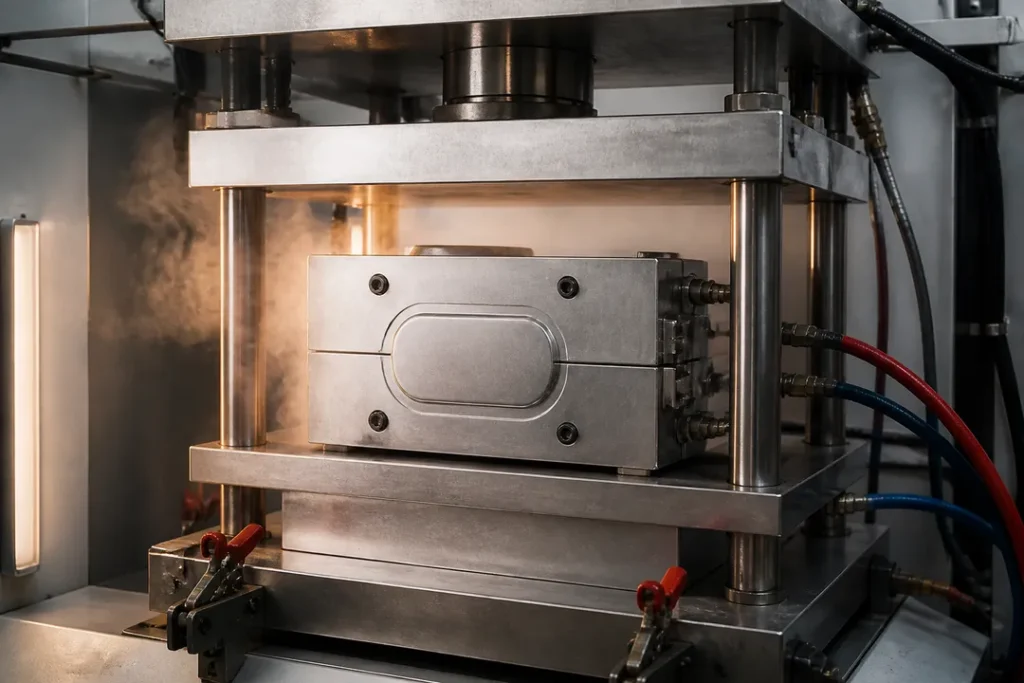
The mold is the foundation of repeatable foam production.
It controls the shape, surface, thickness, compression ratio, venting, cooling and demolding behavior of the final product.
A good mold does not only copy the product geometry.
It translates material behavior into a manufacturable process.
For EVA and PE foam compression molding, the mold must control how the foam is squeezed.
If the cavity is too tight, cells may collapse and the product may become hard or thin. If the cavity is too loose, the part may lack definition.
The mold should include proper stops, radii, surface texture and release design.
For EPS and EPP steam molding, mold design becomes even more complex.
The mold must include filling guns, steam chambers, vents, cooling channels, drainage paths and ejection systems.
Poor venting can prevent bead fusion. Poor drainage can leave water marks or increase cycle time. Poor cooling can cause shrinkage or warpage.
Aluminum is commonly used for foam molds because it provides good thermal conductivity and is easier to machine than steel.
For steam molding, aluminum helps transfer heat quickly and supports faster cooling.
However, the mold must still be strong enough to handle repeated pressure and thermal cycles.
Mold design should always consider maintenance. Vents may need cleaning. Filling guns may need replacement. Cooling channels must remain open. Ejection systems must be accessible.
A mold that is difficult to maintain may produce good samples at first but become unstable during mass production.
Heating and Softening Foam Materials
Heating is one of the most sensitive stages in foam molding.
The foam must become soft enough to form, but not so hot that its cells collapse or its surface melts.
The correct heating method depends on material type, thickness, density and target shape.
For EVA foam, heat may be applied through ovens, heated molds, infrared heaters, hot air or heated platens.
Industrial production usually requires controlled heating rather than manual heat guns because uniformity matters.
Uneven heating can create wrinkles, weak areas or inconsistent shape retention.
For thicker foam sheets or blocks, heating must reach the core, not only the surface.
If the surface is hot but the center remains stiff, compression will be uneven.
This can cause surface over-forming while the internal material resists deformation. Controlled heating time is therefore essential.
For EPS and EPP bead foam, heating occurs through steam inside the mold.
Steam penetrates the bead structure, softens bead surfaces and creates fusion. The steam must reach all areas evenly.
If steam flow is blocked or venting is poor, some areas may remain under-fused while others are overheated.
Heating control directly affects product performance. Underheating causes poor shape definition and weak bonding.
Overheating causes shrinkage, surface damage or cell collapse. A stable heating window is one of the key signs of a mature foam molding process.
Compression Molding for EVA and PE Foam
Compression molding is one of the most important processes for shaping EVA and PE foam into commercial products.
The process begins with cutting foam blanks to the correct size.
The blanks are heated, placed into the mold and compressed until they conform to the required shape.
After cooling, the part is removed and trimmed.
The key process variables are temperature, pressure, time and compression ratio.
Temperature determines how easily the foam can deform.
Pressure determines how closely the foam follows the mold.
Time determines whether the new shape can stabilize.
Compression ratio determines final thickness and cell structure.
If pressure is too high, the foam may lose resilience because the cells are crushed.
If pressure is too low, the part may not show enough detail.
If cooling is too short, the part may spring back after demolding.
If the blank size is poorly designed, wrinkles or material shortage may occur.
Compression molding can also create surface textures and embossed details.
Mold textures can improve grip, create decorative finishes or hide minor scratches.
However, texture depth must be controlled. Too much texture can make demolding difficult or weaken the foam surface.
This method is widely used for protective pads, molded case interiors, sports guards, footwear components, tool trays, kneeling pads and custom foam inserts.
It is a practical option when the product needs better shape definition than flat cutting but does not require bead foam steam molding.
EPS and EPP Bead Foam Molding
EPS and EPP molding are different from sheet foam forming. Instead of heating a flat sheet, manufacturers fill a mold cavity with pre-expanded beads.
Steam heats the beads, causing their surfaces to soften and bond together. After cooling, the molded part is ejected as a complete foam object.
EPS is commonly used for packaging, insulation boards, protective blocks and disposable containers. It is lightweight and cost-effective, but less resilient than EPP.
EPP is used when the product needs durability, impact recovery and repeated use. Automotive absorbers, reusable transport packaging and protective components often use EPP.
The bead molding process usually includes pre-expansion, aging, filling, steam fusion, cooling and demolding.
Pre-expansion controls bead density. Aging stabilizes internal pressure.
Filling ensures the mold cavity is fully packed. Steam fusion bonds the beads.
Cooling stabilizes the shape. Demolding releases the finished part.
Mold quality is critical in EPS and EPP molding. Vents must allow air to escape while preventing bead leakage.
Steam channels must heat the cavity evenly.
Cooling must be efficient enough to reduce cycle time without causing deformation.
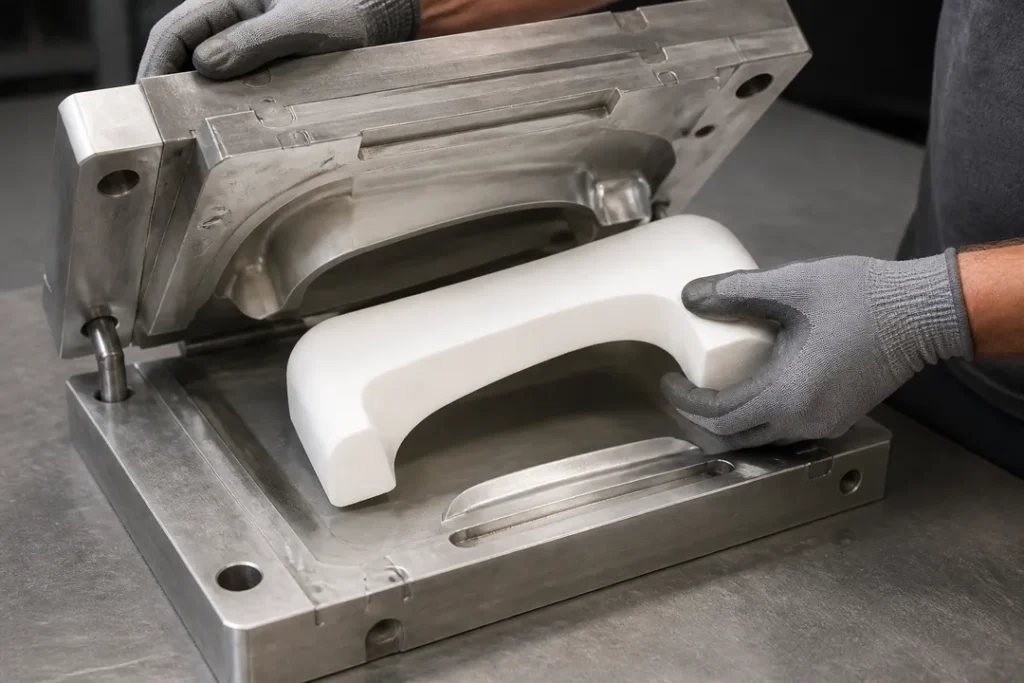
Ejection must release the part without damaging the surface.
Compared with EVA sheet forming, EPS and EPP molding requires higher investment in molds and machines, but it provides stronger three-dimensional capability and better repeatability for complex foam products.
For industrial applications, bead foam molding is often the most scalable solution.
CNC Cutting, Die Cutting and Secondary Shaping
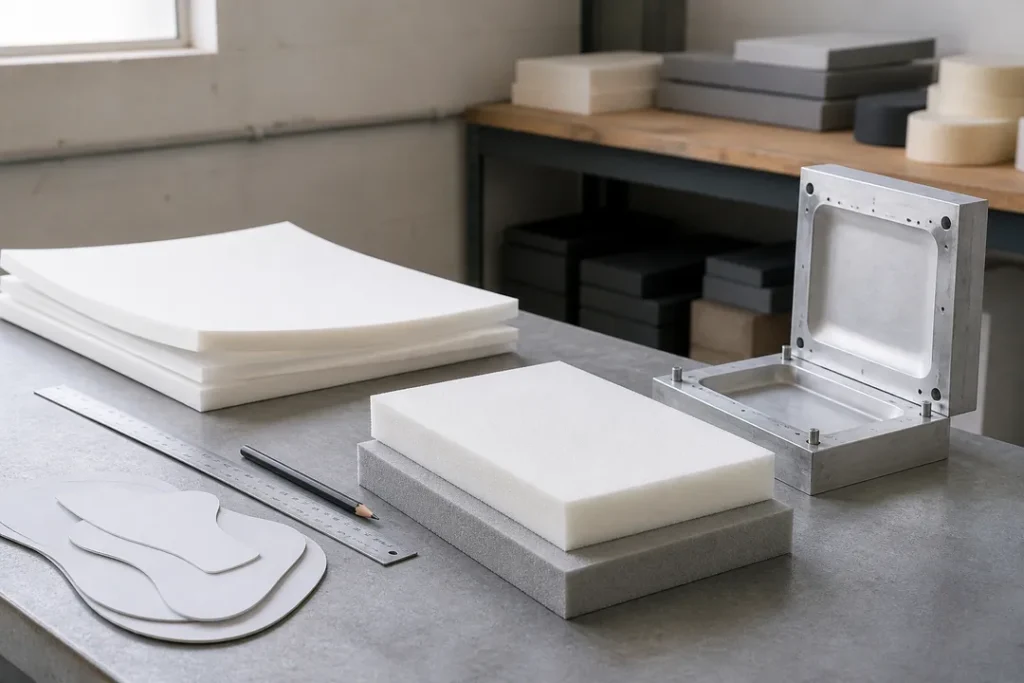
Many molded foam products require secondary processing after the main forming stage.
Cutting, trimming, drilling, slotting and surface finishing are often needed to achieve final dimensions and functional details.
CNC cutting is suitable for prototypes, low-volume production, custom cavities and complex shapes.
It can cut pockets, grooves, contours and nesting features with high flexibility.
CNC is especially useful when tooling investment must be minimized during early product development.
Die cutting is faster for flat foam parts. A steel-rule die or precision cutting tool can produce repeated outlines efficiently.
This method is common for gaskets, pads, layered inserts, packaging liners and flat protective components.
Hot-wire cutting is often used for EPS blocks and insulation boards. A heated wire melts through the foam and creates smooth cuts.
It is suitable for boards, display shapes, architectural models and simple profiles.
However, it is less suitable for materials that do not cut cleanly under heat or for highly detailed internal cavities.
Secondary shaping should be considered during product design. If a feature cannot be molded reliably, it may be better to machine or cut it after molding.
Good manufacturing planning chooses the simplest and most stable process for each feature.
Surface Finishing, Lamination and Functional Layers
Foam products often need surface treatment to improve appearance, durability, hygiene or function.
A foam core may provide shape and cushioning, while the surface layer provides wear resistance, waterproofing, color, grip or branding.
Fabric lamination is common for sports pads, cases, bags, medical supports and comfort products. Fabric improves touch, color and abrasion resistance.
However, lamination must be controlled to avoid wrinkles, adhesive bleed-through or delamination.
Film lamination can provide waterproofing, decorative finish, chemical resistance or easy cleaning.
TPU, PVC, PE and other films may be selected depending on product requirements. The film must be compatible with the foam substrate and the forming temperature.
Surface embossing can be built into the mold. It can create texture, logos, grip patterns or decorative surfaces.
For B2B products, surface texture may also communicate product quality. A clean, consistent texture suggests stable molding and good tooling.
The key is to match finishing with function.
A packaging insert may not need decorative lamination, but it needs accurate cavities and clean edges.
A consumer-facing pad may need soft fabric and attractive texture.
An industrial EPP part may need no decorative surface but must meet strength and durability requirements.
Quality Control for Molded Foam Products
Quality control in foam molding must evaluate both appearance and performance.
A product may look acceptable but fail in density, compression strength, dimensional accuracy or recovery behavior.
Dimensional inspection verifies length, width, height, cavity position, wall thickness and fit.
Foam tolerances are different from hard plastic or metal tolerances, but critical dimensions must still be controlled.
For packaging inserts, cavity accuracy determines whether the protected product fits securely. For industrial components, dimensions affect assembly.
Density testing is important because density affects weight, cushioning, strength and cost.
In EPS and EPP molding, density variation can indicate problems in pre-expansion, filling or steam fusion.
In EVA and PE foam, density helps confirm material consistency.
Compression testing checks how the foam behaves under load.
This is critical for protective packaging, pads, sports guards and impact components.
The foam must compress enough to absorb force, but recover enough to maintain function.
Surface inspection checks for burns, wrinkles, weak fusion, dents, bubbles, contamination, tearing and trimming defects.
For customer-facing products, surface consistency affects perceived quality. For industrial products, surface defects may indicate deeper process problems.
A mature foam molding supplier should be able to define inspection criteria based on the product’s real function.
Not every dimension or surface feature has the same importance. Quality control should focus most on the features that affect performance, fit and customer use.
Common Problems in Foam Molding and How to Prevent Them
Poor shape retention is one of the most common problems in foam molding.
It may happen when the material is underheated, removed too early, cooled unevenly or compressed beyond its recovery ability.
The solution is to adjust heating, compression, cooling and material selection.
Cell collapse occurs when foam is overheated or over-compressed. The product may become thin, hard, shiny or weak.
Once the cell structure is destroyed, cushioning performance cannot be fully restored. Preventing collapse requires careful control of temperature and compression depth.
Wrinkles and folds occur when material cannot distribute smoothly inside the mold.
The cause may be poor blank design, sharp corners, uneven heating or excessive material.
Better pre-cut shapes, larger radii and controlled forming speed can reduce wrinkles.
Poor bead fusion in EPS and EPP products may be caused by insufficient steam, poor venting, incorrect bead aging or uneven filling.
The solution usually requires checking mold vents, steam channels, filling guns, material density and process parameters.
Dimensional instability may come from uneven cooling, material shrinkage, incorrect mold compensation or premature demolding.
For precision foam products, the mold must account for material behavior and the process must include enough stabilization time.
Most foam molding problems can be prevented through design review, material testing, mold engineering and process validation.
Fixing problems after mass production begins is always more expensive than preventing them during development.
How to Choose a Foam Molding and Mold Manufacturing Partner
Choosing the right partner is critical for custom foam products.
A supplier should not only cut foam or build a mold.
They should understand material behavior, product function, mold design, process control and quality inspection.
A strong supplier will ask about application, load conditions, target density, product size, production volume, assembly requirements, surface expectations and budget.
These questions are necessary because the correct process depends on the final use.
The supplier should also recommend the right manufacturing method.
Some products should be thermoformed from EVA sheets. Some should be compression molded.
Some should be CNC cut. Some require EPS or EPP steam molding.
A supplier who uses one method for every project may not be able to deliver the best result.
Mold capability is especially important. For foam molding, mold design determines cycle time, part quality, scrap rate and long-term production stability.
Buyers should ask how the supplier handles venting, cooling, ejection, material shrinkage, surface texture and maintenance.
Quality documentation is another sign of professionalism. A reliable supplier should be able to provide drawings, material specifications, inspection standards, sample reports and process recommendations.
For B2B buyers, these documents reduce risk and improve communication.
The right partner helps transform an idea into a manufacturable product.
They do not simply produce what is requested; they help identify design risks, process limitations and cost-saving opportunities before tooling investment begins.
Conclusion
Molding craft foam is much more than heating and shaping a soft material.
In industrial manufacturing, it is a controlled process that combines material selection, product design, mold engineering, heat control, pressure forming, cooling, cutting, finishing and quality inspection.
EVA, PE, PU, EPS and EPP each require different forming strategies.
EVA and PE are often shaped through thermoforming or compression molding.
PU is often selected for comfort and cushioning.
EPS and EPP require bead foam steam molding when complex three-dimensional products are needed.
The best process depends on the product’s function, volume, cost target and performance requirements.
For manufacturers and buyers, the most important lesson is that foam molding should be planned as an engineering process, not a simple craft operation.
Material behavior must be tested. Mold design must support repeatability. Process parameters must be controlled. Quality must be measured by both appearance and performance.
If you are developing custom foam packaging, EVA molded pads, EPS protective parts, EPP automotive components, insulation products or functional foam inserts, working with an experienced foam mold and molding partner can reduce development risk.
Share your product drawings, application requirements, target density, production volume and performance expectations.
A technical team can help you select the right foam material, molding method and mold structure for reliable production.