In the rapidly evolving landscape of industrial production, few questions generate as much debate among engineers, product developers, and manufacturing leaders as this: Is injection molding additive manufacturing?
The short answer is no—they are fundamentally different processes with distinct operating principles.
But the more nuanced—and far more valuable—answer is that these two technologies are no longer competing alternatives.
They are converging into an integrated manufacturing ecosystem that leverages the strengths of each to achieve what neither could accomplish alone.
In industrial plastics processing, additive manufacturing (AM) and injection molding are often presented as competing technologies.
However, both processes offer different strengths and can be usefully combined in many development and production scenarios.
What Is Injection Molding?
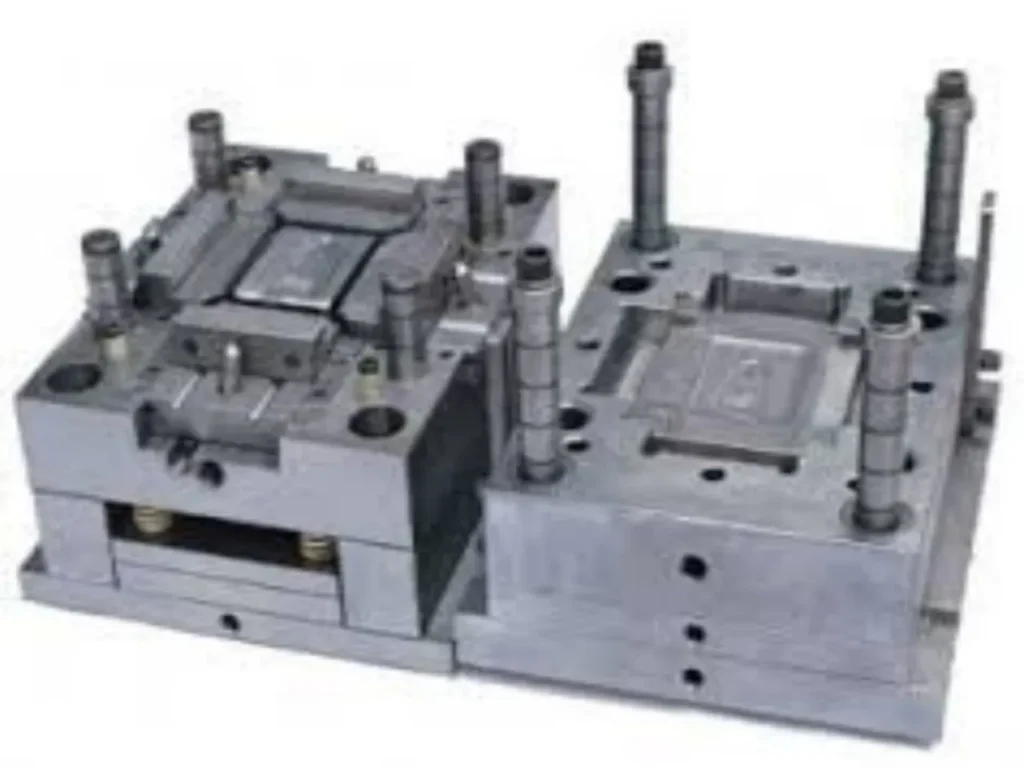
Injection molding is a high-volume manufacturing process that produces identical plastic parts by injecting molten material into a precision-machined mold.
It is the most common method for mass-producing plastic components, ranging from bottle caps and LEGO bricks to automotive dashboards and medical syringes.
The Process Step by Step
The process uses an injection molding machine, which has three main parts: the clamping unit, the injection unit, and the mold. The cycle repeats every few seconds to minutes.
- Clamping: The two halves of the mold are securely closed by the clamping unit. This must withstand the high injection pressure without opening.
- Injection: Plastic pellets (resin) are fed from a hopper into a heated barrel. Inside, a reciprocating screw melts the material and acts as a plunger, forcing the molten plastic forward through a nozzle and into the mold cavity at very high pressure (typically 10,000–30,000 psi). This ensures the material fills every detail of the mold.
- Dwelling & Cooling: Pressure is held briefly to compensate for material shrinkage as it begins to cool. Cooling channels—water or oil lines running through the mold—circulate to solidify the part. Cooling typically accounts for the majority of the cycle time.
- Ejection: Once solid, the mold opens. Ejector pins push the finished part out of the mold. The mold then closes, and the cycle repeats.
Materials
Thermoplastics (e.g., ABS, polypropylene, nylon) dominate injection molding because they can be melted, solidified, and remelted. Thermosets and liquid silicone rubber are also used for specialized applications, while metal injection molding (MIM) produces small, complex metal parts.
Advantages
- High speed & low cost per part: After the initial investment, thousands of parts can be produced per hour for pennies each.
- Excellent repeatability: Millions of parts can be made with virtually identical dimensions and tolerances as tight as ±0.001 inches.
- Complex geometry: Ribs, bosses, threads, and undercuts can be molded directly, eliminating secondary operations.
- Low labor: The process is highly automated.
Disadvantages
- High initial cost: The mold (or “tool”) is expensive—typically $5,000 to $100,000 or more. This makes injection molding economical only for large production runs (typically 1,000+ parts).
- Long lead time: Designing and machining a mold can take weeks or months.
Everyday Examples
Injection molding is everywhere: bottle caps, syringes, disposable cutlery, wire spools, car interior panels, power tool housings, and, famously, LEGO bricks—each molded with sub-micron precision.
In short, injection molding is the backbone of modern plastic manufacturing: fast, precise, and extraordinarily efficient at scale, but requiring a significant upfront investment in tooling.
What Is Additive Manufacturing?
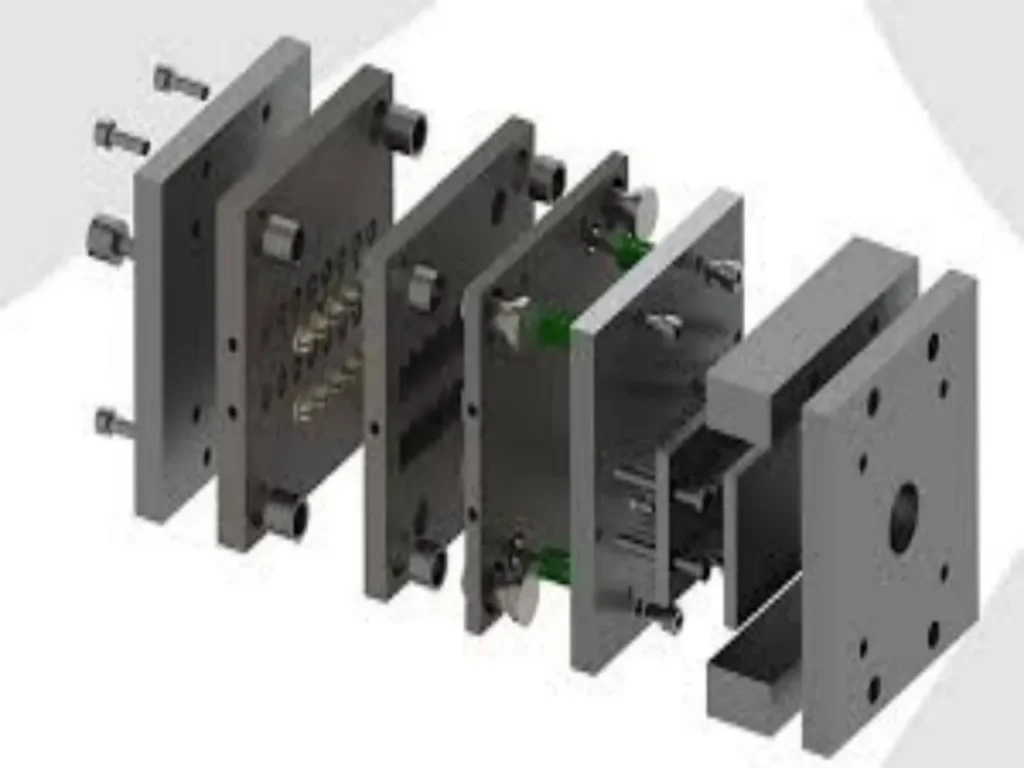
Additive Manufacturing (AM) , commonly known as 3D printing, is a process of creating three-dimensional objects by building them layer by layer from a digital model. Unlike traditional “subtractive” methods (such as milling or cutting, which remove material from a solid block), additive manufacturing adds material only where it is needed.
The Core Principle: Layer-by-Layer Construction
The process starts with a 3D computer-aided design (CAD) file. Specialized software slices this digital model into hundreds or thousands of extremely thin horizontal cross-sections. The 3D printer then reads these slices and deposits, cures, or fuses successive layers of material – plastic, metal, resin, or ceramic – until the final object is complete. Each layer bonds to the one below it, gradually building the shape from the bottom up.
Main Technologies
Additive manufacturing is not a single technology but a family of processes, each with unique strengths:
- Fused Deposition Modeling (FDM): The most common and affordable type. A plastic filament (e.g., PLA, ABS) is melted and extruded through a nozzle, like a hot glue gun. It is widely used for prototypes and simple end-use parts.
- Vat Photopolymerization (SLA/DLP): Uses a laser or projector to cure liquid photosensitive resin into solid plastic. This method produces very smooth, highly detailed parts, making it ideal for dental models, jewelry, and miniatures.
- Powder Bed Fusion (SLS, SLM, EBM): A high-power laser or electron beam selectively fuses powdered material (nylon, aluminum, titanium) layer by layer. This technique creates strong, functional metal or plastic parts without needing support structures. It is widely used in aerospace and medical implants.
- Binder Jetting: A liquid binding agent is selectively deposited onto a powder bed to join particles together. After printing, the part is typically sintered in a furnace. This allows for full-color parts and high-speed production.
Key Advantages
- Geometric Freedom: AM can produce shapes impossible with traditional methods – complex internal channels, lattice structures, and organic geometries.
- No Tooling Required: Parts are printed directly from a digital file, eliminating expensive molds and dies. This dramatically reduces lead time and makes low-volume production (1–1000 parts) economical.
- Minimal Waste: Material is only placed where needed, often achieving near 100% material utilization. This is especially valuable for expensive materials like titanium.
- Mass Customization: Each printed part can be unique without additional cost. This enables custom hearing aids, dental aligners, and personalized prosthetics.
Limitations
- Speed: Additive manufacturing is slow for large volumes. Printing a single complex part can take hours or days.
- Surface Finish and Strength: Layer-by-layer building often leaves visible layer lines and can result in anisotropic (direction-dependent) mechanical properties, weaker than injection-molded or machined parts.
- Size Constraints: Most industrial printers have limited build volumes, though large-scale systems are emerging.
- Post-Processing: Many printed parts require support removal, sanding, heat treatment, or machining to achieve final specifications.
Typical Applications
- Aerospace: Fuel nozzles, lightweight brackets, and ducting (e.g., GE, Airbus).
- Medical: Custom surgical guides, titanium hip implants, and orthodontic aligners (Invisalign).
- Automotive: Prototyping, custom tooling, and low-volume spare parts.
- Consumer Goods: Eyeglass frames, athletic shoe midsoles (Adidas 4D), and hearing aids.
In Summary
Additive manufacturing is not a replacement for mass-production methods like injection molding. Instead, it excels at complexity, customization, and low-volume production. While injection molding produces millions of identical, low-cost plastic parts per day, additive manufacturing creates unique, intricate objects on demand – making both technologies complementary in modern manufacturing.
Why “Injection Molding vs. 3D Printing” Misses the Point
For many years, the roles were clearly defined: injection molding for mass production, additive manufacturing for prototyping.
This clear distinction is increasingly blurring. Markets are less predictable and product life cycles are shorter.
The decisive factor here is not either/or, but rather the targeted use of both processes in line with specific requirements.
When Injection Molding Wins
Injection molding remains the dominant method for the production of most plastic products, offering distinct advantages for larger-scale production with which 3D printing has yet to compete.
For a typical 600-part order, a single-cavity injection mold can be built in 2.5 weeks and produce the parts in less than one day at 60 parts per hour.
The same order via 3D printing would take 3-5 days just to build and cool the parts, plus additional post-processing time, yielding several weeks total for 600 parts.
Injection molding also delivers superior material properties, surface finishes, and dimensional consistency.
AM components often exhibit lower mechanical strength, reduced thermal tolerance, and less refined surface finishes, with a restricted material palette compared to the thousands of materials available for injection molding.
When Additive Manufacturing Excels
Additive manufacturing‘s strengths lie in exactly the areas where injection molding struggles.
The high initial tooling costs and lengthy mold-development cycles remain significant barriers for complex parts, especially in low-volume applications.
With 3D printing, there is no mold to build, no minimum order quantity, and design changes can be implemented in real time without pausing production.
For quantities below a few dozen parts, printed parts rarely compete with molding in terms of speed and cost.
But the value proposition extends beyond simple unit economics. In product development, rapid tooling—3D-printed molds and inserts—allows manufacturers to validate designs, produce pilot runs, and accelerate decision-making long before final tooling is in place.
With costs typically below $1,000 per mold, 3D printing enables multiple design iterations for a fraction of the cost of conventional injection molding tooling.
How Additive Manufacturing Is Transforming Injection Molding
The question “Is injection molding additive manufacturing?” may be the wrong question.
The more productive inquiry is: How can additive manufacturing enhance, accelerate, and extend the capabilities of injection molding?
Additive Manufacturing for Injection Mold Tooling
The most established intersection of these technologies is the use of AM to produce injection molds and mold inserts.
Rather than machining molds from solid metal, manufacturers can 3D print them—or print inserts that fit into conventional master molds—in a fraction of the time and cost.
A recent study investigated a hybrid manufacturing approach combining 3D printing and injection molding to extend the limitations of each individual technique.
The approach was demonstrated using a range of polymeric materials, including ABS, nylon, and polyurethane foam, with finite element analysis confirming that temperature and stress remained within safe operational limits for 3D-printed materials.
An economic analysis revealed substantial cost savings compared to fully 3D-printed components, establishing hybrid manufacturing as a viable and scalable alternative.
This approach offers sharply reduced mold-making expenses, faster product-development cycles, and the freedom to create advanced geometries.
Conformal Cooling: The Game-Changer
Perhaps the most transformative application of AM in injection molding is the fabrication of conformal cooling channels. Traditional molds are machined with straight-line cooling channels, which cannot follow the complex contours of many parts.
Conformal cooling channels—3D printed into the mold to follow the part geometry exactly—bring cooling closer to the surface, closer to the plastic, so the plastic cools faster and solidifies faster.
A compelling case study involved a medical device component molded from nylon 66.
The part was hampered by cycle times that were 15 seconds too long and frequent molding failures due to air trapping in deep recesses.
Using a hybrid additive manufacturing system combining laser powder bed fusion with CNC machining, the mold was equipped with both conformal cooling channels and engineered porous venting in key regions.
The first test eliminated all burning on the deep ribs and took 10 seconds out of the cycle time.
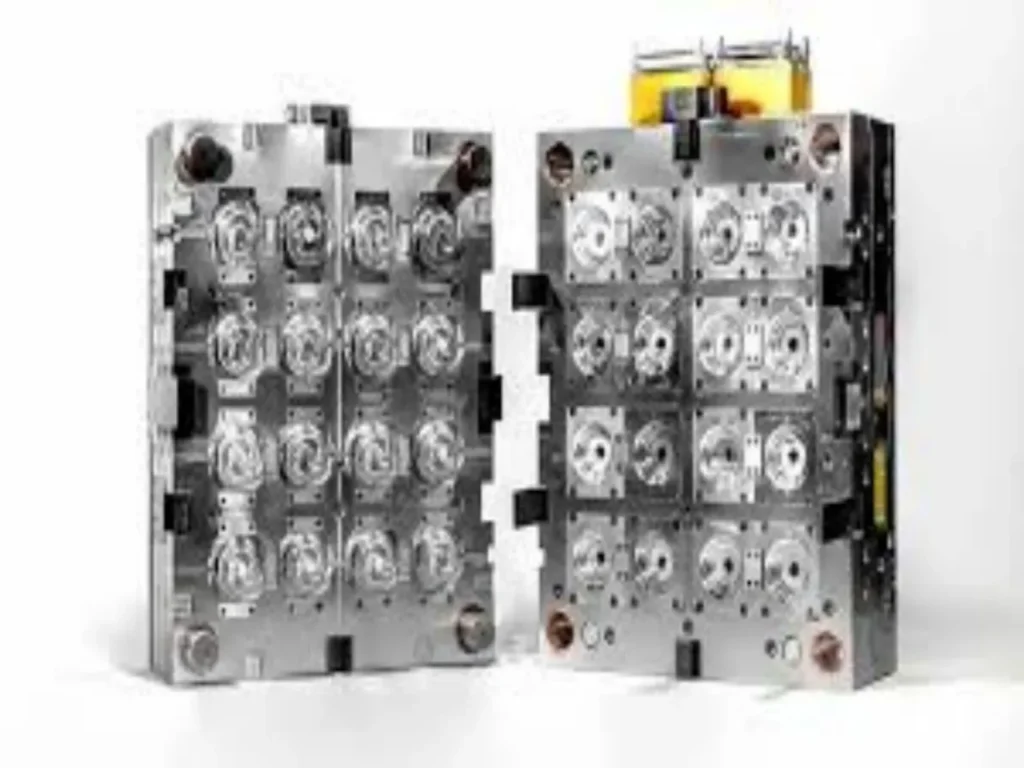
Another research project designed and manufactured an 8-cavity plastic injection mold using a hybrid additive-subtractive manufacturing strategy.
Inserts were designed with conformal cooling channels, fabricated using laser powder-bed fusion, and finished with conventional mold-making methods.
The conformally cooled hybrid-built inserts achieved a 56% shorter cooling time and a 15% faster overall cycle time than the existing 4-cavity counterpart.
The break-even point for this new mold was approximately 29 days of run time.
Rapid Tooling: Bridging Prototype to Production
For manufacturers who need injection-molded parts but cannot justify the investment in permanent metal tooling, 3D-printed rapid tooling offers an ideal solution.
Stratasys reports that 3D-printed injection mold tools can be designed, printed, and tested in under a day, with costs typically below $1,000 per mold.
The technology is not intended to replace hardened steel tooling for high-volume, multi-cavity production.
Instead, it fills a critical gap for small-batch injection molding, pre-production validation, and agile product development—all while avoiding the long lead times and high costs of metal tooling.
Complex geometries, conformal cooling channels, or shapes that would be too costly or impossible to machine can be produced quickly because of 3D printing’s additive nature. The restrictions of machinability become a non-factor.
Beyond Tooling
The integration of additive and injection technologies has advanced beyond tooling into true hybrid manufacturing processes that combine the strengths of both approaches in a single workflow.
Soluble 3D-Printed Molds
An increasingly relevant example of hybrid manufacturing is the use of 3D-printed, water-soluble molds in injection molding—especially for individual parts, small series, and functional prototypes.
Since the availability of water-soluble printing materials such as PVA or BVOH, temporary mold inserts can be created that can be removed after the casting process using chemical or aqueous solutions.
Suppliers such as AddiFab and Nexa3D rely on light-based printing processes such as DLP or LSPc to produce high-resolution molds with sufficient pressure and temperature resistance.
The molds can be used on conventional injection molding machines but are single-use, making this process primarily suitable for applications with a high degree of design freedom but low volume requirements—for example, in medical technology, research, or for individualized consumer goods.
The main technical challenges include dimensional stability under spray pressure, thermal resilience of the materials, and residue-free dissolution of complex geometries.
Nevertheless, the low barrier to entry is notable: a complete system consisting of an Anycubic printer, HoliPress injection molding machine, and peripherals enables in-house trials for less than 5,000 euros.
The AXIOM Process: Extrusion Into an Open Mold
Hybrid Manufacturing Technologies has developed a truly novel process called AXIOM—Automated eXtrusion Into an Open Mold—enabled by the AMBIT XTRUDE extrusion 3D printing head used in a milling machine spindle.
The process blends the flexibility of 3D printing with the quality of injection molding, enabling the use of thermoplastics that are otherwise incompatible with 3D printing while delivering improved surface finish and part integrity that eliminates visible layer lines.
This hybrid method combining polymer extrusion and molding produces parts rivaling injection-molded quality, enabling faster, smoother, and stronger thermoplastic production.
Applications and Case Studies
Medical Device Component
A medical device manufacturer needed to produce a precision control knob for a device controlling flow rate or dosage.
Traditional injection molding cycle times were 15 seconds too long, and the part frequently failed to mold completely because air trapped in the deepest recesses prevented plastic flow.
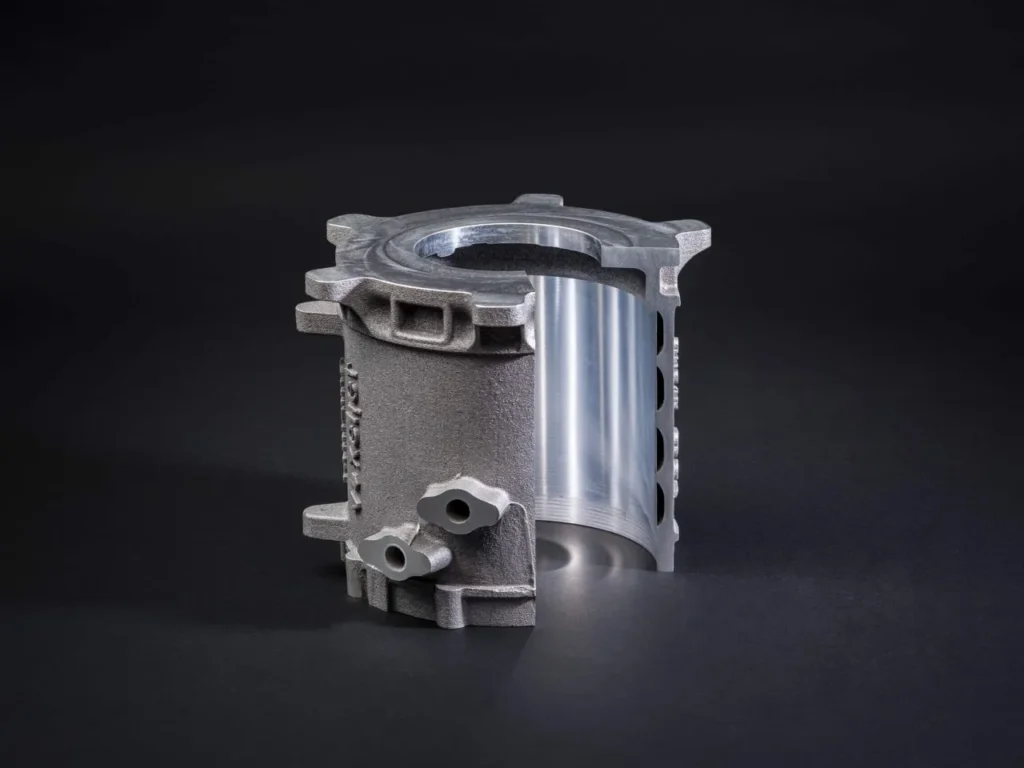
Matsuura‘s hybrid additive manufacturing system—combining laser powder bed fusion and CNC machining in the same machine—produced an injection mold with conformal cooling channels and engineered porous venting.
The results: elimination of all burning defects and a 10-second reduction in cycle time. In a very real sense, this injection-molded part was also made through 3D printing, because 3D printing was able to produce the mold that produced the part.
Eight-Cavity Production Mold
Researchers designed and manufactured an 8-cavity plastic injection mold using a hybrid additive-subtractive manufacturing strategy to complement an existing 4-cavity mold. The AM tooling cost incurred was only about 10% of the total tooling cost. The new 8-cavity mold ran with a 56% shorter cooling time and a 15% faster overall cycle time than the existing 4-cavity counterpart.
3D-Printed Mold Inserts for Prototyping
The Polymer-Lab at TH Köln has developed practical solutions for 3D-printed plastic mold inserts, addressing concerns about surface quality, limited tool life, and high personnel costs.
A new ejector concept using standard ejector pins with tapered heads and quick-change bases eliminates the need for cutting to length, significantly reducing setup time for low-volume production runs.
Conclusion
Is injection molding additive manufacturing? No.
They remain fundamentally different processes: one builds parts layer by layer from digital files; the other injects molten material into precision metal molds. But this distinction is rapidly becoming less important than the synergy between them.
Additive manufacturing is not replacing injection molding.
It is enhancing it—accelerating mold fabrication, enabling conformal cooling that slashes cycle times, producing rapid tooling that de-risks product development, and creating entirely new hybrid processes that combine the best of both worlds.
For manufacturers navigating today‘s volatile markets, shorter product life cycles, and increasing demand for customization, the strategic imperative is clear: build a hybrid production portfolio that leverages injection molding for high-volume efficiency and additive manufacturing for flexibility, speed, and complexity.
The future of plastics manufacturing is not a choice between injection molding and additive manufacturing. It is the intelligent integration of both.