
EPS Mold Production Capacity is the heartbeat of profitability.
For new plant managers and seasoned factory owners alike, the ability to accurately forecast, plan, and optimize production capacity is what separates a thriving operation from one plagued by idle machinery or missed delivery deadlines.
However, capacity planning in an EPS mold environment is not a simple game of math.
It involves a complex interplay of steam thermal dynamics, mechanical cycle times, mold maintenance schedules, and global supply chain logistics.
EPS Mold Production Capacity Core Metrics
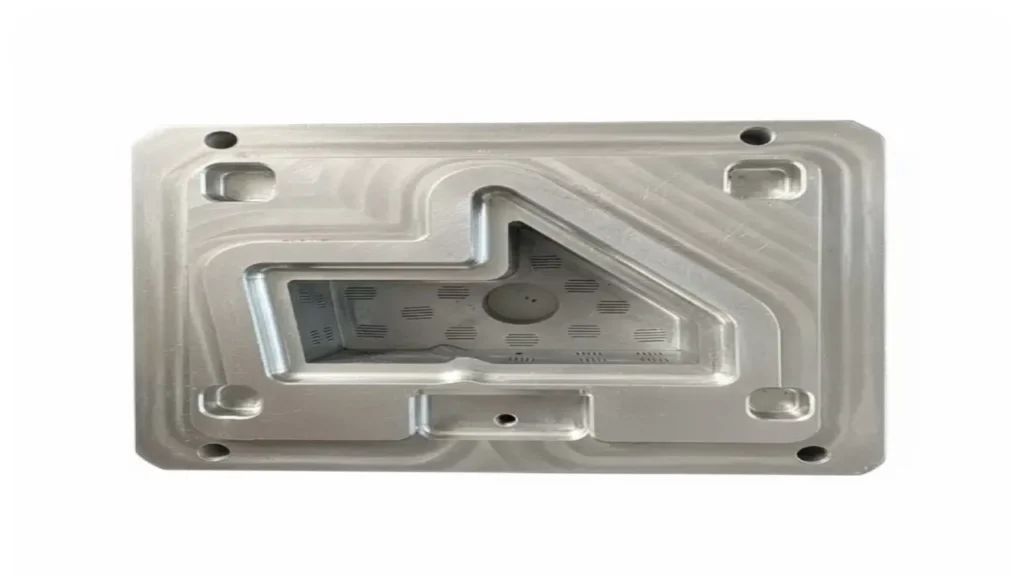
Before you can plan capacity, you must be able to measure it. In the EPS mold industry, we rely on three critical metrics that define the upper limits of what a factory can produce.
A. Cycle Time (The Nano-Metric)
The cycle time is the total duration required to produce one shot (one set of parts from the mold). For EPS, this typically ranges from 60 to 180 seconds, depending on density and thickness.
- Heating/Steaming Time: Reaching the fusion temperature.
- Cooling Time: The longest phase, where water or vacuum reduces the core temperature.
- Ejection & Reset: Removing the part and preparing for the next shot.
B. OEE (Overall Equipment Effectiveness)
OEE is the gold standard for measuring manufacturing productivity.
- Availability: Is the machine running during scheduled time? (Subtracting downtime for mold changes or repairs).
- Performance: Is the machine running at its maximum designed speed?
- Quality: How many parts are usable vs. scrap?
- Target for EPS Factories: A world-class OEE is 85%. Most mid-tier factories operate at 60-70%.
C. Throughput Capacity
Throughput is the number of units produced per hour/shift.
- Formula:
(Total Seconds in Shift / Cycle Time) × Number of Cavities × OEE. - Example: If your mold has 10 cavities, a 90-second cycle, and an 80% OEE, your throughput per hour is
(3600 / 90) × 10 × 0.8 = 320 units/hour.
The Technical Pillars of Production Throughput
Capacity planning is not just about buying more machines; it is about optimizing the technical infrastructure that powers the molds.
A. Steam Boiler & Accumulator Capacity
EPS molding is a thermal process. If your boiler cannot maintain constant steam pressure (typically 0.8 to 1.5 bar for EPS), your cycle times will fluctuate.
- The Bottleneck: Many factories fail to plan for “Peak Demand.” When 10 machines all hit the “Steaming” phase at the same time, steam pressure drops.
- Strategy: Implement Steam Accumulators. These act like batteries for thermal energy, storing high-pressure steam and releasing it instantly during the expansion phase, ensuring every mold achieves perfect fusion without slowing down the rest of the line.
B. Vacuum System Efficiency
Cooling is the bottleneck of EPS production. To scale capacity, you must master the vacuum.
- Passive vs. Active Cooling: Relying solely on water cooling is slow. A high-efficiency vacuum system pulls moisture and heat out of the beads, allowing the part to stabilize faster.
- Planning Tip: When adding new molds to your facility, calculate the CFM (Cubic Feet per Minute) required. An undersized vacuum pump will add 20-30 seconds to every cycle, effectively killing your capacity by 20%.
C. The Mold Material Factor: Aluminum vs. Copper
At Foamold (Transfoam), we emphasize that the mold material is a thermal conductor.
- Standard Aluminum: Excellent for general packaging.
- Copper-Infused Inserts: For areas of the mold with thick cross-sections, using copper inserts can speed up heat transfer, reducing cooling time by up to 15%. This is a “silent” way to increase capacity without buying new equipment.
Designing Molds for Maximum Capacity
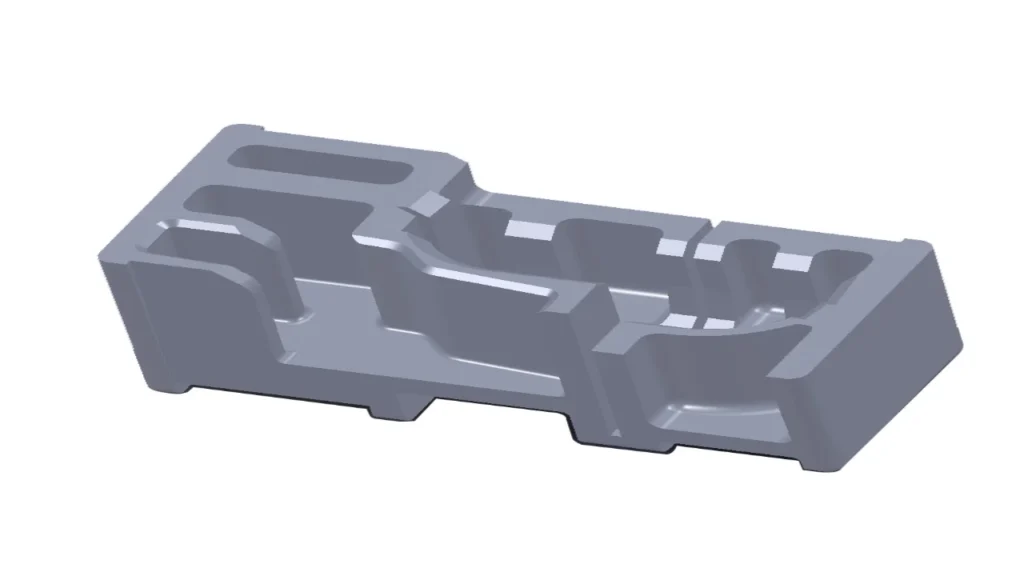
Your capacity is capped by the design of your tooling. A poorly designed mold is a permanent drag on your profit margins.
A. Multi-Cavity Optimization
The most obvious way to increase capacity is to add cavities. However, there is a “sweet spot.”
- The Trade-off: A 20-cavity mold produces more parts but is harder to heat evenly. If the center cavities are under-fused while the outer ones are over-burned, your “Quality” metric (from OEE) will plummet.
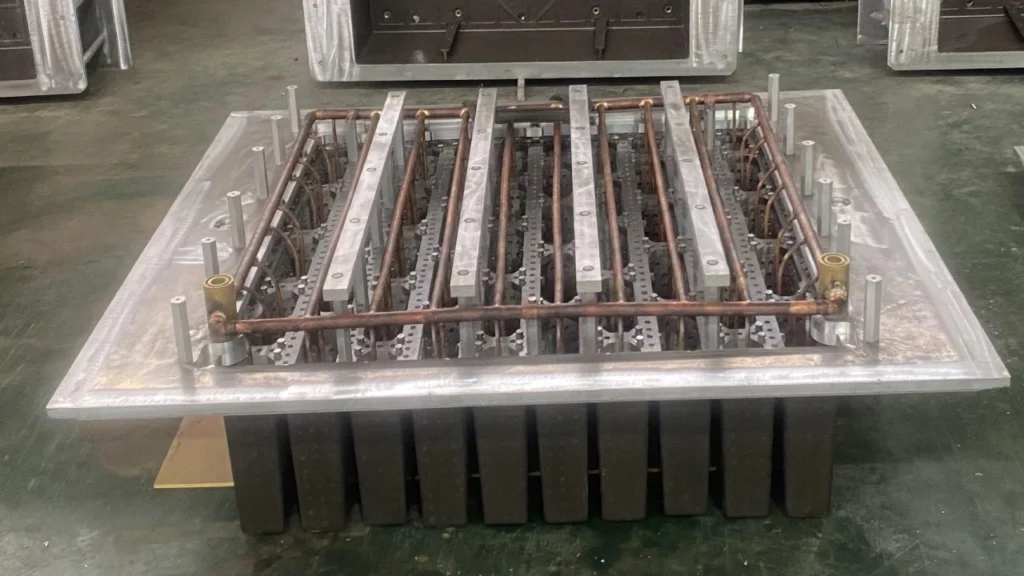
- Solution: Use Symmetrical Steam Manifolds in the mold frame to ensure every cavity receives identical thermal energy.
B. Filling Gun Layout & Density
The speed at which the beads fill the mold determines the start of the cycle.
- High-Speed Filling Guns: Modern EPS molds should use pressurized filling systems.
- Avoid Clogging: Use self-cleaning filling guns. A clogged gun requires a machine stop, which counts as “Unplanned Downtime,” the enemy of capacity.
C. Surface Coatings (Teflon/PTFE)
A mold that sticks is a mold that fails. Applying high-performance Teflon coating ensures that parts eject cleanly every time. In a 24/7 operation, avoiding just 5 “stuck parts” per shift can save hours of cumulative downtime per month.
Workforce & Skill Management
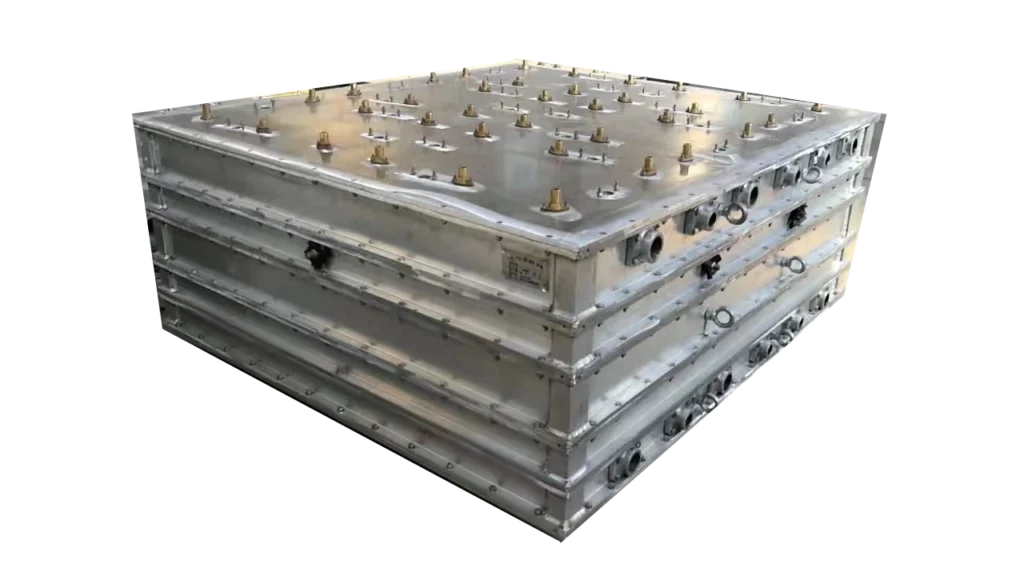
Even the most automated EPS factory depends on human expertise for Mold Changes and Troubleshooting.
A. SMED (Single-Minute Exchange of Die)
In B2B manufacturing, you often need to switch between an EPS Fish Box Mold and an ICF Block Mold.
- The Problem: If a mold change takes 4 hours, and you do 3 changes a week, you lose 12 hours of production.
- The Solution: Use Quick-Change Mold Frames. These allow for standardized mounting and utility connections (steam, water, air), reducing changeover time to under 45 minutes.
B. Preventive Maintenance (PM) Schedules
Capacity is lost when machines break. A strategic plan must include:
- Daily: Inspecting filling guns and seals.
- Weekly: Checking vent cleanliness (using ultrasonic cleaning if necessary).
- Monthly: CMM (Coordinate Measuring Machine) inspection of the mold surface to check for erosion or warping.
Supply Chain & Material Flow: Africa & South America Focus
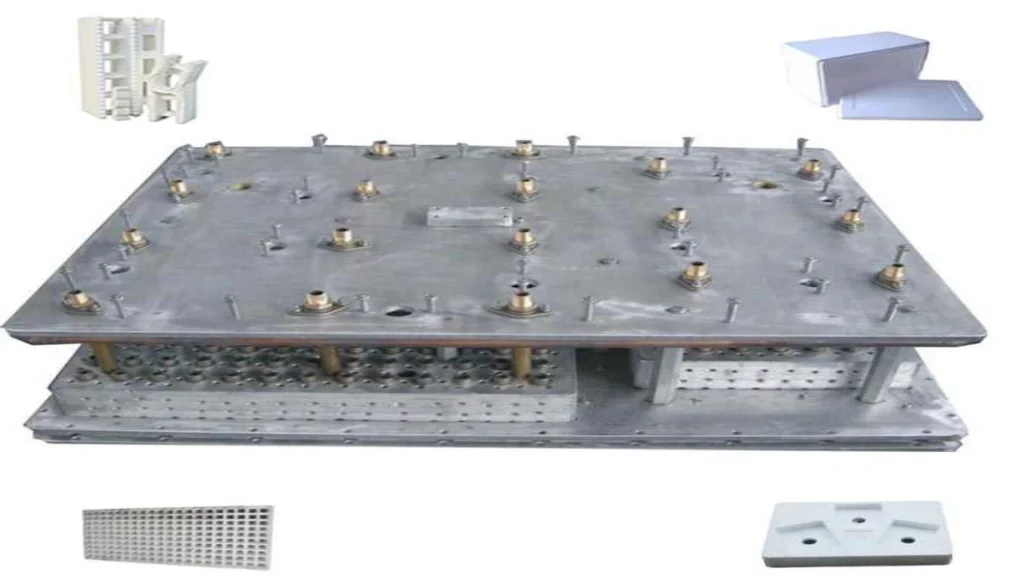
Since your primary markets include Africa (30%) and South America (25%), your capacity planning must account for longer lead times in spare parts and raw material (beads) delivery.
A. Spare Parts “Safety Stock”
If a core vent or a seal fails in a factory in Rugao, China, a replacement is hours away. In Nigeria or Brazil, it could be weeks.
- Strategy: Every high-capacity EPP/EPS mold should be sold with a “Critical Spares Kit” containing extra filling guns, seals, and 10% extra vents.
B. Bead Density & Storage
EPS beads expand differently based on humidity and age.
- Pre-Expander Capacity: Your pre-expander must always stay ahead of your molding machines. If your molding machines are waiting for aged beads, your capacity is zero.
- Silo Planning: Calculate your silo volume based on the 24-48 hour “aging” requirement of EPS beads.
The ROI of EPS Mold Production Capacity
Expanding capacity is a Capital Expenditure (CapEx). You must calculate the Payback Period.
A. CapEx Breakdown
- New EPS Shape Molding Machine: 40,000−40,000−80,000.
- Custom Molds: 5,000−5,000−15,000 per set.
- Infrastructure Upgrade (Boiler/Vacuum): $20,000+.
B. The “Unit Cost” Reduction
As capacity increases, your Fixed Costs (rent, management, insurance) are spread across more units.
- Example: Doubling your output often reduces your per-part cost by 15-20%, even if your electricity bill doubles. This increased margin is what funds further expansion.
Summary: The 5 Steps to Perfect Capacity Planning
- Baseline Audit: Measure your current OEE and identify if the bottleneck is Steam, Vacuum, or Labor.
- Tooling Upgrade: Invest in high-cavity, Teflon-coated molds with quick-change frames.
- Infrastructure Balance: Ensure your boiler and vacuum systems can handle “Peak Demand” from multiple machines.
- Process Standardization: Implement SMED protocols to minimize downtime during mold swaps.
- Digital Tracking: Use ERP/MES software to monitor throughput in real-time.
Conclusion
Capacity planning is a journey, not a destination. As the market for EPS products evolves—from basic packaging to advanced ICF construction and automotive safety components—your factory must be agile enough to scale.
At Foamold (Transfoam), we do more than manufacture high-precision EPS and EPP molds. We provide the technical partnership needed to design your production line for maximum efficiency.
Ready to double your throughput? Book a Visit to Our Factory or contact us for a Custom Production Capacity Audit. Let’s turn your manufacturing goals into a high-precision reality.