
For the past decade, the global perception of Expanded Thermoplastic Polyurethane (ETPU) has been inextricably linked to the athletic footwear industry. Since the launch of the “Boost” technology, ETPU—often referred to as “Popcorn Foam”—has redefined energy return, cushioning, and durability in sneakers.
The Future of ETPU—unmatched resilience, low-temperature flexibility, and extreme fatigue resistance—are now being harnessed to solve complex engineering challenges in automotive safety, sports science, and medical ergonomics.
For product developers and factory owners, the question is no longer just about what ETPU can do for footwear, but how ETPU can transform their specific industry.
Market of ETPU
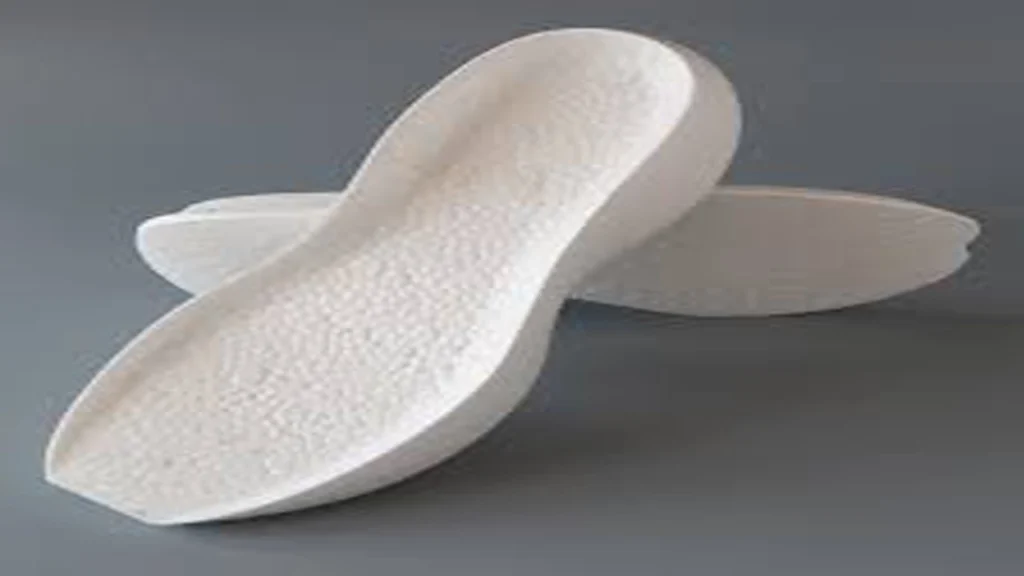
The ETPU market is entering a period of sustained, robust growth. Multiple independent research organizations have projected significant expansion across the coming decade, with forecasts consistently indicating strong compound annual growth rates (CAGR).
Global Market Projections
According to Emergen Research, the global expanded thermoplastic polyurethane market was valued at USD 2.30 billion in 2025 and is expected to register a revenue CAGR of 7.2% during the forecast period, reaching USD 4.61 billion by 2035. 24 Chemical Research projects similar growth, estimating the market at USD 2.15 billion in 2025 with a projected increase to USD 4.28 billion by 2034, representing a CAGR of 8.1%.
Other forecasts reinforce this trajectory:
- Research Nester estimated the market at USD 2.5 billion in 2024, expecting it to surpass USD 5.1 billion by 2034 at a CAGR of 7.7%
- Databridgemarketresearch valued the E-TPU market at USD 3.62 billion in 2025, projecting growth to USD 4.77 billion by 2033
ETPU Foam Particles Market
The ETPU foam particles segment—the raw material form used in most applications—shows equally promising growth. Global Info Research reported the global ETPU Foam Particles market at US2,201millionin2024∗∗,withaforecastedreadjustedsizeof∗∗USD3,159millionby2031∗∗ataCAGRof∗∗5.22,201millionin2024∗∗,withaforecastedreadjustedsizeof∗∗USD3,159millionby2031∗∗ataCAGRof∗∗5.2 1,141 million in 2024 and is projected to reach USD 1,618 million by 2031 with a CAGR of 5.0%.
Shoe Material Market
Given that footwear remains the dominant application for ETPU, the broader TPU foamed shoe material market provides important context. According to YHResearch, the global TPU foamed shoe material market was approximately ¥30.08 billion RMB (about $4.1 billion USD) in 2025 and is expected to approach ¥38.75 billion RMB by 2032, with a CAGR of 3.7%. The expanded-thermoplastic polyurethane shoe material market specifically is projected to grow at a CAGR of 9.3% from 2025 to 2031.
Why ETPU is Unique
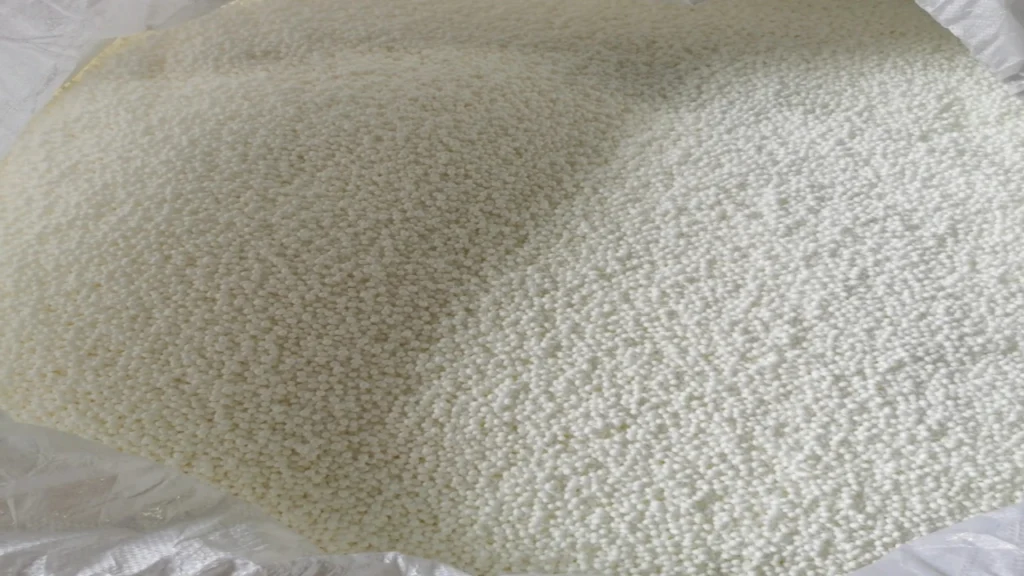
The uniqueness of ETPU (Expanded Thermoplastic Polyurethane) lies in its ability to combine the lightweight nature of conventional foams with the superior mechanical properties of high-performance elastomers—achieved through supercritical physical foaming technology. This “1+1>2” synergy creates a material that is not only high-performing but also versatile and environmentally friendly, making it irreplaceable in several key industries.
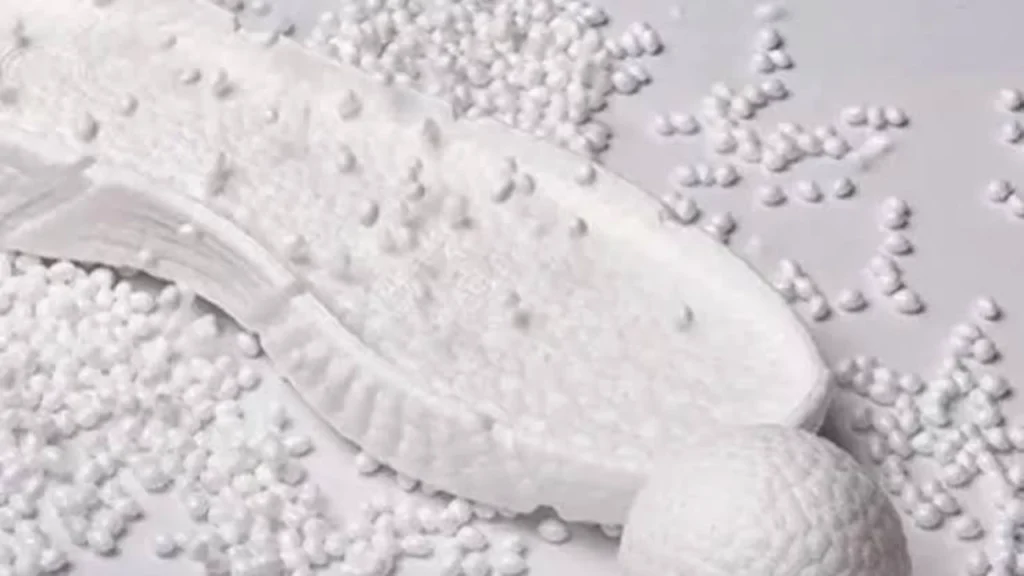
ETPU is most recognizable by its popcorn-like bead morphology—a feature that is key to its superior performance:
- Microcellular Closed-Cell Structure: During supercritical foaming, each ETPU bead develops thousands of independent, closed cells, typically ranging from 8 to 35 microns in diameter.
- Source of Performance: This structure transforms each bead into a microscopic “energy ball.” When combined, these beads give the material an ultra-low density and exceptional energy return and cushioning characteristics.
| Performance Metric | ETPU | Traditional Material (e.g., EVA) | Unique Value |
|---|---|---|---|
| Rebound Resilience | Ball rebound of 60%–69% | Typically 40%–45% | Delivers superior “step-in feel” and energy return, enhancing athletic performance |
| Compression Set | Can be controlled within 30% | Prone to permanent deformation after prolonged compression | Maintains shape and elasticity over time; midsoles don’t “bottom out” |
| Low-Temperature Performance | Remains highly elastic at -25°C to -20°C | Becomes stiff and brittle in cold conditions | Consistent performance year-round, even in freezing environments |
| Abrasion & Flex Resistance | Inherits TPU’s high abrasion and flex resistance | Comparatively weaker in both areas | Products are more durable and withstand high-frequency, high-intensity use |
| Sustainability | Thermoplastic, fully melt-recyclable | Chemically crosslinked, non-recyclable | Aligns with global sustainability goals; enables a circular economy |
| Elongation at Break | Up to 6–7% , which is 2–3 times that of EVA | Relatively low elongation | Offers greater flexibility and tear resistance, adapting to complex deformations |
ETPU in Automotive Industry
The automotive sector is the largest growth engine for ETPU outside of footwear. As Electric Vehicles (EVs) demand lighter materials and higher safety standards, ETPU is moving into the vehicle’s “nervous system.”
A. Dynamic Vibration Dampening (NVH)
Electric vehicles are significantly quieter than internal combustion engines, making road noise and vibration much more noticeable. ETPU is being integrated into:
- Suspension Bushings: ETPU’s fatigue resistance makes it ideal for isolating road vibration.
- Seat Cushioning: Beyond comfort, ETPU’s ability to maintain its shape over long-distance driving makes it a premium alternative to traditional PU slabs.
B. Impact Absorption & Pedestrian Safety
Automotive designers are now using ETPU in Bumper Inserts and Dash Pads.
- Why ETPU? In a collision, EPP (Expanded Polypropylene) provides excellent one-time energy absorption. However, ETPU provides Multi-Hit Protection. For low-speed impacts, ETPU bumpers can absorb the energy and return to their original shape, significantly reducing repair costs and insurance premiums.
ETPU in Sports & Personal Protection
If ETPU can protect a runner’s knee from 20 miles of impact, it can protect an athlete from high-velocity collisions.
A. Next-Gen Helmet Liners
Traditionally, helmets used EPS (Expanded Polystyrene) because of its excellent one-time crush energy absorption. However, modern sports like American football, ice hockey, and cycling are focusing on Sub-Concussive Hits—the repeated smaller impacts that cause long-term brain trauma.
- The ETPU Solution: By layering ETPU with EPS or using a full ETPU liner, helmet manufacturers can create gear that manages repeated impacts without losing its protective capacity. At Foamold, we are already engineering specialized Helmet Molds designed specifically for ETPU’s unique steam-fusion requirements.
B. Performance Flooring and Track Surfaces
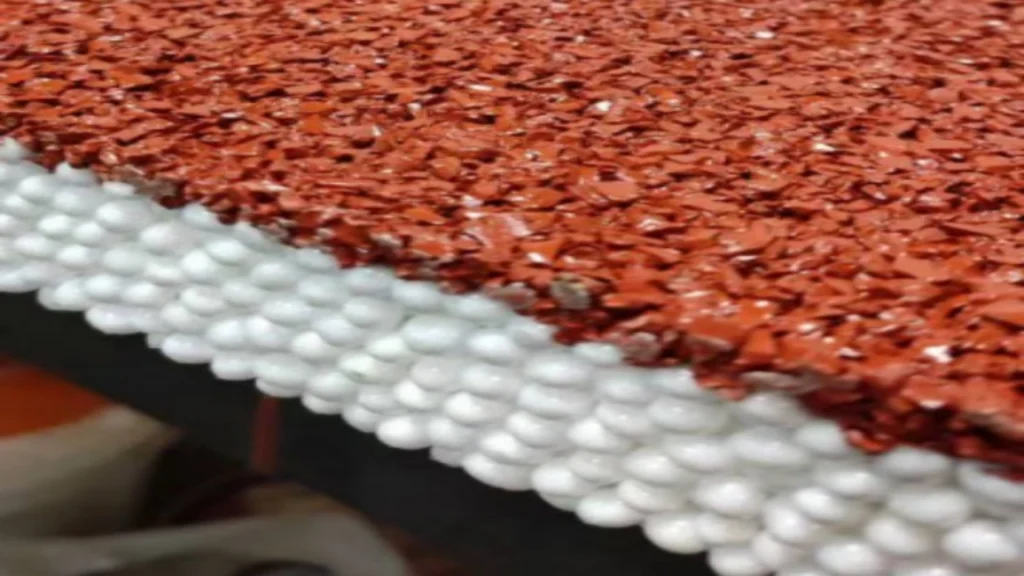
ETPU is migrating from the shoe to the ground. High-end athletic tracks and gym flooring are now incorporating ETPU “Popcorn” infills. This provides a “rebound effect” that reduces muscle fatigue for athletes and prevents joint injuries in school playgrounds.
ETPU in Medical & Ergonomics
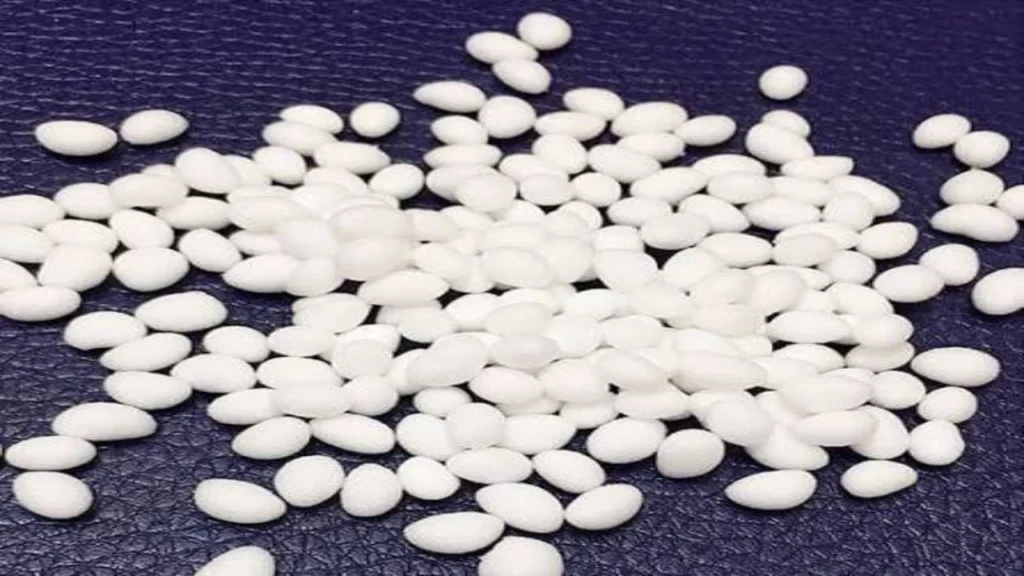
The medical industry is utilizing ETPU for its biocompatibility and pressure distribution properties.
A. Orthopedic Rehabilitation
Custom orthotic insoles and prosthetic limb liners are being manufactured using ETPU. The material’s ability to contour to the patient’s body while providing dynamic support is a breakthrough for those with chronic foot conditions or mobility challenges.
B. Decubitus Prevention (Anti-Bedsore Technology)
For long-term hospital patients, ETPU is being used in high-end mattresses and seating pads. Standard PU foam eventually “bottoms out,” creating pressure points that lead to bedsores. ETPU’s constant energy return ensures that the patient’s weight is distributed evenly over time, even with prolonged use.
Mastering the ETPU Mold
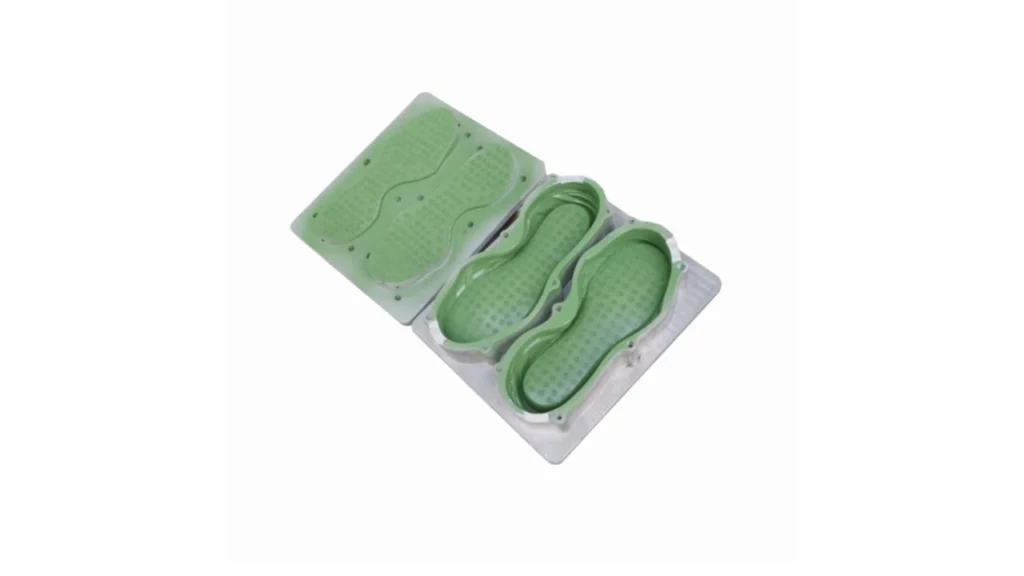
Developing a product in ETPU is not as simple as swapping beads in an existing machine. The EPP foam manufacturing process is complex, but ETPU is even more demanding.
A. High-Pressure Steam Architecture
ETPU requires a very specific Steam-to-Pressure ratio. If the steam is too hot, the beads melt into a solid block; if too cool, they don’t fuse.
- Mold Material: ETPU molds must be made from high-grade, forged aluminum with specialized thermal conductivity.
- Venting Density: Because ETPU beads are extremely “bouncy,” the mold must have a higher density of core vents to ensure the air is evacuated instantly as the beads expand.
B. Shrinkage Control and Stabilization
ETPU shrinkage is significantly different from EPS or EPP.
- Dimensional Accuracy: ETPU parts continue to “mature” or stabilize for 24-48 hours after demolding. A high-precision ETPU Sole Mold must account for this post-molding behavior in its initial CAD design. At Foamold, we use advanced CMM (Coordinate Measuring Machine) verification to ensure our ETPU molds deliver sub-millimeter accuracy.
C. Teflon and Surface Coating
Due to the “tackiness” of ETPU at fusion temperatures, high-performance Teflon or Ceramic coatings are mandatory. This ensures a clean ejection and a smooth, “popcorn-texture” surface that is aesthetically pleasing for consumer products.
ETPU vs. EPP vs. EPS
For a new product developer, choosing the right material is a balance of Performance vs. Cost.
| Property | EPS (Polystyrene) | EPP (Polypropylene) | ETPU (Thermoplastic PU) |
|---|---|---|---|
| Energy Return | Very Low | Moderate | Extreme (>70%) |
| Durability | Low (Single-use) | High (Multi-use) | Extreme (Lifelong) |
| Chemical Resistance | Low | High | High |
| Flexibility | Brittle | Flexible | Elastic |
| Mold Cost | $ | $$ | $$$ |
| Best Application | Shipping / Construction | Automotive / HVAC | EV Safety / Sports / Medical |
The “Total Life Cycle” Value
While ETPU tooling and raw materials are more expensive, the Value Density is higher. An ETPU component can replace a complex assembly of PU foam, springs, and plastic housings, simplifying your supply chain and reducing assembly labor costs.
Conclusion
The footwear industry was just the proof of concept. The future of ETPU lies in its ability to protect, support, and endure in environments where other foams fail. Whether it is a safety-critical automotive part, a life-saving medical mattress, or a high-performance sports helmet, ETPU is the material that bridges the gap between softness and strength.
At Foamold (Transfoam), we are committed to pushing the boundaries of what is possible with particle foam. Our engineering team combines decades of experience in CNC precision machining with a deep understanding of ETPU thermal dynamics.
Are you ready to innovate beyond the shoe sole? Contact our ETPU specialists today for a technical DFM (Design for Manufacturability) audit. Let’s build the high-performance tools that will power the next generation of your products.