In foam molding—whether Expanded Polypropylene (EPP), Expanded Polystyrene (EPS), or other bead foam technologies—production efficiency directly determines your bottom line.
Every second shaved from cycle time, every percentage point gained in yield, and every minute saved in mold changeovers multiplies into thousands of dollars of additional profit over a year of production.
Yet many foam molding operations leave significant efficiency gains on the table. Poor mold design, suboptimal process parameters, inadequate maintenance, and outdated equipment all conspire to increase cycle times, raise scrap rates, and drive up energy consumption.
The good news: systematic improvements in each of these areas can boost overall equipment effectiveness (OEE) by 20-40% without major capital investment.
Optimize Mold Design for Faster Cycle Times
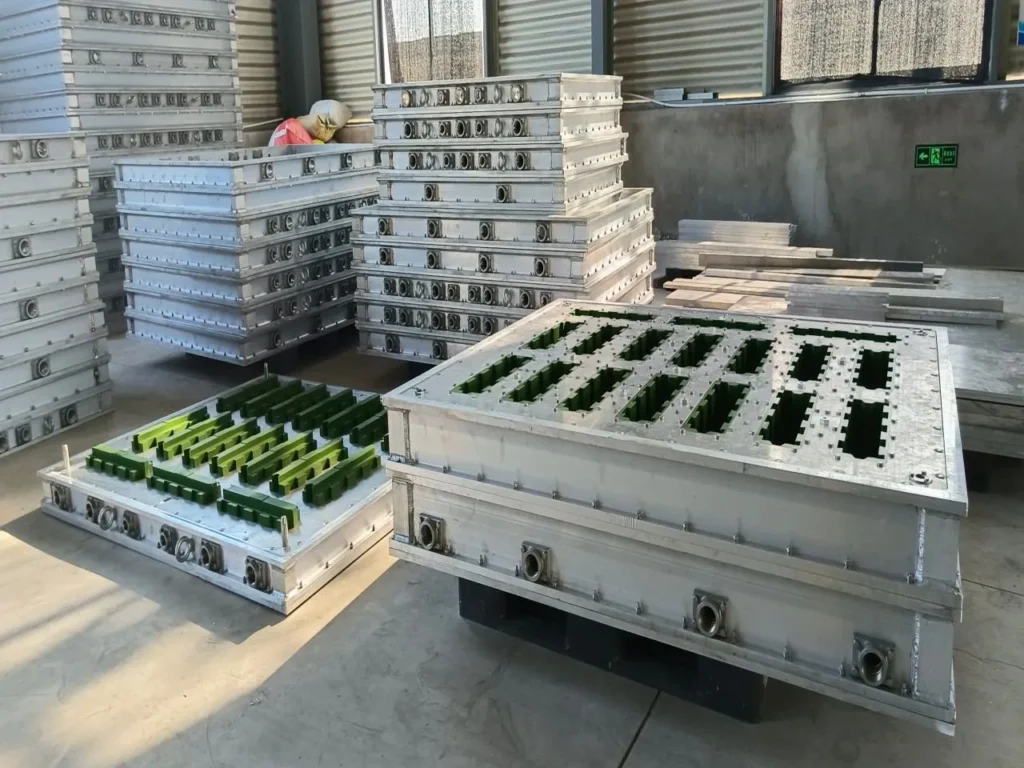
The foundation of efficient foam molding is a well-designed mold. Many efficiency problems—slow cooling, inconsistent fill, high scrap rates—trace back to mold design compromises made during initial tooling.
Conformal Cooling Channels
Traditional foam molds use straight-drilled cooling lines, which cool unevenly and slowly because they cannot follow the contour of the part.
Conformal cooling channels—cooling passages machined to match the exact geometry of the molded part—represent one of the most significant efficiency breakthroughs in recent years.
By maintaining a constant distance from the mold cavity surface, conformal cooling reduces cooling time by 30-50% compared to conventional cooling designs.
For a typical EPS or EPP molding cycle where cooling consumes 40-60% of total cycle time, this improvement alone can reduce overall cycle time by 15-25%.
When specifying new molds, insist on conformal cooling for complex geometries. For existing molds, evaluate whether retrofitting with conformal cooling inserts is cost-effective based on production volume.
Optimized Venting Design
Poor venting forces operators to use longer fill times, adding 10-15 seconds to every cycle while also increasing the risk of incomplete fills and surface defects.
The physics are straightforward: as steam or compressed air pushes foam beads into the mold cavity, trapped air must escape.
Without adequate venting pathways, that air creates back-pressure that slows material flow and prevents complete cavity filling.
Proper venting design includes:
- Vent depths calculated specifically for the bead size and viscosity of your foam material (typically 0.03-0.08mm for EPS/EPP)
- Vent placement at the last points to fill in the cavity
- Sufficient venting area—typically 1-2% of the cavity surface area
- Self-cleaning vent designs that resist bead ingress
A well-vented mold fills completely in the shortest possible time, eliminating the “air cushion” that otherwise extends fill cycles.
Parting Line and Ejection Optimization
Smooth, properly maintained parting lines reduce clamping force requirements and prevent flash formation.
Ejector pin placement and design significantly impact cycle time as well: inadequate ejector pin coverage or poorly lubricated pins cause parts to stick, requiring operator intervention or longer cooling to ensure release.
Design molds with:
- Sufficient ejector pin density (typically one pin per 100-150cm² of projected area)
- Strategically placed ejector pins away from thin sections prone to damage
- Surface treatments (nitriding, PVD coatings) on ejector pins to reduce friction and wear
Implement Advanced Process Controls
Once you have a well-designed mold, the next lever for efficiency is the molding process itself. Modern control systems can dramatically reduce cycle times and scrap rates.
Closed-Loop Temperature Control
Manual temperature control—relying on operator judgment to adjust steam and cooling water—introduces variability that extends cycle times.
Operators naturally add safety margins, running longer cycles than necessary to ensure parts are fully fused and cooled.
Closed-loop temperature control systems use strategically placed thermocouples in the mold and platen to automatically regulate steam and cooling inputs.
These systems maintain cavity temperatures within ±1°C of setpoint, eliminating temperature-driven variability. The result: consistent cycles at the minimum possible duration.
For existing machines without closed-loop controls, retrofit kits are available from major controls manufacturers. The payback period is typically 6-12 months based on cycle time reductions of 10-15%.
Intelligent Steam Management
Steam accounts for the largest energy input in foam molding, but traditional machines apply steam at fixed pressures and durations regardless of actual conditions. This “shotgun” approach wastes energy and extends cycle times.
Intelligent steam management systems use real-time cavity pressure and temperature feedback to modulate steam input precisely when and where needed. Features include:
- Pressure profiling (gradually increasing steam pressure during fill)
- Pulsed steam injection to optimize heat transfer
- Automatic steam cutoff when fusion temperature is reached
These systems typically reduce steam consumption by 15-25% while also cutting steam cycle duration by 10-20%.
Automatic Material Dosing and Density Control
Inconsistent material dosing leads to overpacking (wasting material and extending cooling time) or underpacking (producing unusable parts). Either way, efficiency suffers.
Volumetric dosing systems with closed-loop feedback maintain consistent shot weights within ±1%.
For EPP molding where multiple density zones are required, variable density control systems adjust material distribution in real-time to achieve target density profiles without trial-and-error manual adjustments.
Reduce Mold Changeover Time (SMED)
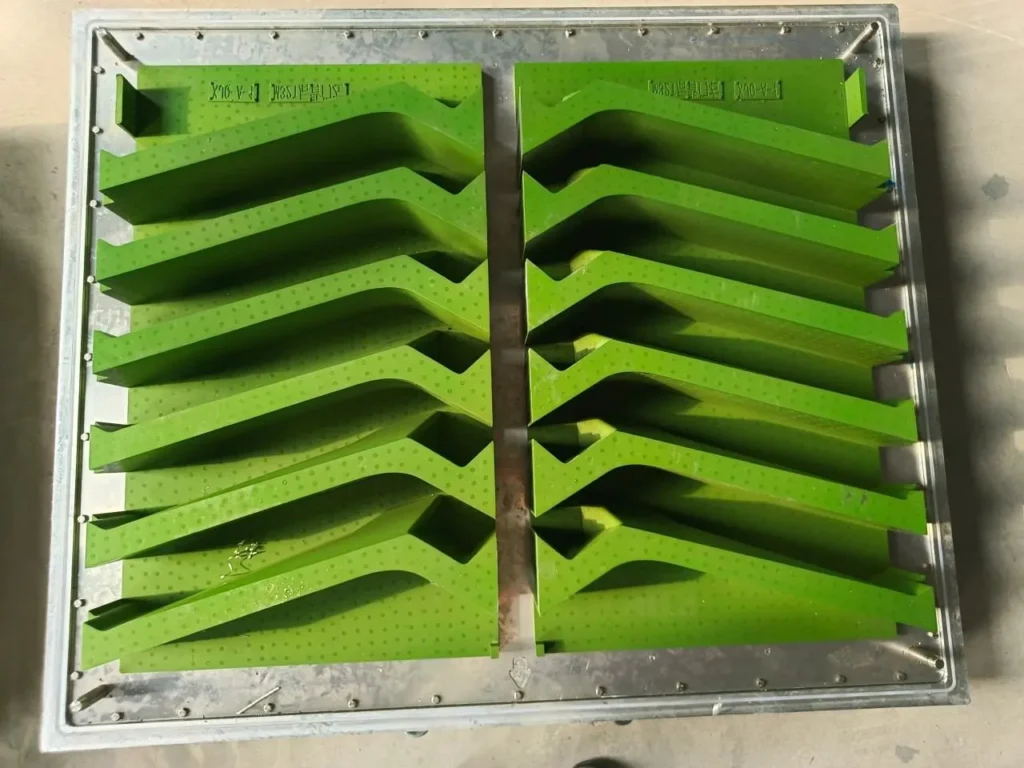
Mold changeover downtime is pure production loss—no parts are being made while molds are swapped. Yet many foam molding operations accept changeover times of 2-4 hours as normal.
Single-Minute Exchange of Die (SMED) methodology, developed by Shigeo Shingo for Toyota, systematically reduces changeover time by converting internal tasks (those requiring machine stoppage) to external tasks (performed while the machine runs).
Apply SMED to Foam Mold Changeovers
Internal tasks (machine stopped):
- Unbolting and removing the current mold
- Cleaning platens and connections
- Positioning and bolting the new mold
- Connecting steam, water, air, and electrical lines
- Initial warm-up
External tasks (done while machine runs with previous mold):
- Gathering tools and required hardware
- Preheating the new mold in a dedicated oven
- Pre-assembling connection fittings
- Preparing raw materials for the new job
- Documenting settings for the next run
By systematically converting internal to external tasks, foam molding operations typically reduce changeover times from hours to 15-30 minutes.
Quick-Change Mold Hardware
The physical setup of mold changeovers can be accelerated with:
- Hydraulic or magnetic clamping systems (replacing bolts) that reduce clamping time from 15-20 minutes to under 1 minute
- Quick-disconnect couplings for steam, water, and air lines (color-coded to prevent misconnection)
- Standardized mold heights and connection positions across all molds for a given machine
- Cart-mounted molds that can be rolled directly to the machine instead of crane-lifted
Investment in quick-change hardware typically pays back within 3-6 months through increased machine uptime.
Implement Predictive Maintenance for Molds
Unscheduled mold maintenance stops production completely.
The cost of an unexpected mold failure includes not just repair labor and parts, but lost production hours, expedited shipping for replacement tooling, and potentially scrapped production from out-of-spec parts.
Scheduled Preventive Maintenance
At minimum, foam molds require regular:
- Cleaning of venting grooves (every 5,000-10,000 cycles)
- Lubrication of ejector pins and guide components (every 2,000-5,000 cycles)
- Inspection of cooling channel integrity (every 10,000-20,000 cycles)
- Verification of parting line flatness (every 20,000-50,000 cycles)
Create a maintenance calendar for each mold based on actual cycle counts, not arbitrary time intervals. Digital cycle counters embedded in the molding machine or mold itself enable precise maintenance scheduling.
Condition Monitoring
Advanced operations use sensor-based condition monitoring to detect problems before they cause failures:
- Vibration sensors on ejector systems detect pin binding before it causes stuck parts
- Flow meters in cooling circuits identify partial blockages before they affect cooling uniformity
- Pressure sensors in steam lines detect seal degradation before steam leaks develop
When a monitored parameter drifts outside normal range, the system generates an alert for maintenance during the next scheduled downtime, preventing unexpected stoppages.
Spare Parts Strategy
Nothing extends downtime like waiting for replacement parts. Maintain a critical spares inventory including:
- Ejector pins (most common failure point)
- Guide bushings and pillars
- Seal kits for steam and water connections
- Thermocouples and pressure sensors
- Heating elements (for electrically heated molds)
For high-volume production molds, consider stocking a complete spare mold.
While expensive, a spare mold eliminates downtime entirely when maintenance is required—often justified for molds producing high-margin products on tight delivery schedules.
Optimize Part Design for Manufacturability (DFM)
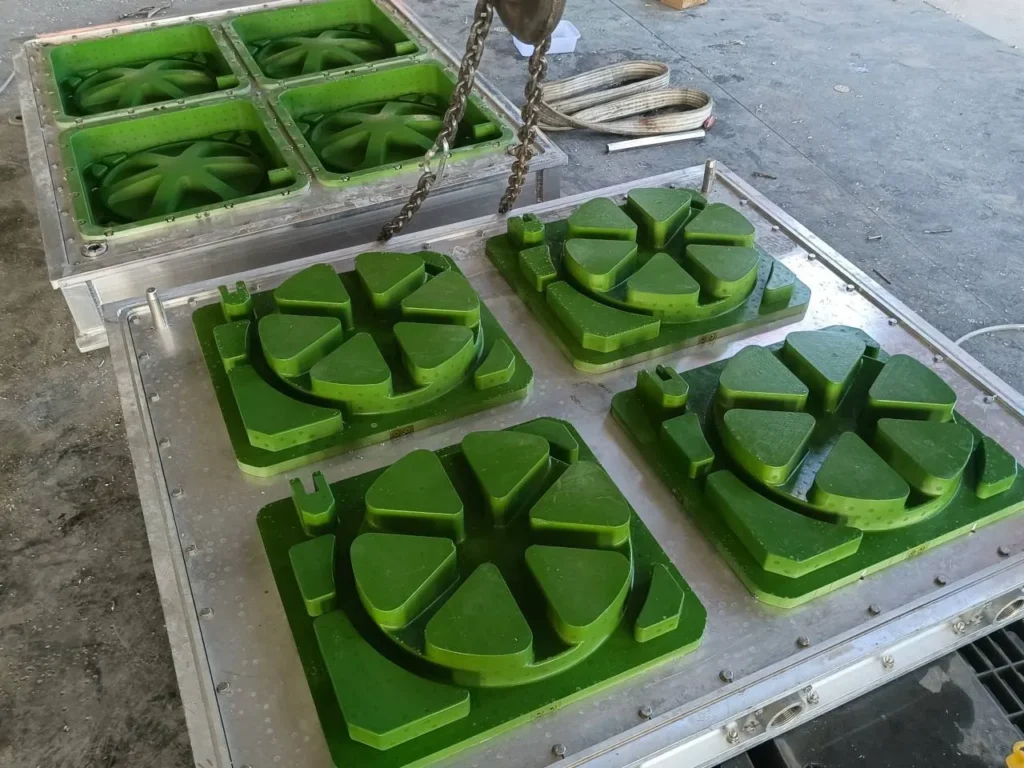
Efficiency does not start on the production floor; it starts at the engineering desk.
Parts designed without consideration for the molding process impose inherent inefficiencies that no amount of process optimization can fully overcome.
Design Rules for Foam Molding
Work with your mold supplier and process engineers to establish design rules:
Wall thickness consistency: Gradual thickness transitions (not abrupt changes) promote uniform fill and cooling. A ratio of adjacent wall thicknesses exceeding 2:1 creates filling and density problems.
Draft angles: Minimum 1° draft on vertical walls (3° preferred) ensures reliable part ejection. Zero-draft designs require longer cooling to allow part shrinkage to release the mold, adding seconds to every cycle.
Rib and boss design: Ribs should be 50-60% of adjacent wall thickness to prevent sink and extend cooling time. Bosses require adequate base fillets to prevent stress concentration and sticking.
Parting line placement: Locate parting lines on flat, accessible surfaces away from critical dimensional features. Complex parting lines with multiple steps and angles increase mold complexity and reduce ejection reliability.
Design for Multi-Cavity or Family Molds
If your annual volume justifies the investment, multi-cavity molds produce multiple parts per cycle, directly multiplying output without additional machine time. However, multi-cavity molds require:
- Balanced runner systems (or direct gating) that fill all cavities simultaneously
- Uniform cooling across all cavities to prevent cycle time being dictated by the slowest-cooling cavity
- Sufficient machine platen size and clamping force
Family molds (multiple different part numbers in one mold) offer efficiency when assembling multiple components into a finished product. However, ensure that different part numbers have similar cycle time requirements; otherwise, the mold cycles at the pace of the slowest part.
Adopt Automation Where It Delivers ROI
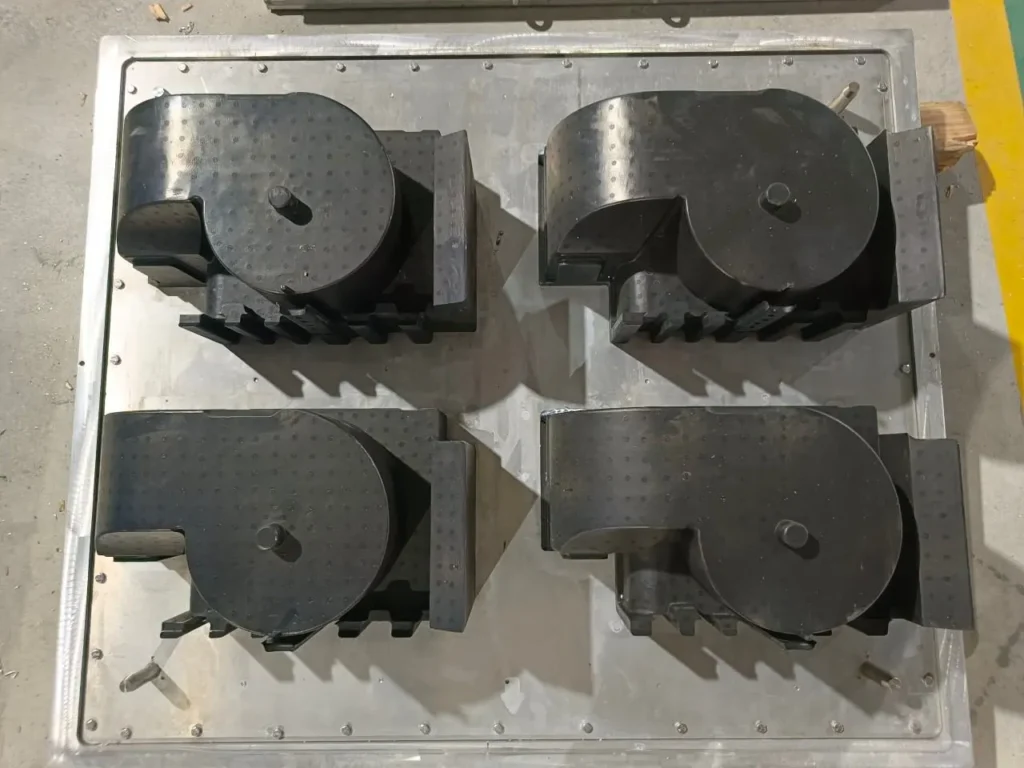
Automation reduces cycle time variability, eliminates non-value-added labor, and enables unattended operation. However, not all automation delivers equal returns.
Parts Removal and Handling
Manual part removal introduces variability: operators work at different speeds, take breaks, and occasionally forget to remove a part (leading to mold damage). Robotic part removal eliminates these issues.
For simple parts, a pneumatic pick-and-place unit operates at lower cost than a full six-axis robot. For complex geometries requiring rotation or delicate handling, articulated robots provide greater flexibility.
The economic case for automation is straightforward: calculate the labor cost of manual removal (operator hourly rate × removal time per cycle × cycles per year) and compare to robotic system amortization.
Most foam molding operations see payback within 12-24 months for high-volume production.
Automated Material Handling
Manual material loading—adding EPS or EPP beads to the machine hopper or dosing system—wastes operator time and introduces the risk of material contamination or incorrect mixing.
Central material handling systems automatically convey virgin and recycled beads from silos or gaylords to multiple machines. Integrated gravimetric blenders ensure consistent material blends without operator intervention.
For smaller operations, machine-mounted autoloaders with level sensors maintain hopper fill automatically, freeing operators for higher-value tasks.
Automated Post-Molding Operations
Secondary operations—trimming flash, drilling holes, welding components, applying labels—often occur on separate equipment with separate labor.
Integrating these operations into the molding cell reduces work-in-process inventory and total labor per part.
In-mold labeling (IML) applies labels during the molding cycle, eliminating a separate labeling operation. In-mold assembly produces components with integral hinges, snap-fits, or living hinges that would otherwise require secondary assembly.
Reduce Scrap and Rework Through Quality Systems
Every scrapped part represents wasted material, energy, machine time, and labor. Reducing scrap from 5% to 2% is equivalent to adding 3% more production capacity without any capital investment.
Statistical Process Control (SPC)
Implement SPC for critical process parameters:
- Part weight (indicates density consistency)
- Cycle time (indicates cooling or fill issues)
- Steam pressure and duration
- Cooling water inlet and outlet temperature difference
Collect data automatically from the molding machine controls, not manually. Chart parameter trends and establish control limits.
When a parameter trends toward a control limit, investigate and correct before producing scrap.
Real-Time Defect Detection
Vision systems mounted at the mold exit can inspect every part for defects:
- Incomplete fills (short shots)
- Surface voids or bubbles
- Flash (excess material at parting lines)
- Warpage or dimensional deviations
When a vision system detects a defect, it can automatically separate the bad part from good production and alert operators to the problem.
Early detection prevents continued scrap production while the same issue persists.
Root Cause Analysis for Recurring Issues
Keep a defect log documenting each scrap occurrence: part number, defect type, estimated cause, and corrective action. Review the log monthly to identify recurring issues that require systematic solutions.
Common recurring issues in foam molding include:
- Inconsistent part weight → investigate material dosing system or material moisture content
- Flash on same cavity of multi-cavity mold → check mold damage or parting line wear on that cavity
- Voids in same location → check venting or steam distribution at that location
Energy Efficiency Reduces Cost per Part
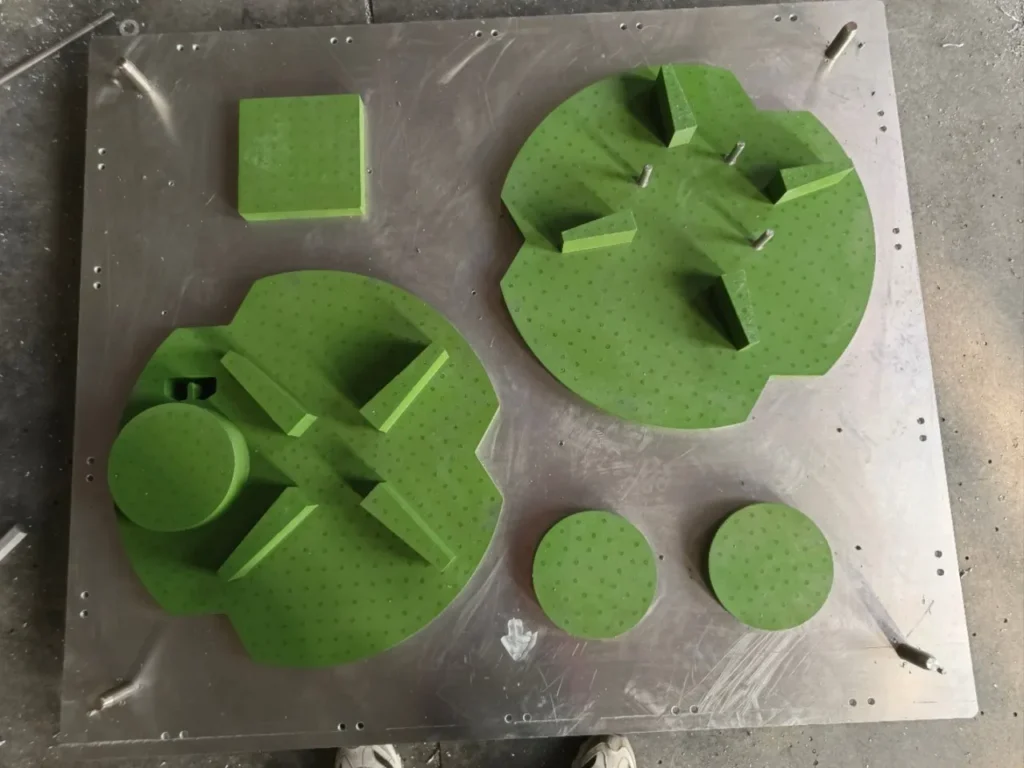
Energy is typically the second-largest variable cost in foam molding after raw materials. Improving energy efficiency directly reduces cost per part while also supporting sustainability goals.
Steam System Optimization
Steam generation consumes 60-80% of total energy in foam molding. Optimization opportunities include:
Heat recovery: Install economizers on boiler exhaust to preheat feedwater. Recover condensate heat for preheating mold cooling water or plant heating.
Insulation: Insulate steam pipes, fittings, and the molding machine platen to reduce radiated heat loss. An uninsulated 10-meter steam pipe at 150°C loses roughly 10 kW of heat continuously.
Steam trap maintenance: Failed-open steam traps waste steam continuously; failed-closed traps cause water hammer and slow cycle times. Test and repair traps quarterly.
Steam recovery systems: As noted in EPS industry trends, steam recovery systems reduce fuel consumption by 20-30% by capturing and reusing steam from the cooling phase.
Cooling System Efficiency
Cooling water pumps operating at full speed regardless of demand waste significant energy. Variable frequency drives (VFDs) on cooling pumps reduce pump speed during low-demand periods (startup, warm-up, idle), cutting energy consumption by 30-50%.
Cooling tower efficiency also matters: maintain proper water treatment to prevent scale (which reduces heat transfer), keep fill media clean, and operate fans only when needed.
Compressed Air Systems
Leaks in compressed air systems are notoriously wasteful. A single 3mm leak at 6 bar wastes approximately 1,500 kWh of electricity per year. Implement a leak detection and repair program.
For pneumatic ejector systems, evaluate whether lower air pressure achieves reliable ejection. Many systems operate at higher pressure than necessary, wasting energy and accelerating component wear.
Conclusion
Improving foam mold production efficiency is not a one-time project but an ongoing discipline.
The ten strategies outlined above operate at different levels: mold design, process controls, changeover methodology, maintenance systems, part design, automation, quality systems, energy management, training and metrics, and supplier collaboration.
The most successful foam molding operations systematically implement these strategies in priority order:
- Start with mold design (conformal cooling, optimized venting) – fixes the physical constraints
- Implement process controls (closed-loop temperature, intelligent steam) – reduces variability
- Apply SMED to changeovers – increases available production time
- Establish preventive maintenance – prevents unplanned downtime
- Optimize part design – eliminates inherent inefficiencies
Each strategy delivers incremental gains. Cumulatively, these gains multiply.
A mold with conformal cooling (15% cycle reduction), operating on a machine with closed-loop temperature control (10% cycle reduction), with SMED changeovers (15% capacity increase), and 2% scrap (vs. 5% baseline) achieves roughly 40-50% higher effective output than an unoptimized operation.
The investment required for these improvements varies. Some—like SMED and operator training—require little capital but significant organizational focus.
Others—like conformal cooling molds and robotic automation—require upfront investment but deliver rapid payback through lower per-part costs.
In today’s competitive environment, foam mold production efficiency is not merely a technical objective; it is a strategic imperative.
If you have any questions regarding EPS/EPP/ETPU molds, please feel free to contact us at Transfoam; we will provide you with the perfect solution.