
In the competitive landscape of industrial manufacturing and product design, the “hidden” technology of tooling often dictates the success of a project.
For developers working with particle foams, the choice between EPP Mold vs EPS Mold is one of the most significant decisions they will face.
However, many developers focus solely on the material properties, neglecting the fact that the mold is the heart of the production line.
An EPP mold and an EPS mold are not interchangeable; they are engineered systems designed to handle different thermal, mechanical, and chemical stresses.
Material Difference & Its Architectural Dictation
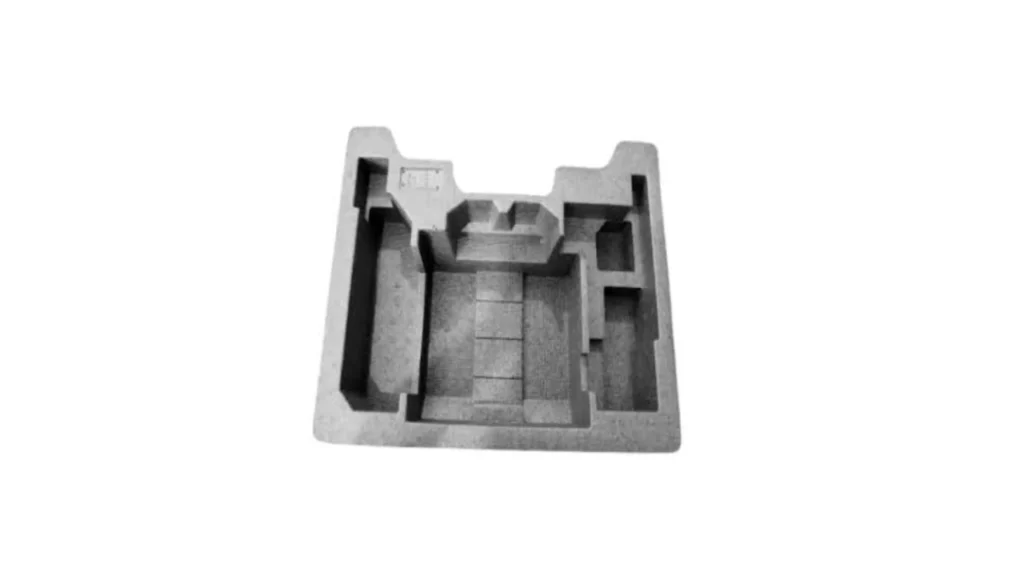
The first and most fundamental difference between EPS and EPP molds is how the raw material dictates the mold architecture.
The EPS Paradigm: Rigidity and Fusion
Expanded Polystyrene (EPS) is a thermoplastic material containing a blowing agent (usually pentane). When exposed to steam, the beads soften and the blowing agent expands them to fill the mold cavity.
- Fracture Mechanics: As shown in guides on how to cut Styrofoam, EPS is rigid and brittle. It has virtually no elastic memory.
- Mold Implications: An EPS mold must be designed with “Clean Release” as the top priority. Because the material is brittle, any “drag” or “hang-up” in the mold will cause the part to crack during ejection. This means EPS molds often feature highly polished surfaces and simplified geometries. Complex undercuts are typically avoided unless specialized moving cores or “slides” are integrated, which adds to the tooling cost.
The EPP Paradigm: Resilience and Molecular Memory
Expanded Polypropylene (EPP) is a semi-crystalline, closed-cell foam. Unlike EPS, it does not use a chemical blowing agent during the molding phase; it relies on physical expansion under high pressure.
- Molecular Toughness: EPP is famous for its “memory.” If you compress it, it springs back.
- Mold Implications: Because EPP is flexible and tough, the mold can actually incorporate more complex “negative” geometries. The material can be slightly compressed during ejection without breaking. However, this toughness requires the mold to have a much higher Venting Density. EPP beads are physically stronger, and forcing them into a complex cavity requires the air to be evacuated extremely fast. If your EPP mold has poor venting, you will get “voids” or “non-fused” areas, compromising the structural integrity of the part.
Thermal and Pressure Dynamics: Engineering for Extremes
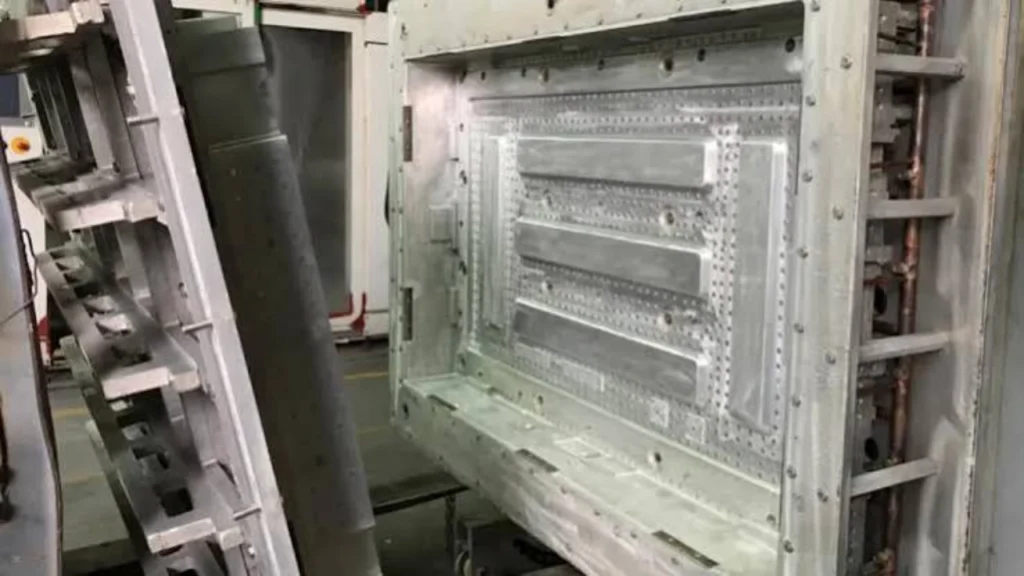
The most significant engineering gap between EPS and EPP molds lies in the Steam-Chest Technology. The EPP foam manufacturing process operates in a much more violent environment than EPS.
Pressure Thresholds
- EPS Molds: These typically operate at a steam pressure of 0.8 to 1.5 bar. The internal pressure during expansion is relatively manageable. Consequently, the mold walls are thinner (typically 10-12mm of aluminum), and the framing is lighter.
- EPP Molds: EPP requires a “High-Pressure Steam Chest.” Operating pressures range from 3.0 to 5.0 bar. To withstand this, EPP molds must be built with a much higher safety factor. The aluminum plates are thicker (15-20mm), and the structural ribs behind the plates are more robust to prevent “bowing” under pressure.
Temperature & Alloy Choice
EPP molding temperatures are significantly higher than EPS. This constant cycling between high-temperature steam and cold cooling water creates immense Thermal Fatigue.
- Aluminum Grades: While a standard EPS mold might use a cast 300-series aluminum, a high-performance EPP mold (like those we produce at Foamold) often utilizes 6061-T6 or 7075-T6 forged aluminum. These alloys have higher tensile strength and better resistance to thermal cracking.
- Thermal Expansion: A 1-meter EPP mold can expand by several millimeters when heated to 150°C. New developers must ensure their mold manufacturer accounts for this expansion in the guiding pins and frame alignment. If not, the mold will “bind” or leak, leading to downtime.
Surface Technology and Coating Strategies
Surface finish is not just about aesthetics; it’s about cycle time and ejection efficiency.
The “Dry” vs. “Lubricated” Surface
- EPS Surfaces: EPS beads are relatively “dry.” A high-quality sand-cast or CNC-machined aluminum surface is often sufficient. However, for high-volume packaging, a basic non-stick coating might be applied.
- EPP Surfaces: EPP beads have a tendency to “tack” or stick to raw aluminum, especially at high temperatures.
- Teflon (PTFE) Coating: This is the industry standard for EPP. A high-grade Teflon coating reduces surface tension, allowing the part to slide out easily. This can reduce your cycle time by 10-15% because you don’t have to wait for the mold to cool down as much to prevent sticking.
- Ceramic & Laser Textures: In the automotive world (e.g., EPP sun visors or tool trays), aesthetic “skin” textures are applied directly to the mold surface via laser etching. EPP reproduces these textures beautifully, but the mold must be perfectly engineered to ensure the texture doesn’t create “micro-undercuts” that trap the part.
Venting: The Silent Critical Factor
Vents allow the air to escape so the steam and beads can enter.
- EPS Vents: Typically use “slotted” or “plug” vents with wider openings.
- EPP Vents: Use high-precision core vents with microscopic holes (0.2mm to 0.3mm). Because EPP is molded at high pressure, if the vent holes are too large, the foam will “extrude” into the vent, creating ugly “pimples” on the surface and eventually clogging the vent.
Dimensional Control
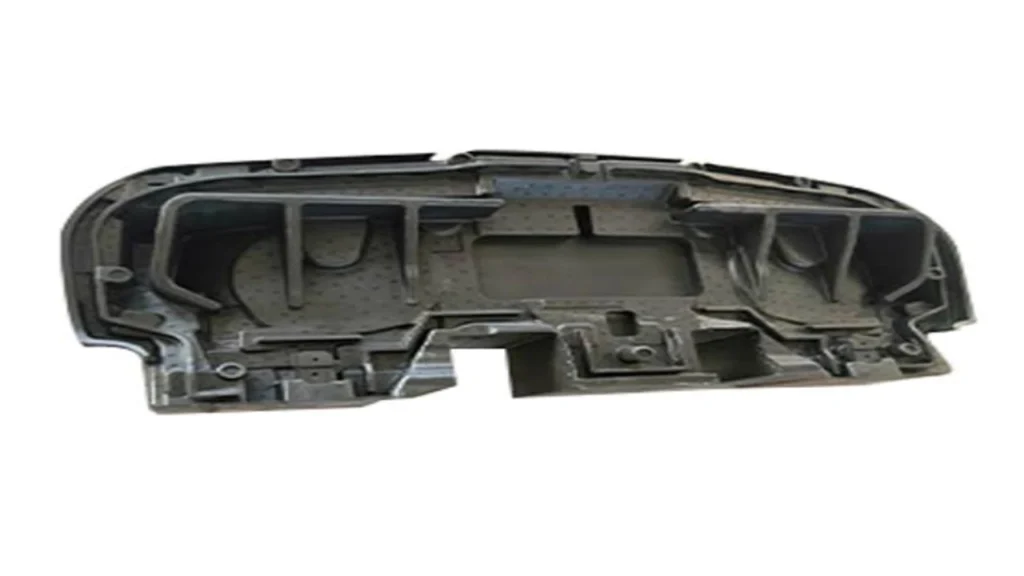
Shrinkage is the most common reason for mold failure during the prototyping phase. A part that fits the CAD model in the office might not fit the plastic housing in the factory.
EPS Shrinkage: The Stable Performer
EPS is very predictable. Its shrinkage rate is usually 0.3% to 0.6%. Once the part leaves the mold and cools for a few hours, its dimensions stay remarkably stable.
This is why EPS is the preferred material for ICF (Insulated Concrete Forms) and large architectural blocks where a 1mm deviation over 2 meters can ruin the construction alignment.
EPP Shrinkage: The Variable Variable
EPP shrinkage is a complex function of Density, Temperature, and Curing.
- Rate: Shrinkage can be as high as 2.0% to 3.5%.
- Density Correlation: A 30 g/L (low density) part shrinks differently than an 80 g/L (high density) part.
- Post-Molding Curing: Unlike EPS, EPP parts are often placed in a curing oven (typically 80°C for 4-6 hours) after molding to stabilize the dimensions.
- Developer Tip: You cannot use an EPS mold to test EPP parts. The shrinkage difference means the EPP part will be significantly smaller than intended, and the venting/pressure requirements will not be met.
ROI Analysis: CapEx vs. OpEx for New Products
As a developer, you are managing a budget. Understanding the cost structure of tooling is vital for your Unit Economic Analysis.
EPS Tooling: Low Barrier to Entry
- CapEx (Initial Cost): EPS molds are generally 20% to 40% cheaper to manufacture. They require less raw aluminum, simpler machining, and lower-pressure auxiliary equipment.
- Best For: Disposable packaging, building insulation, hobbyist products, and high-volume commodity goods.
EPP Tooling: The High-Efficiency Investment
- CapEx (Initial Cost): Higher. The high-grade alloys, complex venting, Teflon coating, and robust framing add to the price.
- OpEx (Operational Savings):
- Durability: An EPP mold is an “asset for life.” It can withstand millions of cycles with proper maintenance.
- Insert Molding: EPP molds are excellent for over-molding. You can place a metal bracket or a plastic clip inside the mold before injecting the foam. The high pressure ensures a perfect bond. This eliminates post-assembly labor, saving you money on every unit produced.
- Low Scrap Rates: The toughness of EPP means far fewer parts are damaged during the ejection and packaging phase compared to EPS.
How a Foam Mold is Born
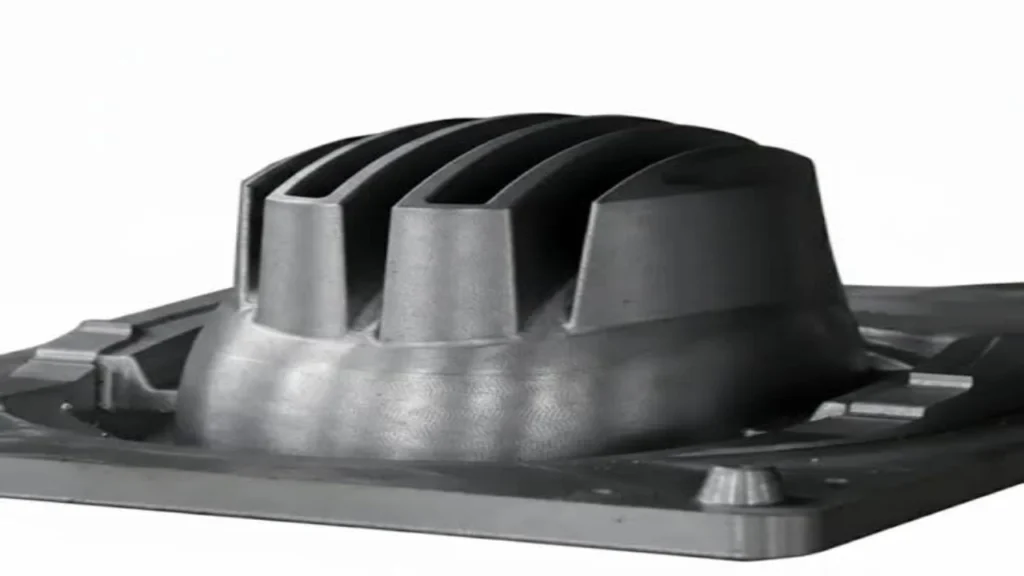
To truly understand the difference, you must see how these tools are made. At Foamold, our process combines traditional craftsmanship with aerospace-grade technology.
Step 1: DFM (Design for Manufacturability)
We take your 3D CAD model and run it through a “Foam Flow Simulation.” We identify where air will be trapped and where steam will have difficulty reaching. For EPP, this is the stage where we calculate the complex shrinkage compensation.
Step 2: CNC Machining & 3D Printing
- EPS Molds: Often use sand-casting followed by CNC finish-machining.
- EPP Molds: Because of the need for high-strength alloys, we often use Full CNC Machining from a solid block of forged aluminum. This ensures zero porosity in the metal, which is critical for high-pressure steam retention.
Step 3: Venting & Plumbing
This is the “vascular system” of the mold. We install hundreds (sometimes thousands) of vents and a complex network of cooling water channels. In EPP molds, the cooling channels must be strategically placed to ensure the thickest parts of the foam cool at the same rate as the thin areas, preventing “sink marks.”
Step 4: Surface Treatment & QC
Finally, the Teflon coating is applied. The mold is then inspected using a CMM (Coordinate Measuring Machine) to ensure the cavity dimensions are accurate within microns.
Conclusion
For a new product developer, the mold is not just a cost—it is the guarantor of your product’s quality.
- Choose an EPS Mold when your project demands low initial costs, excellent thermal insulation, and rigid dimensional stability for large-scale parts.
- Choose an EPP Mold when your product faces high-impact environments, requires multi-functional inserts, needs long-term durability, or targets high-end industries like automotive and aerospace.
At Foamold (Transfoam), we don’t just “make molds.” We partner with you to engineer the most efficient production system for your specific needs.
Contact our engineering experts today for a detailed consultation on your next EPS or EPP project. Let us help you build a mold that delivers precision, performance, and profit.