
Compare aluminum mold vs steel mold for EPS, EPP, and ETPU foam molding. Learn about cost, durability, thermal conductivity, machining, maintenance, and applications.
Choosing the right mold material is one of the most important decisions in EPS, EPP, and ETPU foam production.
The mold affects product quality, cycle time, energy consumption, dimensional accuracy, maintenance requirements, and the total cost of ownership.
Aluminum molds and steel molds are the two most common choices for foam molding applications.
Aluminum molds are known for their low weight, excellent thermal conductivity, fast cooling, and relatively short manufacturing time.
Steel molds are valued for their strength, wear resistance, dimensional stability, and suitability for long-term mass production.
Neither material is automatically better for every project. The right choice depends on production volume, foam material, product geometry, required service life, budget, machine size, and performance expectations.
What Is an Aluminum Mold?
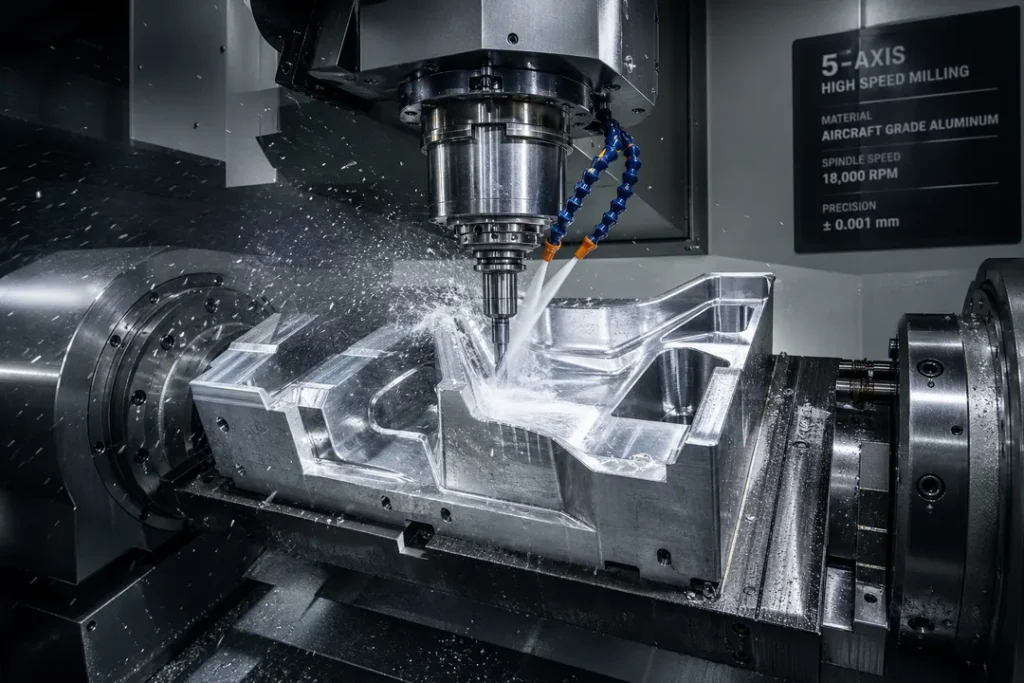
An aluminum mold is a foam molding tool manufactured from aluminum alloy, commonly using grades such as 6061 or 7075.
Aluminum is widely used because it is lightweight, easy to machine, and highly conductive.
In EPS and EPP foam molding, aluminum molds can transfer heat efficiently between the mold cavity and the cooling system.
This may help shorten cooling time and improve production efficiency. A lighter mold is also easier to install, remove, transport, and change during production.
Aluminum is suitable for molds with complex shapes, relatively small production volumes, rapid prototyping requirements, and applications where fast heat dissipation is important.
It is also useful for customized products because design modifications can often be completed more quickly than with harder mold materials.
However, aluminum is softer than steel. It may be more vulnerable to scratches, dents, deformation, and surface wear when exposed to improper handling or very high production loads.
For this reason, aluminum molds should be designed with the correct wall thickness, support structure, surface finish, and operating conditions.
What Is a Steel Mold?
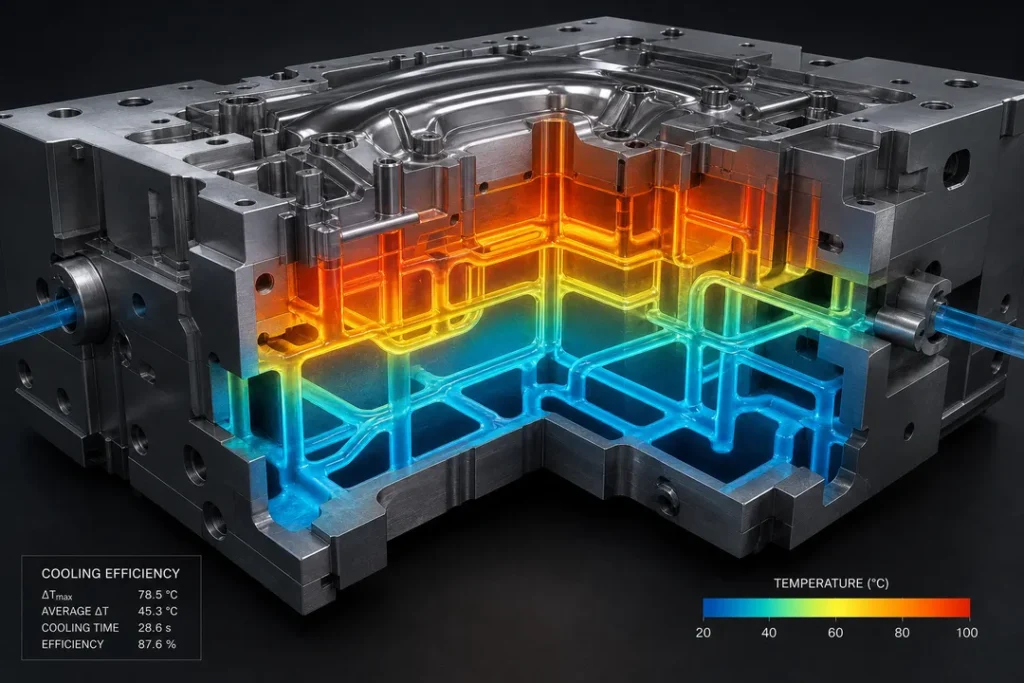
A steel mold is a foam molding tool manufactured from carbon steel, alloy steel, or pre-hardened mold steel. Common mold steels include P20, 718, and NAK80.
These materials are selected for their strength, hardness, wear resistance, and ability to maintain dimensional accuracy over long production periods.
Steel molds are often used for high-volume EPS and EPP products, automotive components, industrial packaging, construction materials, and other applications where the mold must withstand repeated heating, cooling, clamping, filling, and demolding cycles.
A properly heat-treated steel mold can resist deformation and maintain cavity accuracy over a long service life.
This is especially important for large products, high-density foam, complex structural parts, and production lines that operate continuously.
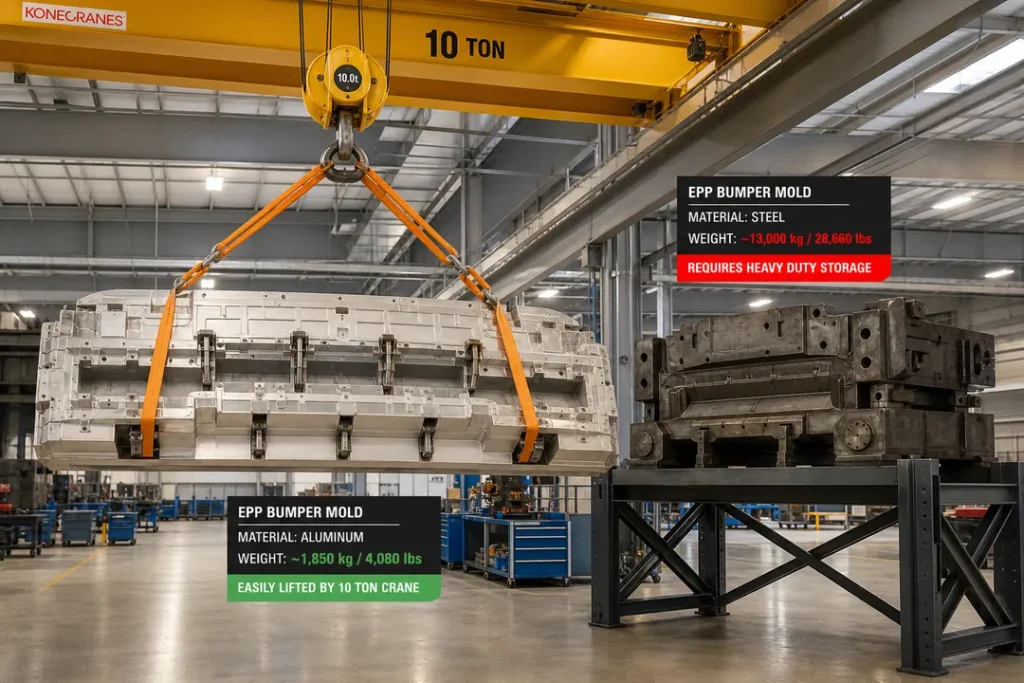
The main disadvantages of steel are its higher weight, slower heat transfer compared with aluminum, more demanding machining process, and generally higher initial manufacturing cost.
A steel mold may also require larger lifting equipment and more planning during mold changeovers.
Aluminum Mold VS Steel Mold: Key Differences
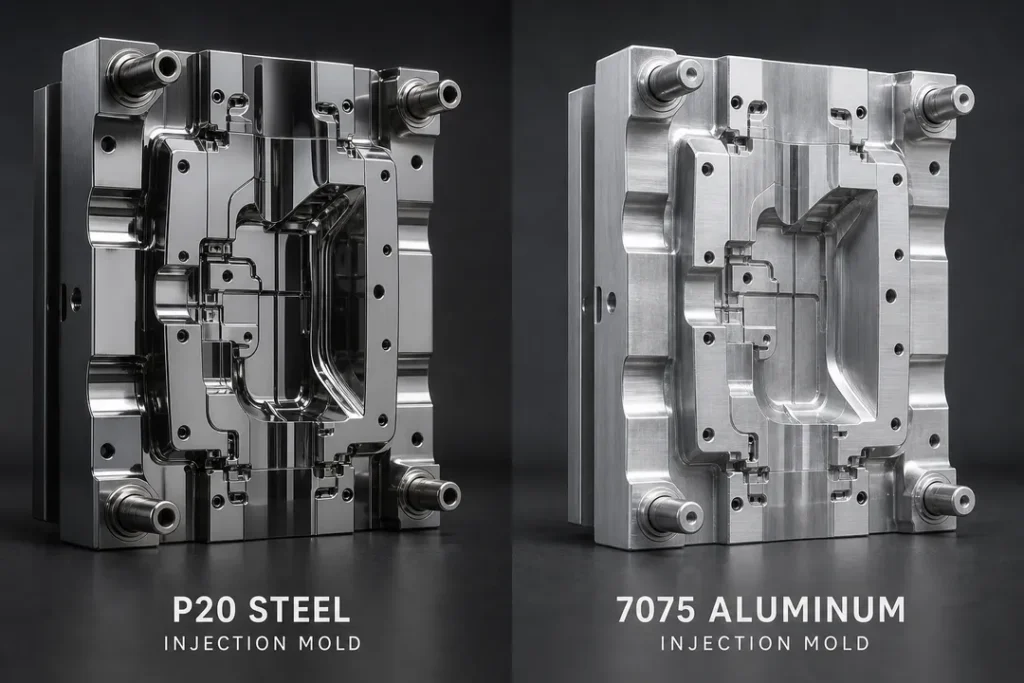
| Property | Aluminum Mold | Steel Mold |
|---|---|---|
| Weight | Lightweight | Heavy |
| Thermal conductivity | Excellent | Moderate |
| Cooling speed | Fast | Slower |
| Machining | Easier and faster | More demanding |
| Initial cost | Usually lower | Usually higher |
| Wear resistance | Moderate | High |
| Dimensional stability | Good for suitable loads | Excellent for high loads |
| Modification speed | Relatively fast | Usually slower |
| Best for | Prototypes, small and medium batches | Mass production and long service life |
Thermal Conductivity and Cooling Performance
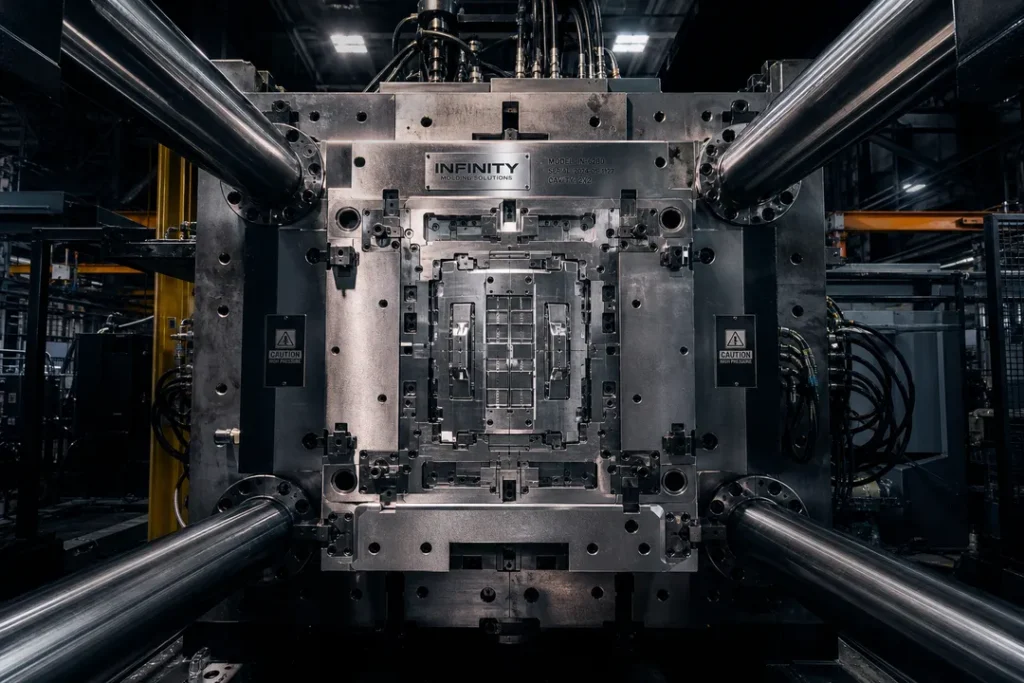
Thermal management is one of the biggest differences between aluminum and steel molds.
Aluminum transfers heat more efficiently, which can help the mold heat up and cool down faster during the molding cycle.
For foam products, cooling time can have a direct impact on production capacity.
If a product remains hot inside the mold for too long, the cycle time increases and the production line may produce fewer parts per shift.
An aluminum mold can be advantageous when fast cooling and short cycle times are important.
Steel has lower thermal conductivity than aluminum, so steel molds may require more carefully designed cooling channels, water circuits, or process parameters.
However, this does not mean steel molds cannot achieve efficient cooling. A well-designed steel mold with optimized cooling channels can still deliver stable production performance.
The actual result depends on the mold structure, cavity thickness, cooling-channel layout, foam density, steam conditions, vacuum system, and machine settings.
Durability and Wear Resistance
Steel generally provides better wear resistance and mechanical strength than aluminum.
This makes it a strong choice for molds that operate under high clamping force, high production volume, repeated demolding, or demanding industrial conditions.
For example, automotive EPP components and large EPS packaging molds may be used thousands of times.
If the mold surface wears or the cavity changes shape, product dimensions and surface quality may become unstable. Steel helps reduce this risk when the mold is properly heat-treated and maintained.
Aluminum molds can still provide good service life, particularly when used with correct process control and careful handling.
They are often suitable for low-to-medium production volumes, custom products, prototypes, and applications where the mechanical load is moderate.
Surface treatment can improve the performance of both materials. Polishing, hard coatings, anodizing, nitriding, or other treatments may be selected according to the foam material and production conditions.
Manufacturing Cost and Lead Time
Aluminum molds often have a lower initial cost because aluminum is easier to cut and machine.
The lighter material also simplifies transportation and installation. For a new product that still requires design changes, an aluminum mold may reduce development risk.
Steel molds usually require more machining time, stronger cutting tools, heat treatment, grinding, and additional finishing.
These processes can increase the initial investment and extend the manufacturing schedule.
However, the cheapest mold is not always the most economical option.
A steel mold may offer a lower cost per part when production volume is high because it can provide a longer service life and more consistent performance.
An aluminum mold may be more cost-effective for a short project, seasonal product, prototype, or product that may be redesigned later.
A proper comparison should include mold price, expected production volume, cycle time, maintenance, repair, replacement, energy consumption, and possible downtime.
Machining and Design Flexibility
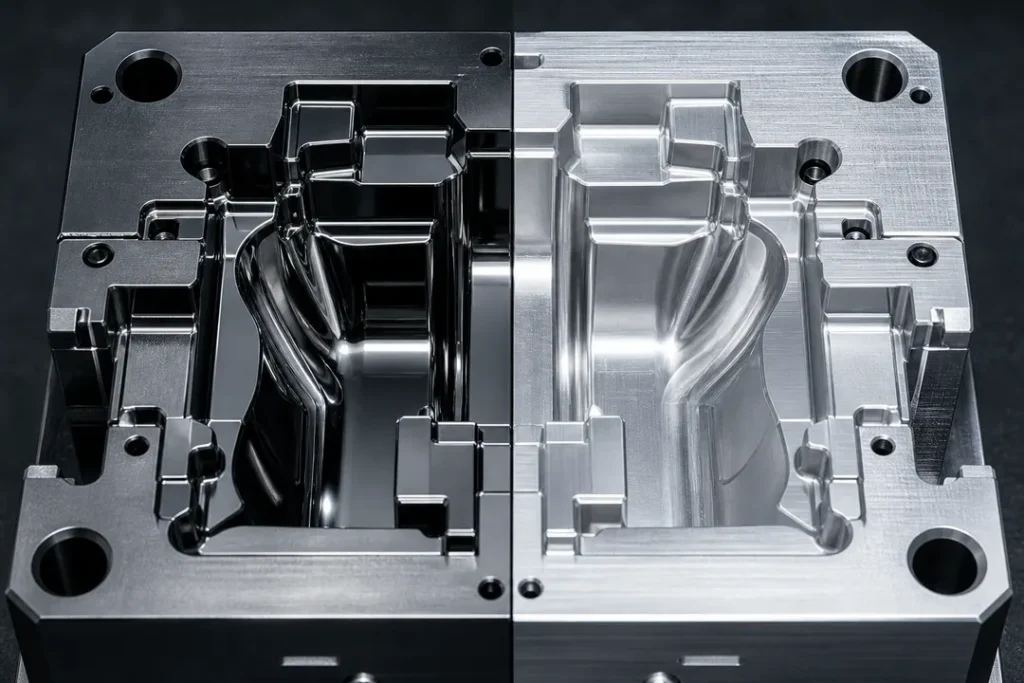
Aluminum is relatively easy to machine, making it suitable for prototypes, product development, and customized foam shapes.
If the customer needs to adjust a cavity, modify a contour, or change an insert position, aluminum may allow the modification to be completed more quickly.
Steel can also be machined into highly complex shapes, but the process is generally more demanding.
CNC machining, EDM, wire cutting, heat treatment, and precision finishing may all be required depending on the design.
For complex EPS or EPP molds, the cavity, core, parting surface, filling system, venting system, and demolding mechanism must be designed as one complete system.
The material choice should therefore be made together with the mold structure rather than separately.
Foam Applications for Aluminum Molds
Aluminum molds are commonly considered for:
- EPS prototype molds
- EPP custom product molds
- Small and medium production runs
- Architectural foam decoration
- Rapid tooling projects
- Lightweight packaging products
- Products requiring fast cooling
- Experimental or frequently modified designs
- Low-volume sports and consumer products
For example, aluminum may be suitable for a customized EPP packaging insert or an EPS decorative profile where production volume is limited and design flexibility is important.
Foam Applications for Steel Molds
Steel molds are commonly considered for:
- High-volume EPS packaging
- Automotive EPP components
- EPP car bumper and seat parts
- Large EPS block and insulation products
- Industrial containers and pallets
- High-density foam components
- Long-term production programs
- Applications with high wear or clamping loads
- Molds requiring high dimensional stability
Steel is often preferred when the same product will be manufactured continuously for many years. It is also a strong option when product quality, mold life, and repeatability are more important than minimum initial cost.
Maintenance and Service Life
Both aluminum and steel molds require regular maintenance. The mold surface, cavity, core, vents, filling ports, ejectors, guide pins, guide sleeves, and cooling channels should be inspected and cleaned according to the production schedule.
Aluminum molds require extra care to avoid impact damage, scratches, and deformation.
Operators should use suitable tools during cleaning and mold changeovers. Excessive force can damage the cavity surface or alignment components.
Steel molds are more resistant to mechanical damage, but they still require rust prevention, lubrication, cleaning, and inspection.
If water remains inside a steel mold or the surface is not protected during storage, corrosion may affect accuracy and demolding performance.
A good maintenance plan should include:
- Daily removal of foam residue and contaminants
- Regular inspection of cavity dimensions
- Cleaning of vents and filling points
- Lubrication of moving components
- Inspection of ejectors and guide systems
- Cooling-channel cleaning
- Surface polishing or treatment when necessary
- Rust prevention during long-term storage
- Trial molding after major maintenance
How to Choose Between Aluminum and Steel Molds
The decision should start with the production requirements rather than the material preference.
Choose an aluminum mold when:
- The production volume is low or medium
- The product may be redesigned
- Fast cooling is important
- The mold must be lightweight
- A short development period is required
- The project is a prototype or trial order
- The mechanical load is moderate
- Initial investment must be controlled
Choose a steel mold when:
- The production volume is high
- The product design is already stable
- Long service life is required
- The mold will experience high clamping or impact loads
- Wear resistance is important
- Dimensional stability must be maintained over many cycles
- The project is for automotive or industrial mass production
- Downtime and mold replacement would be expensive
For some projects, a hybrid solution may be possible. A steel frame can provide structural strength while selected aluminum inserts improve heat transfer or simplify replacement.
The best configuration depends on the product geometry, molding machine, production cycle, and quality target.
Before ordering, buyers should provide the supplier with product drawings, material information, expected annual output, machine model, cavity quantity, target cycle time, and required tolerances.
This allows the mold manufacturer to recommend the most suitable material and structure.
Conclusion
Aluminum molds and steel molds both have important roles in EPS, EPP, and ETPU foam production.
Aluminum molds are lightweight, thermally conductive, easier to machine, and often more economical for prototypes, customized products, small and medium production runs, and applications requiring fast cooling.
Steel molds are stronger, more wear-resistant, and more dimensionally stable. They are generally better suited to automotive components, high-density foam, large products, high-volume manufacturing, and long-term production programs.
The best choice is not simply the material with the lowest price. It is the mold that provides the right balance between production volume, cycle time, durability, maintenance, dimensional accuracy, and total operating cost.
If you are looking for a custom EPS mold, EPP mold, or ETPU mold, contact us with your product drawings and production requirements.
Our engineers can help you select the right mold material, structure, cooling system, and manufacturing process for your project.