
Learn how to make a foam object with EPS and EPP molding technology, from bead selection and pre-expansion to mold design, steam molding, cooling, and finishing.
Foam objects are used in packaging, automotive parts, construction insulation, cold-chain containers, consumer products, sports equipment, and industrial transport systems.
Although a finished foam product may look simple, creating a reliable and consistent foam object requires controlled material preparation, precise mold design, stable steam molding conditions, and careful cooling.
For industrial production, EPS foam and EPP foam are two of the most widely used materials.
EPS, or Expanded Polystyrene, is commonly selected for lightweight packaging, insulation boards, protective inserts, and construction products.
EPP, or Expanded Polypropylene, is preferred for reusable packaging, automotive energy-absorbing components, durable containers, sports products, and products that require high resilience.
The basic manufacturing principle is similar: small polymer beads are expanded, stabilized, filled into a mold, fused with steam, cooled, and removed as a finished foam object.
However, the material properties, process settings, mold requirements, and end-use performance differ between EPS and EPP.
What Is a Foam Object?
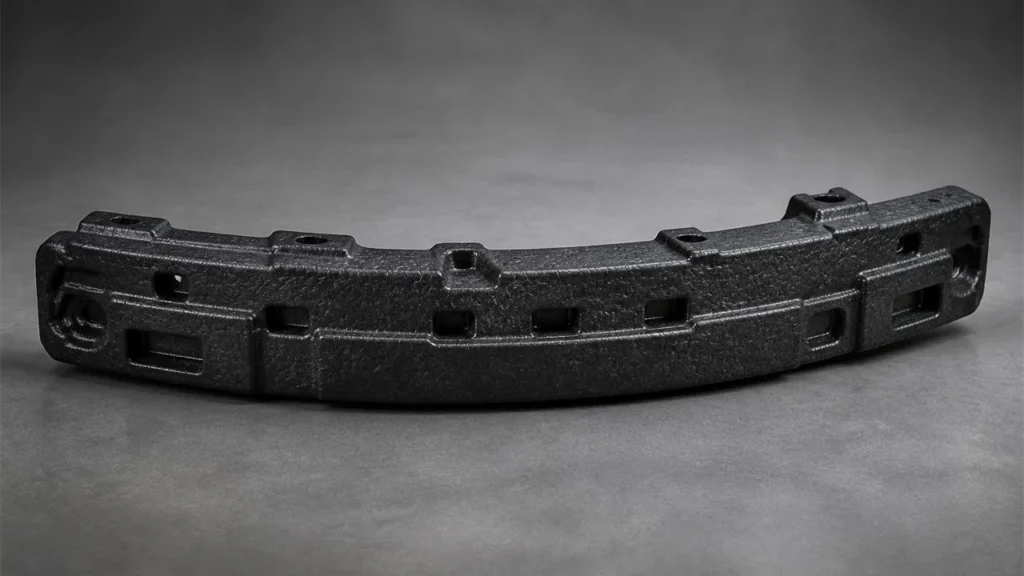
A foam object is a part made from cellular material that contains many small air-filled cells.
These cells reduce the weight of the part while providing useful functions such as cushioning, thermal insulation, impact resistance, buoyancy, noise reduction, and shape support.
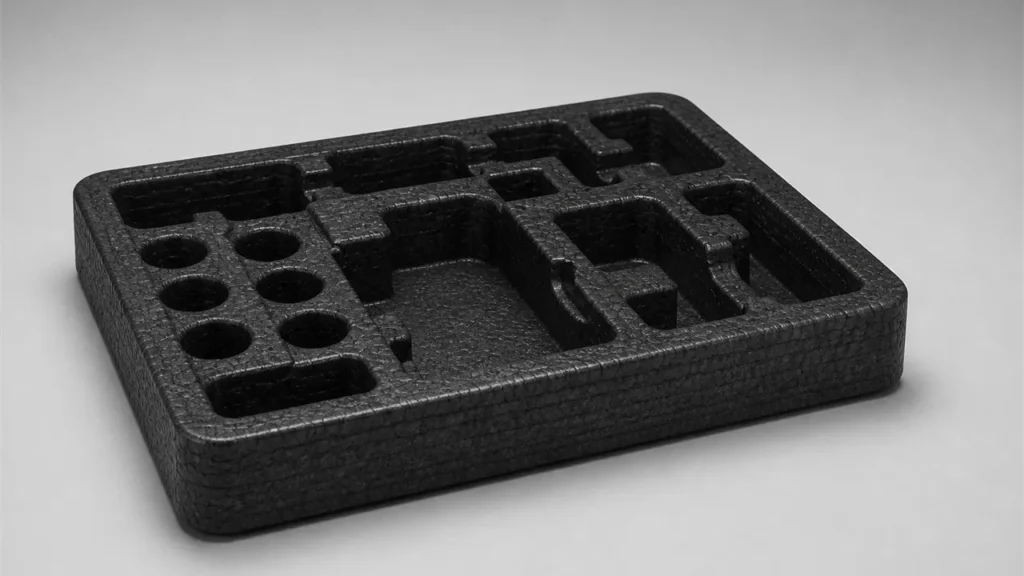
Foam objects can be simple or highly complex. A basic EPS foam block may be cut into insulation panels. A shaped EPS insert may protect electronics during transport.
An EPP foam object may be molded into an automotive bumper absorber, a reusable food container, a helmet liner, or a protective transport tray.
The final foam object is not created by simply melting plastic into a mold. In EPS and EPP manufacturing, pre-expanded beads are fused together inside a mold cavity.
The mold defines the outside shape, while the material density and bead fusion determine the strength, weight, insulation, and impact performance.
Choosing the Right Foam Material
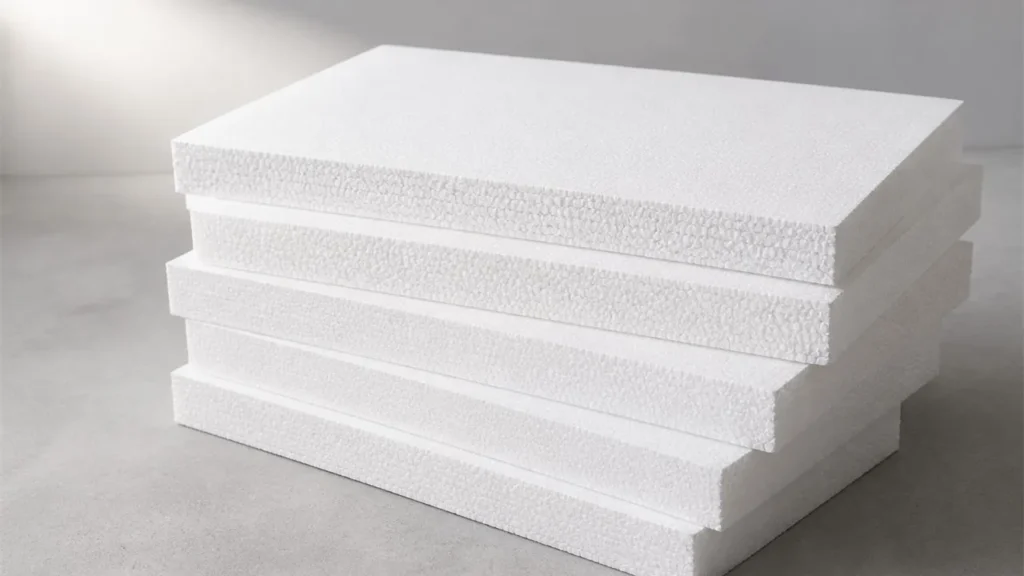
The first step is selecting the correct foam material for the product’s intended use.
EPS foam is lightweight, rigid, and cost-effective. It offers good thermal insulation and is commonly used for protective packaging, insulation panels, fish boxes, food containers, decorative profiles, and single-use products.
EPS is suitable when low weight, thermal performance, and economical production are the main priorities.EPP foam is lightweight but more flexible and resilient than EPS.
It can recover after repeated compression and impact, making it suitable for automotive components, reusable packaging, transport containers, sports equipment, toys, and industrial protection parts.
ETPU foam is another option for applications requiring high elasticity, energy return, and repeated deformation.
It is often used in footwear, cushioning products, damping components, and high-performance sports applications.
The material should be selected according to density, strength, impact resistance, insulation needs, temperature exposure, chemical resistance, recycling requirements, product lifespan, and budget.
Designing the Foam Product
Before manufacturing begins, the foam object must be designed for both function and production.
A product drawing should define the overall dimensions, wall thickness, tolerance, ribs, holes, locking features, drainage areas, assembly points, surface texture, and load requirements.
For packaging products, the design must match the protected item closely enough to prevent movement during transport.
For automotive parts, the design may need to absorb impact, fit around metal or plastic components, and meet strict dimensional tolerances.
For insulation products, the design must achieve the required thickness, thermal performance, and installation method.
Foam product design should also consider demolding. Deep undercuts, sharp corners, overly thin walls, and inaccessible areas can make the part difficult to remove from the mold.
In many cases, small changes to draft angles, ribs, or parting lines can improve both mold performance and product quality.
A good design reduces material waste, improves cycle time, and helps ensure that the final foam object performs as intended.
Designing the Foam Mold
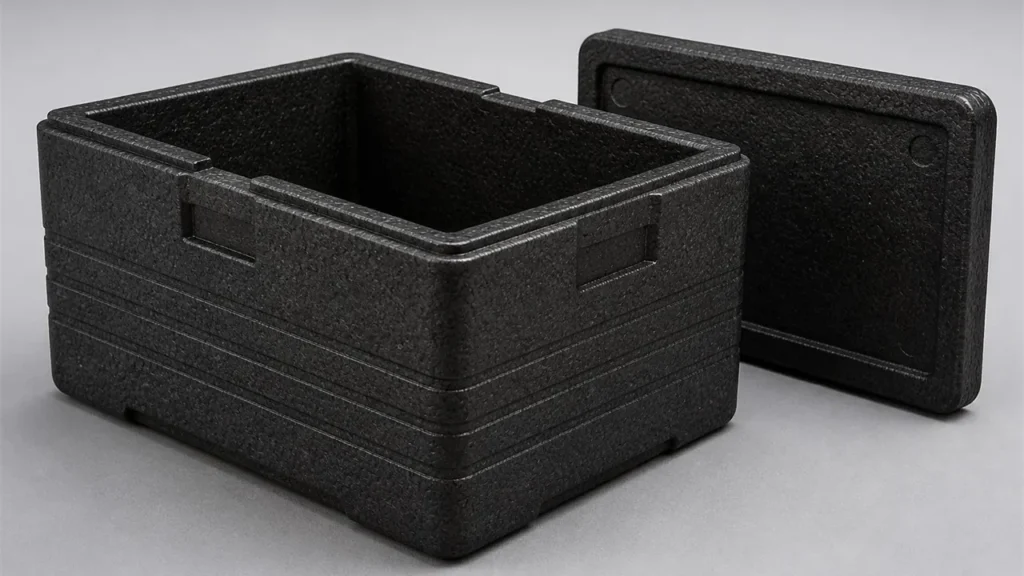
The mold is the core tool used to create the foam object. It contains a cavity that matches the final product shape.
During molding, the pre-expanded beads fill this cavity and fuse together under steam pressure.
Foam molds are commonly made from aluminum or steel. Aluminum molds are lightweight and provide good thermal conductivity, making them suitable for faster cooling, prototypes, custom products, and medium-volume production.
Steel molds are stronger and more wear-resistant, making them suitable for high-volume production, automotive parts, large industrial products, and long-term programs.
A foam mold must include more than a cavity. It may also contain filling guns or ports, steam channels, cooling-water channels, vacuum ports, vents, ejectors, guide systems, locking mechanisms, and interchangeable inserts.
The mold design must ensure that beads can fill every area evenly. Poor filling can cause voids, uneven density, weak corners, poor surface finish, and unstable dimensions. Good venting and cooling are also essential for stable molding and efficient demolding.
Pre-Expansion of Foam Beads
For EPS and EPP foam production, the manufacturing process begins with small polymer beads. These beads contain a blowing agent or are formulated to expand when exposed to heat and steam.
In a pre-expander machine, steam heats the raw beads. The beads expand and become much larger while their density decreases. This stage is important because it establishes the basic density of the final foam object.
A lower-density product is lighter and may offer better insulation, but it may have lower compressive strength.
A higher-density product is stronger and more durable, but it uses more material and weighs more. The required density depends on the product application.
Pre-expansion must be carefully controlled. Steam pressure, temperature, residence time, raw-material grade, and batch consistency all affect the final bead condition. Uneven pre-expansion can lead to inconsistent product density and poor fusion during molding.
Aging and Stabilizing the Beads
After pre-expansion, the beads are not immediately ready for molding. They are transferred to aging silos or ventilated storage areas for conditioning.
During aging, the beads cool down and internal pressure becomes more stable.
Air gradually diffuses into the cells, helping the beads maintain their expanded structure.
This improves their ability to fill the mold evenly and fuse properly during steam molding.
Skipping or shortening the aging stage can cause problems such as shrinkage, poor fusion, unstable density, deformation, or weak product structure.
Aging time varies according to material type, density, ambient conditions, and production requirements.
For consistent foam production, the beads should be stored in a clean, dry, well-ventilated environment. Material handling systems should also prevent excessive bead breakage, contamination, and moisture buildup.
Filling the Mold
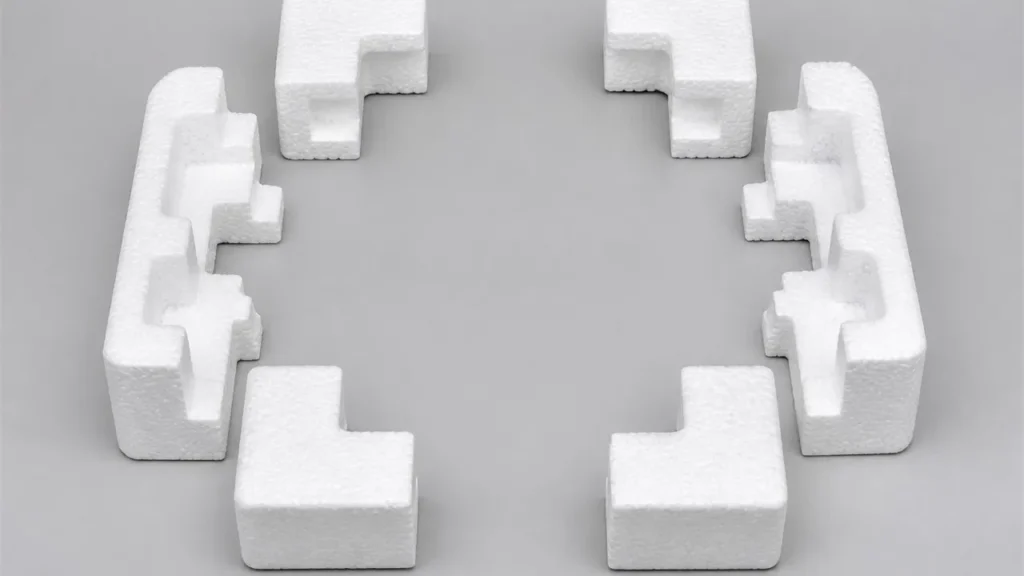
Once the beads are stabilized, they are transferred into the mold cavity. Depending on the production system, filling may use air pressure, vacuum assistance, vibration, multiple filling guns, or automated material-control systems.
The goal is to fill the entire cavity evenly. Complex products may have thin walls, deep cavities, ribs, corners, or multiple chambers that are difficult to fill.
In these cases, the mold design and filling process must work together.
If a mold is underfilled, the finished foam object may contain voids, weak areas, incomplete corners, or inconsistent density.
If the mold is overfilled or filled unevenly, it may create excess internal pressure, surface defects, or difficult demolding.
Modern foam molding machines may use sensors and programmable controls to improve filling accuracy.
For high-value products, trial molding is often used to confirm that the filling pattern produces consistent results before mass production begins.
Steam Molding and Bead Fusion
After the mold is filled, the molding stage begins. The mold closes, and steam is introduced into the cavity through designed steam channels or steam chambers.
The heat softens the surface of the pre-expanded beads. The beads expand slightly again and press tightly against one another.
Under controlled steam temperature, pressure, and time, the bead surfaces fuse together and form one solid foam object.
This stage determines many critical product properties, including density, strength, surface finish, dimensional accuracy, and impact performance.
Too little steam may cause weak fusion and visible gaps between beads. Too much steam or excessive pressure may cause cell collapse, deformation, or surface defects.
The molding parameters should be optimized according to the foam material, density, wall thickness, product geometry, mold design, and machine capacity.
EPS and EPP use similar steam-fusion principles, but their suitable process windows differ.
Cooling and Demolding
After the beads are fused, the foam object is still hot and may be unstable. The mold must be cooled before the product is removed.
Cooling is commonly achieved through circulating water, cooling air, vacuum assistance, or a combination of these methods.
Cooling stabilizes the foam structure and helps the finished part retain its shape. It also reduces internal pressure and moisture, making demolding easier and lowering the risk of deformation.
When the required cooling level is reached, the mold opens and the foam object is removed by ejectors, compressed air, robotic systems, or manual handling.
The product must be handled carefully at this stage because it may still be warm and more sensitive to compression.
For some products, additional post-molding curing is necessary. The foam object may be placed in a ventilated area for several hours or days to allow moisture to evaporate and dimensions to stabilize fully.
Cutting, Assembly, and Surface Finishing
Not every foam object leaves the mold as a finished product.
Some EPS foam products are first molded into large blocks and then cut into sheets, panels, profiles, or custom shapes using hot-wire cutting machines, saws, CNC equipment, or milling tools.
Shaped foam products may also need trimming, drilling, assembly, printing, labeling, coating, or the installation of inserts.
Packaging products may be combined with lids, hinges, handles, or other components. Automotive foam parts may be assembled with plastic brackets, metal reinforcements, clips, or fabric covers.
Surface finishing depends on the product requirement. Some parts need a smooth appearance, while others require texture, drainage holes, logos, or anti-slip patterns.
These features can be created directly in the mold or added during secondary processing.
The finishing stage should be designed to preserve the foam structure. Excessive heat, force, or improper cutting can damage edges, create dust, or reduce product accuracy.
Quality Control for Foam Objects
Quality control begins with incoming raw material and continues through every stage of production.
A foam object should be checked for density, dimensions, weight, surface finish, bead fusion, moisture level, compression strength, impact resistance, and functional fit.
For packaging products, the foam object should fit the protected item securely and withstand expected transport conditions. For insulation products, density and thermal performance are important.
For EPP automotive components, dimensional accuracy, energy absorption, repeat compression behavior, and assembly fit may be critical.
Common quality checks include:
- Visual inspection for voids, cracks, incomplete corners, and surface defects
- Density and weight measurement
- Dimensional inspection
- Compression and recovery testing
- Impact or drop testing
- Moisture measurement
- Assembly verification
- Mold and process-record review
Consistent quality depends on controlling material density, bead aging, filling, steam conditions, cooling time, and mold maintenance.
Common Problems in Foam Object Manufacturing
Several problems can occur during foam molding. Understanding them helps manufacturers improve yield and reduce waste.
Poor bead fusion may result from inadequate steam, unstable bead density, insufficient aging, poor filling, or blocked steam vents. The finished part may feel weak or show visible gaps between beads.
Shrinkage or deformation may occur when the part is removed too early, cooling is insufficient, or the beads have not stabilized properly before molding.
Uneven density can result from inconsistent pre-expansion, poor filling distribution, unsuitable mold design, or incorrect process settings.
Surface defects can be caused by poor mold finish, insufficient venting, excessive moisture, overfilling, or unstable steam control.
Difficult demolding may result from poor draft angles, rough mold surfaces, incorrect cooling, damaged ejectors, or insufficient release design.
Most problems can be reduced through better mold design, stable process control, regular maintenance, and trial production before full-scale manufacturing.
How to Choose a Foam Molding Supplier
A reliable foam molding supplier should provide more than a finished foam part.
The supplier should be able to support product design, material selection, mold development, trial production, process optimization, quality inspection, packaging, and after-sales technical service.
Before requesting a quotation, buyers should prepare:
- Product drawings or 3D files
- Required foam material
- Target density
- Dimensions and tolerances
- Application and performance requirements
- Expected annual quantity
- Surface-finish requirements
- Assembly or insert requirements
- Packaging and delivery requirements
The supplier should review whether the product is suitable for molding, recommend an appropriate mold material, estimate cycle time, and identify possible design risks before production begins.
For custom foam objects, early communication is especially important. A well-designed mold and a stable molding process can reduce later modifications, shorten launch time, and improve product consistency.
Conclusion
Making a foam object is a controlled manufacturing process that combines material science, mold design, steam molding technology, cooling, and quality control.
The basic process includes selecting EPS, EPP, or another suitable material; designing the product; building the mold; pre-expanding and aging the beads; filling the mold; fusing the beads with steam; cooling and demolding; and completing any required cutting, assembly, or finishing.
The quality of the final foam object depends on every stage.
A well-designed product and mold, properly stabilized beads, accurate steam control, sufficient cooling, and reliable inspection are all essential for producing lightweight, strong, and consistent foam parts.
If you are looking to make custom EPS foam objects, EPP foam products, foam packaging inserts, automotive foam components, insulation products, or foam molds, contact us with your drawings and requirements.
Our team can support material selection, mold design, trial production, and mass manufacturing.