
Learn how EPP foam improves electric vehicle safety through lightweight energy absorption, battery protection, thermal insulation, and durable crash-management components.
Electric vehicles are changing the way vehicles are designed, manufactured, and protected.
Unlike conventional vehicles, EVs carry a large, high-voltage battery pack that must be protected from impact, vibration, temperature changes, moisture, and long-term road use.
At the same time, manufacturers must reduce vehicle weight to improve driving range and energy efficiency.
EPP foam, also known as Expanded Polypropylene foam, has become an important material for solving these challenges.
It is lightweight, resilient, impact-resistant, and reusable. When engineered into automotive components, EPP foam can help absorb crash energy, protect battery-related systems, reduce cabin injuries, and support lightweight vehicle construction.
What Is EPP Foam?
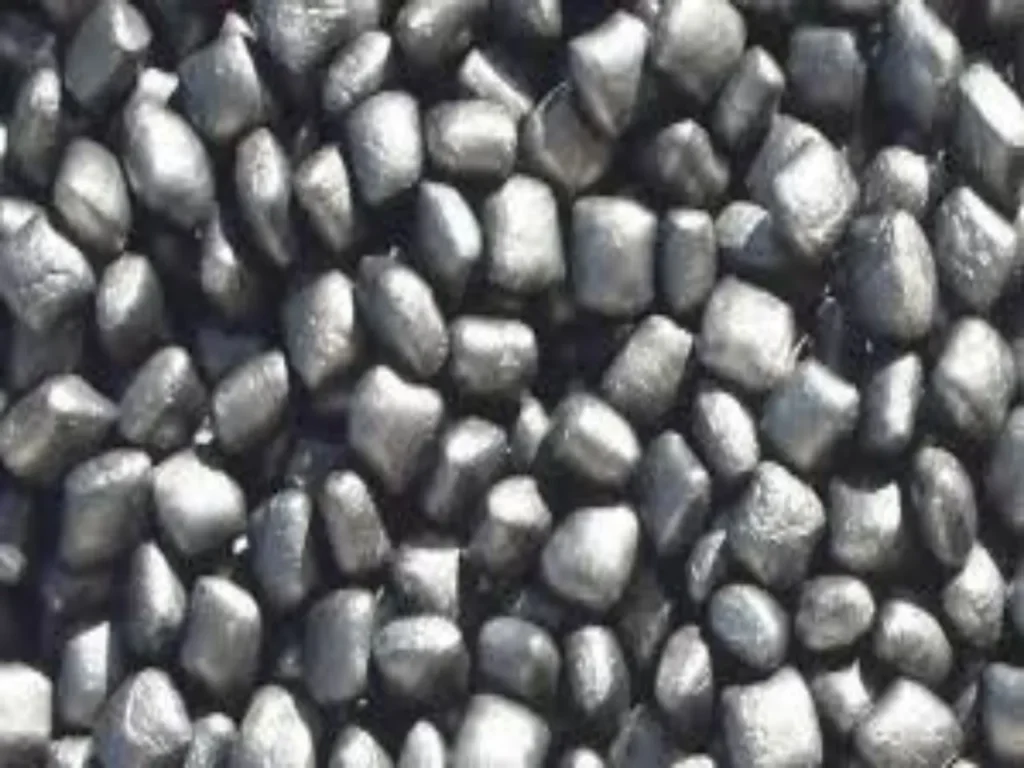
EPP foam is a closed-cell foam material made from expanded polypropylene beads. During molding, pre-expanded beads are placed inside a mold and fused together with controlled steam pressure.
The result is a lightweight foam part that can be produced in complex shapes, from thin protective inserts to large energy-absorbing automotive components.
What makes EPP foam especially valuable is its ability to compress under impact and recover much of its original shape afterward.
This gives it an advantage in applications exposed to repeated loading, vibration, handling, and low-speed impacts.
Unlike rigid foams that may crack after a severe compression event, EPP can retain functional performance across many cycles when the component is properly designed.
For electric vehicles, this combination of low weight, resilience, and design flexibility supports both active engineering goals: protecting people and protecting high-value electrical systems.
Why Electric Vehicles Need Advanced Safety Materials
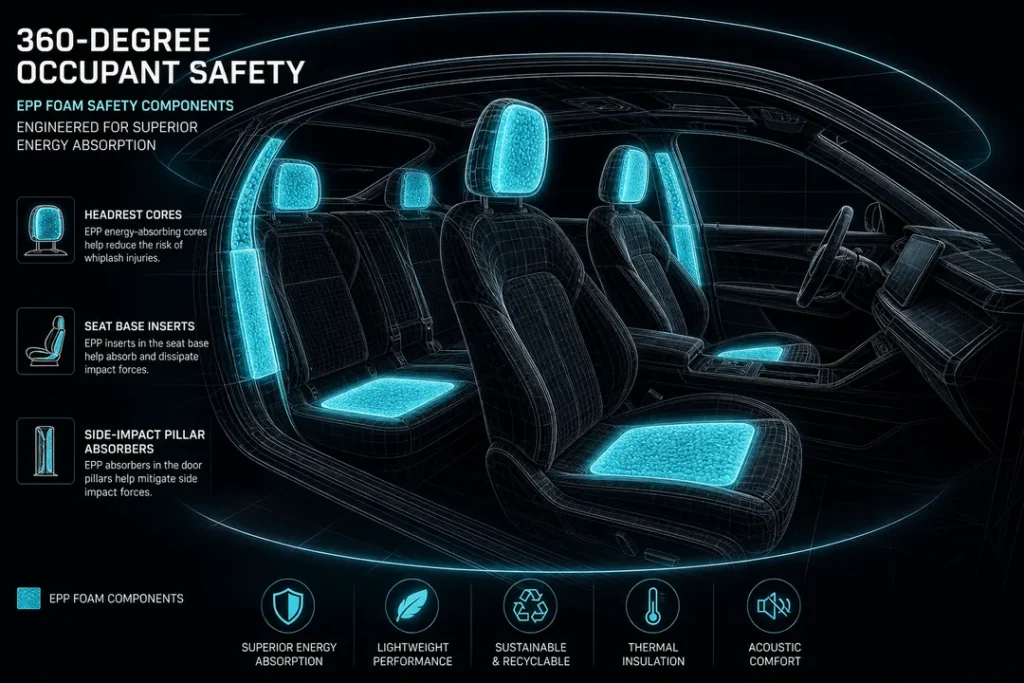
Electric vehicle safety is not limited to the passenger compartment. An EV must protect its battery pack, high-voltage cables, cooling systems, electronic control units, charging interfaces, and structural components.
These systems are often located beneath the floor, behind interior trim, inside front or rear crash zones, and around the vehicle body.
A collision can create localized force, deformation, vibration, and heat. Even when the main vehicle structure manages most of the impact, smaller components still need protection from secondary shock and movement.
Battery modules and electrical connectors may be sensitive to sudden loads, while interior occupants need controlled cushioning in areas such as headrests, knee bolsters, door panels, and seating structures.
EPP foam helps engineers create protective zones that are lightweight and shape-specific.
It can be molded around components, integrated with plastic or metal structures, and tuned through density, geometry, wall thickness, and bead-fusion design.
How EPP Foam Absorbs Crash Energy

One of the most important safety functions of EPP foam is energy absorption.
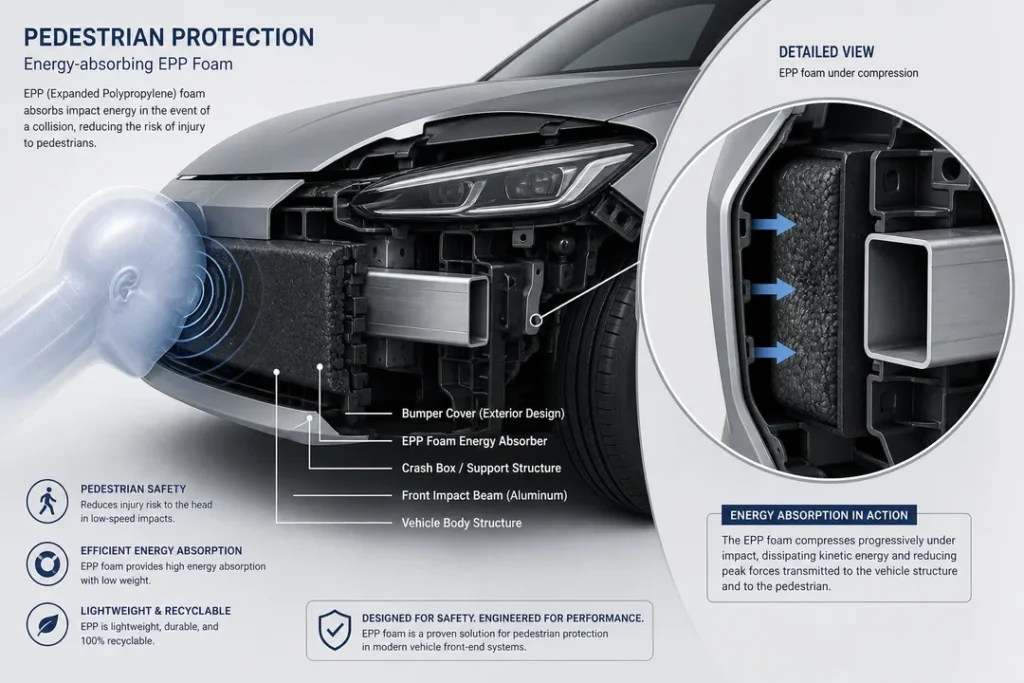
When an EPP component is compressed during an impact, its cellular structure deforms and dissipates energy over a controlled distance.
This helps reduce the peak force transferred to nearby parts or occupants.
In an EV, EPP can be used as part of a broader crash-management strategy.
It does not replace the vehicle’s metal crash structure, battery enclosure, restraint systems, or safety electronics. Instead, it supports these systems by cushioning localized impacts and helping manage secondary loads.
For example, EPP energy absorbers can be used behind bumper covers, inside interior trim assemblies, around seating structures, or near equipment that requires vibration isolation.
Because EPP can recover after minor impacts, it may also be suitable for components exposed to repeated low-energy contact during normal vehicle use.
The safety benefit comes from controlled deformation. A well-designed EPP part can provide the right balance between stiffness and cushioning, helping engineers protect a target area without adding unnecessary mass.
EPP Foam for EV Battery Protection
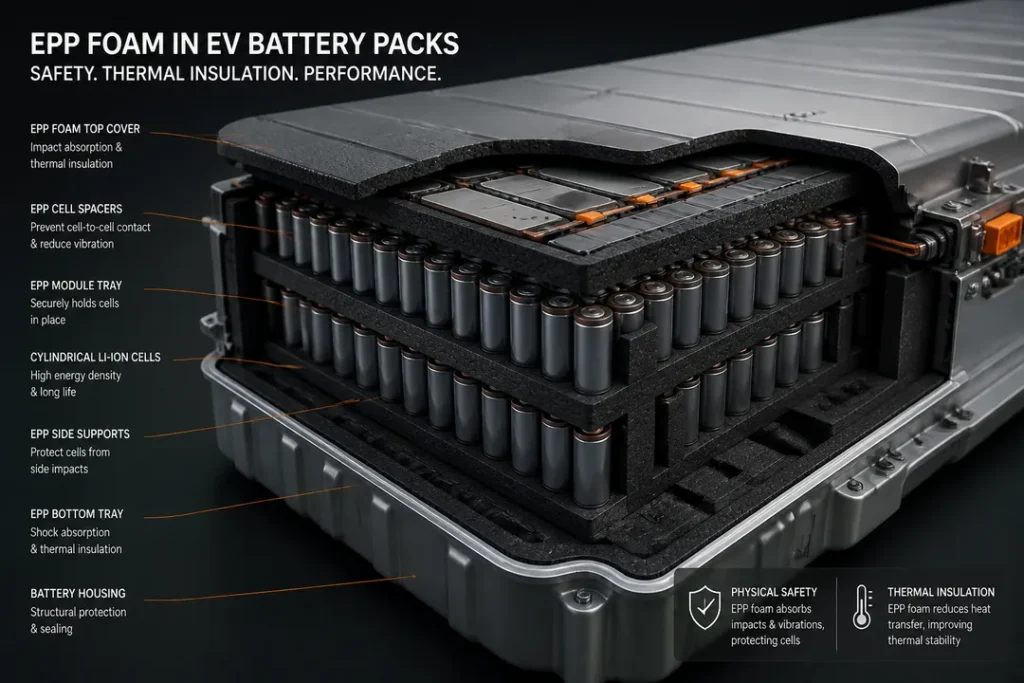
The battery pack is one of the most valuable and safety-critical systems in an electric vehicle.
Although the battery enclosure and vehicle underbody structure provide primary protection, internal and surrounding components also benefit from cushioning, spacing, insulation, and vibration control.
EPP foam can be used around battery-related assemblies as a protective spacer, impact-management insert, thermal barrier support, or vibration-damping component.
Its molded geometry allows suppliers to create parts that fit tightly around irregular structures, cables, housings, ducts, and electronic modules.
In battery-related applications, the foam design must be matched carefully to the complete safety system.
Engineers should consider operating temperature, flame-retardant requirements, compression behavior, chemical exposure, moisture resistance, electrical isolation requirements, and compatibility with adjacent materials.
The purpose is not simply to add foam, but to create a defined protective function within a validated battery-pack architecture.
EPP’s low mass is also important. Battery packs already add significant weight to an EV, so every protective component must deliver useful performance without reducing vehicle efficiency unnecessarily.
How EPP Foam Improves Passenger Safety
EPP foam is widely used in automotive interiors because it can create lightweight cushioning structures with consistent geometry.
In electric vehicles, the same benefit applies to headrests, seat cores, knee bolsters, door-panel inserts, armrests, luggage-area protection, and interior impact-management components.
Passenger safety requires more than a soft surface. A component must respond predictably to force, fit the available package space, resist long-term deformation, and work with surrounding trim and structural parts.
EPP can be engineered in different densities and shapes to support these requirements.
For seating, EPP foam can help reduce weight while providing support and impact-management performance.
In headrests and interior protection zones, it can contribute to controlled cushioning. In luggage compartments, it can protect tools, charging accessories, electronic equipment, and storage areas from movement or impact.
Because electric vehicles often use new interior layouts and flat-floor designs, suppliers need materials that can be molded into complex, space-efficient forms.
EPP supports this design flexibility while maintaining a strong strength-to-weight ratio.
Lightweight Design and EV Driving Range
Vehicle weight has a direct effect on electric vehicle efficiency. A heavier EV generally requires more energy to accelerate, climb, and maintain speed.
Battery technology is important, but lightweight design is also a practical way to support driving range.
EPP foam helps reduce weight in areas where heavier plastic, rubber, or multi-part assemblies may not be necessary.
Its low density allows automotive suppliers to create functional parts with less material mass.
This may include energy absorbers, seating components, storage inserts, insulation supports, tool holders, and protective packaging for onboard equipment.
The value is not only weight reduction. EPP can integrate several functions into one molded component.
A single part may provide spacing, cushioning, noise reduction, component retention, and shape support. Reducing the number of parts can simplify assembly and improve consistency in high-volume production.
For EV manufacturers, this supports a broader engineering objective: improving safety and functionality without adding avoidable weight.
Thermal, Moisture, and Chemical Resistance
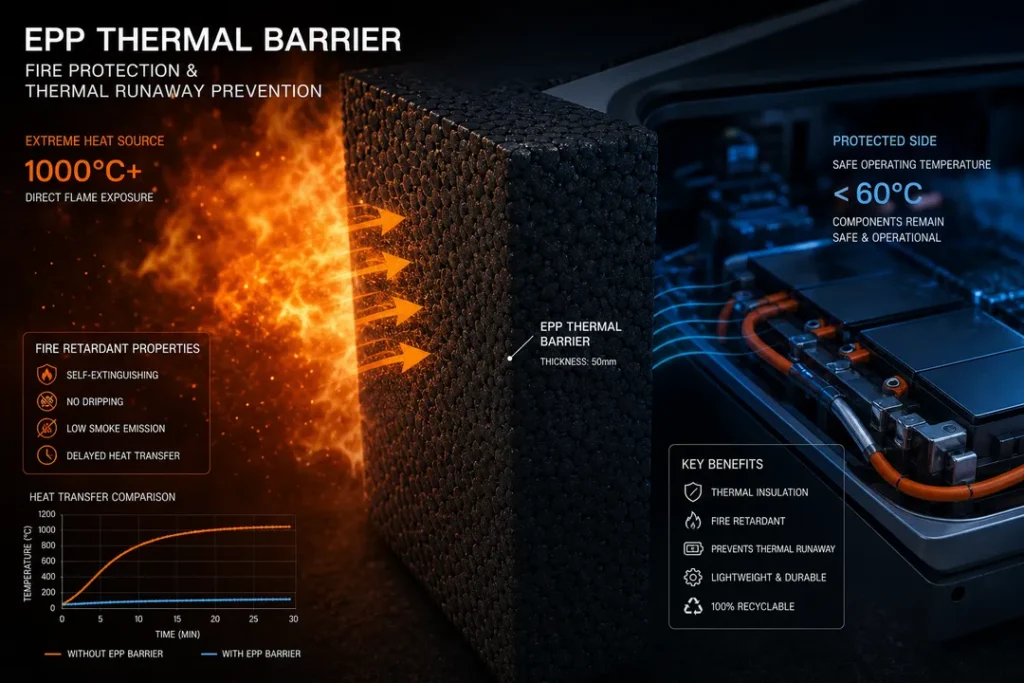
Electric vehicles operate in a wide range of environments, from cold winters and hot summers to wet roads, cleaning fluids, dust, and long-term vibration.
Materials used in EV components must maintain reliable performance under these conditions.
EPP foam has a closed-cell structure that supports low moisture absorption and good resistance to many common chemicals.
It also provides useful thermal insulation properties. These characteristics can be valuable in areas that require controlled temperature transfer, protection from condensation, or resistance to damp environments.
However, every EV application should be evaluated individually. Material selection should consider the actual temperature range, exposure conditions, compliance requirements, and component location.
For areas near battery systems or heat-generating components, the complete design must account for thermal management and all relevant safety standards.
When properly specified, EPP foam can provide a durable protective solution for automotive components exposed to changing operating conditions.
Common EPP Foam Applications in Electric Vehicles
EPP foam can be used in many electric vehicle systems, including:
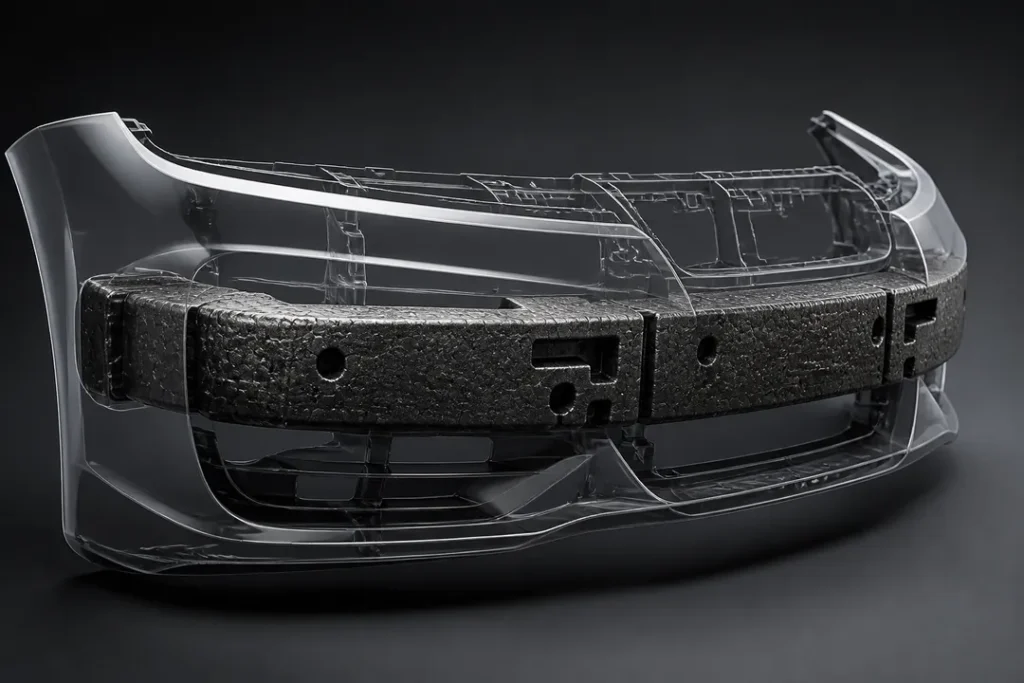
- Front and rear bumper energy absorbers
- Battery-pack spacers and protective inserts
- Seat cores, headrests, and seat-side protection components
- Knee bolsters and interior impact-management parts
- Door-panel inserts and armrest structures
- Acoustic and vibration-damping components
- Trunk organizers, tool holders, and charging-cable storage inserts
- Protective components around electronic modules and vehicle accessories
- Reusable transport packaging for EV batteries, electronics, and automotive parts
The final application depends on the component’s performance target, available space, assembly method, density requirement, and vehicle safety validation process.
EPP Foam Compared With Other Automotive Materials
| Property | EPP Foam | EPS Foam | Solid Plastic |
|---|---|---|---|
| Weight | Very low | Very low | Higher |
| Repeated impact resistance | High | Lower | Depends on material |
| Elastic recovery | High | Limited | Depends on design |
| Shape complexity | High through molding | High through molding | High, but often heavier |
| Reusability | High | Often limited | Varies |
| Suitable for EV energy management | Strong potential | Better for rigid or single-use applications | Useful for structural or rigid functions |
EPP is not automatically the best material for every automotive component. Structural metal parts, engineered plastics, rubber, and other foams each have important roles. The key is to select EPP when lightweight energy absorption, resilience, shape integration, and repeat-use performance are needed.
How to Choose EPP Foam Components for EV Projects
When sourcing EPP foam components for electric vehicles, buyers and engineers should evaluate more than price. Important factors include:
- Required density and compression performance
- Part geometry and installation space
- Impact-energy management target
- Temperature and environmental exposure
- Flame-retardant or compliance requirements
- Compatibility with battery, electrical, plastic, and metal components
- Surface finish and dimensional tolerance
- Mold design, cycle time, and production volume
- Supplier quality-control and testing capability
A reliable EPP component supplier should understand both foam processing and automotive application requirements. Early cooperation between the vehicle manufacturer, tier supplier, mold manufacturer, and EPP molding partner can reduce redesign risk and improve part performance.
Conclusion
EPP foam is becoming an increasingly valuable material in electric vehicle design because it supports safety, lightweight construction, durability, and component integration at the same time.
Its ability to absorb energy, recover after compression, resist vibration, and form complex shapes makes it suitable for many EV applications, from bumper absorbers and interior protection parts to battery-related inserts and reusable transport packaging.
For automotive manufacturers and suppliers, the best results come from designing EPP components around a clear functional target.
Whether the goal is battery protection, passenger cushioning, vibration control, or weight reduction, the foam density, shape, molding process, and validation plan should all match the vehicle’s real operating conditions.
If you are looking for custom EPP foam components, EPP molds, or EPP shape molding solutions for electric vehicle projects, contact us for technical support and a tailored quotation.