Styrofoam is lightweight, easy to shape and widely used in packaging, decoration, insulation, architectural profiles, props and custom foam products.
Learn how to coat Styrofoam with easy methods, including sealing, painting, and protective finishes to create durable and smooth foam surfaces.
However, raw Styrofoam is also soft, porous and easy to damage. It can dent under pressure, absorb surface dirt, break at edges and react poorly with certain solvents.
That is why coating is often necessary when Styrofoam needs to become stronger, smoother, paintable or more durable.
What Does It Mean to Coat Styrofoam?
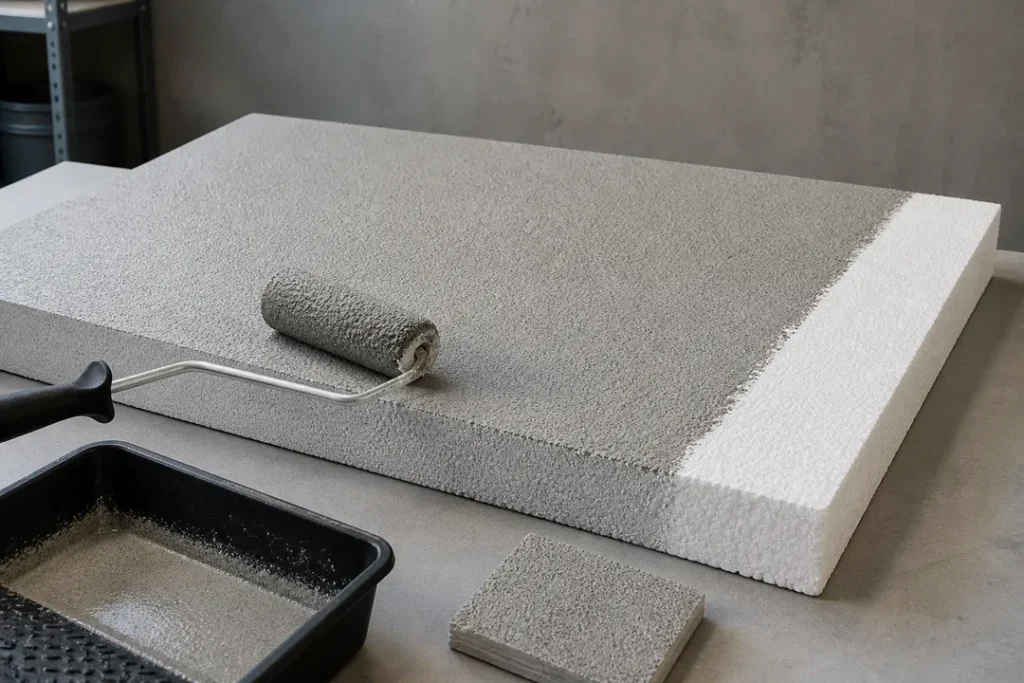
To coat Styrofoam means to apply a protective or decorative layer over the foam surface. This layer may be thin and paint-like, or it may be thick and structural.
The coating can seal pores, improve surface smoothness, increase hardness, protect against abrasion, create a paintable surface or provide a specific decorative finish.
Coating does not change the foam core itself. The EPS or Styrofoam remains lightweight inside.
The coating works as an outer skin. This is why coating design must match the intended function.
A thin primer may improve paint adhesion, but it will not make the foam impact-resistant. A thick hard coat may improve durability, but it can add cost, weight and processing time.
In small craft projects, coating is often used to make Styrofoam paintable and less crumbly. In industrial applications, coating is used to upgrade foam into a finished component.
For example, architectural EPS trim may be CNC cut and then coated to create a stone-like or plaster-like finish.
A display prop may be coated to survive handling. A protective insert may be sealed to reduce dust and improve appearance.
A successful coating system must be compatible, adhesive, durable and appropriate for the application.
It should bond to the foam surface, dry or cure properly, resist cracking and support the final finishing method.
Why Styrofoam Needs a Protective Coating
Styrofoam is useful because it is light, easy to shape and cost-effective. But those same properties create weaknesses.
The foam surface can be fragile. Edges can chip. Small beads or particles may detach during cutting, sanding or handling. Surface dents may appear after pressure or impact.
A coating helps overcome these weaknesses. It can create a smoother surface that accepts paint more evenly. It can reduce surface shedding. It can improve touch and appearance.
For decorative products, coating can transform a raw foam shape into a finished architectural or display component.
Protection is especially important for large foam shapes, crown moldings, cornices, wall panels, props, signs and custom displays.
These products are often handled, transported, installed and painted. Without coating, the foam can be damaged before it reaches the final site.
Coating also expands application possibilities. Raw EPS may not be acceptable for a public-facing decorative surface.
Once coated, it can look like plaster, stone, concrete, wood or a smooth painted substrate depending on the finishing system.
For B2B buyers, coating is not just a finishing detail. It affects product positioning, installation quality, customer perception, damage rate and repeat orders.
A well-coated EPS product can move from low-cost raw foam to a higher-value finished component.
Understanding EPS Foam Before Coating
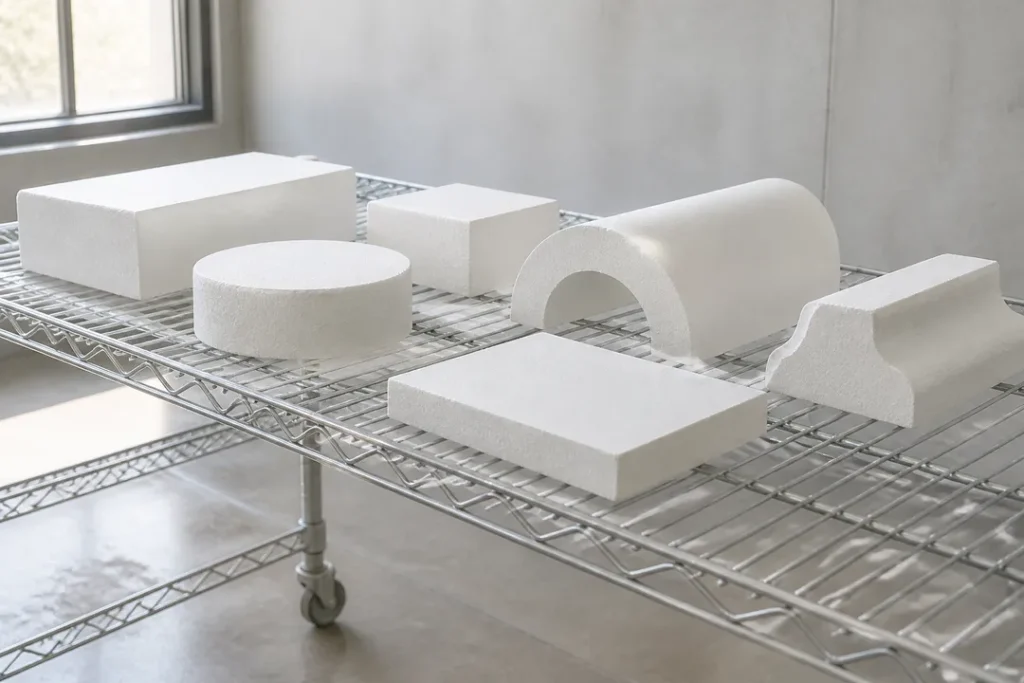
Before coating Styrofoam, it is important to understand its structure. EPS is made of expanded polystyrene beads fused together.
The material contains a high percentage of air, which makes it lightweight and thermally insulating.
However, this bead structure also creates a surface that is porous and uneven compared with solid plastics.
The surface porosity affects coating absorption. Thin liquids may soak into the foam unevenly.
Thick coatings may bridge across the beads but leave air pockets if not applied correctly.
The coating must wet the surface enough to bond, but it must not contain solvents that dissolve the foam.
EPS is sensitive to many solvent-based products. Some spray paints, polyester resins, lacquer thinners and solvent adhesives can attack the foam.
The result may be melting, shrinking, surface collapse or rough deformation. This is one of the most common failures when coating Styrofoam.
EPS also has limited surface strength. If the coating shrinks too much during curing, it can pull against the foam and create cracks.
If the coating is too rigid and the foam flexes, cracking may also occur. For this reason, coating flexibility and thickness must match the foam product’s use.
Good coating starts with material compatibility. Before applying a coating to a full product batch, test it on a foam sample. Check whether it melts, bonds, cracks, dries evenly and supports the desired finish.
Choosing the Right Coating Material
There is no single best coating for all Styrofoam products. The right coating depends on indoor or outdoor use, required hardness, surface appearance, fire requirements, paint compatibility, production volume and budget.
For basic crafts and interior display items, water-based primers and acrylic paints are often enough. They are easy to use, foam-safe and available in many finishes. However, they provide limited impact protection.
For architectural EPS trim, cementitious or polymer-modified coatings are commonly used.
These coatings can create a harder, more durable surface suitable for decorative moldings, cornices, columns and building elements.
They can be applied by brushing, spraying, troweling or dipping depending on product geometry and production setup.
For props, themed environments, signs and display structures, flexible hard coatings such as polyurethane, polyurea or specialized foam coatings may be used.
These coatings can create a protective shell that resists handling damage.
For high-strength shell applications, epoxy-compatible systems may be considered.
Epoxy can provide a hard skin, especially when used with fiberglass reinforcement.
However, the epoxy system must be foam-safe or applied over a sealed surface.
Polyester resin is generally risky for EPS unless the foam is properly protected because solvents can attack polystyrene.
The coating decision should begin with product function, not coating name.
Ask what the coating must do: seal, smooth, harden, protect, decorate, waterproof, resist impact or prepare for paint. Each function points to a different coating strategy.
Water-Based Primers and Acrylic Coatings
Water-based primers are often the safest starting point for Styrofoam.
They do not contain aggressive solvents that melt EPS, and they can create a sealed base for later painting. A primer helps reduce uneven absorption and improves paint adhesion.
Acrylic coatings and paints are also commonly used because they are generally foam-compatible and easy to apply.
They can be brushed, rolled or sprayed depending on viscosity and equipment.
For craft items, displays and indoor decorative pieces, acrylic systems provide a practical balance of safety, color range and ease of use.
However, water-based acrylic coatings are not always strong enough for heavy-duty applications.
They may not provide sufficient dent resistance for high-traffic architectural elements or frequently handled props. In these cases, a stronger coating or reinforced system may be needed.
For better results, apply multiple thin coats rather than one thick coat. Thin coats dry more evenly, reduce cracking risk and help maintain surface detail.
Between coats, inspect the surface for pinholes, rough areas and weak coverage.
If a smooth finish is required, light sanding may be performed after the coating dries.
However, sanding must be gentle because aggressive sanding can break through the coating and damage the foam surface.
Cementitious Coatings for Architectural EPS Foam

Cementitious coatings are widely used for architectural EPS foam shapes, including crown moldings, cornices, columns, façade details, wall panels and decorative profiles.
These coatings are typically made from cement, mineral fillers, polymers and additives. They can create a hard, durable and paintable surface.
For architectural foam, coating must do more than cover the surface. It must protect edges, hide bead texture, provide impact resistance and create the final visual quality.
A good cementitious coating can transform lightweight EPS into an architectural component that looks much more solid than the foam core.
The coating thickness depends on application. Interior decorative trim may need a thinner finish.
Exterior-like or high-contact elements may require thicker coating and sometimes mesh reinforcement. Reinforcement helps reduce cracking and improve strength in corners, edges and large surfaces.
Application methods include brushing, troweling, spraying and dipping.
For high-volume production, controlled coating stations improve consistency. Manual coating can work for custom or low-volume shapes, but it requires skill to maintain uniform thickness.
Cementitious coatings must cure properly. If drying is too fast, cracking may occur. If moisture remains trapped, finishing and painting may be affected.
Manufacturers should control drying conditions and allow enough curing time before packaging or shipment.
Epoxy-Compatible Coatings and Hard Shell Systems
Epoxy can be used to create a hard protective shell over foam, but it must be used carefully with Styrofoam.
Many epoxy systems are safer for EPS than polyester resin, but compatibility should still be tested. Some systems may generate heat during curing or require solvents that can affect foam.
A common method is to seal the foam first, then apply epoxy or a compatible resin system.
For higher strength, fiberglass cloth can be embedded into the resin. This creates a composite skin over the lightweight foam core.
The method is useful for props, models, displays, lightweight structures and parts that require a hard surface.
The advantage of epoxy hard shells is strength. The disadvantage is cost, weight and processing complexity.
Epoxy also requires controlled mixing, pot life management, curing time and proper safety handling.
For architectural EPS foam trim, epoxy is not always necessary. Cementitious or polymer-modified coatings may be more economical and easier to scale.
For impact-resistant props or custom components, epoxy may be more appropriate.
The key is to test the complete system. Test foam, sealer, resin, reinforcement, primer and final paint together. A coating system is only reliable when all layers work as a unit.
Polyurethane, Polyurea and Flexible Protective Coatings
Polyurethane and polyurea coatings are used when foam needs a tougher, more flexible protective skin.
These coatings are common in themed environments, props, signage, displays and some industrial protection applications.
They can help the foam resist handling damage, abrasion and impact better than basic paint.
Polyurea is often valued for rapid curing and toughness, but it typically requires specialized spray equipment and trained operators.
It is not usually a simple do-it-yourself coating. For production environments, however, it can be efficient when properly applied.
Polyurethane coatings can vary widely. Some are soft and flexible, while others are harder.
The chemistry must be checked for foam compatibility. Solvent-free or foam-safe systems are preferred for direct use on EPS.
Flexible coatings are useful when the foam part may move slightly or experience repeated handling. A coating that is too brittle may crack when the foam flexes. A flexible skin can absorb movement better, but it may not provide the same hard surface as cementitious or epoxy systems.
For B2B projects, these coatings should be selected with attention to equipment, coating thickness, cure time, odor, safety requirements and production cost.
They can be powerful solutions, but only when matched to the right application.
Step-by-Step Styrofoam Coating Process
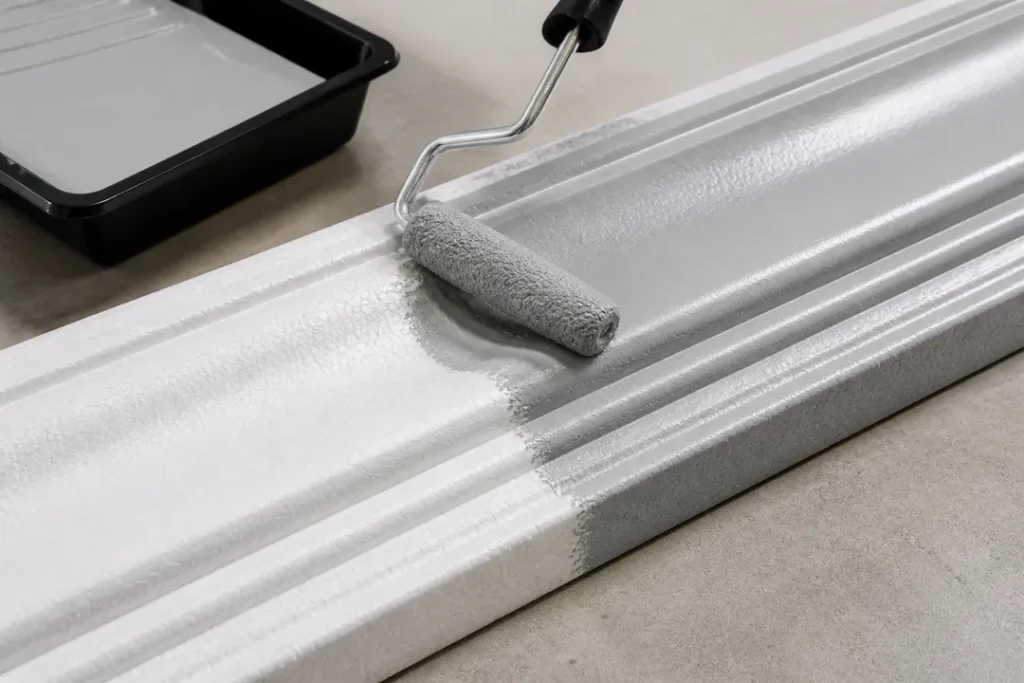
The coating process begins with defining the final requirement. A foam craft decoration, an architectural molding and an outdoor display structure do not need the same coating.
Before selecting materials, decide whether the coating must be decorative, protective, structural, paintable, weather-resistant or impact-resistant.
The second step is surface cleaning. Remove loose beads, dust, cutting residue and oil contamination. A clean surface improves adhesion.
For cut EPS surfaces, gentle brushing or compressed air can help remove particles. Avoid aggressive sanding unless the foam surface needs shaping.
The third step is sealing. A foam-safe primer or sealer helps reduce absorption and protects the foam from later layers.
This is especially important if the final coating includes stronger materials or paint systems. Sealing also improves coating uniformity.
The fourth step is applying the main coating. Apply the coating according to its viscosity and method. Thin coatings may be brushed or sprayed.
Thick coatings may be troweled or dipped. For uniform results, apply multiple controlled layers instead of a single uncontrolled heavy layer.
The fifth step is curing. Allow enough drying or curing time before sanding, painting, packing or installation.
Coating that looks dry on the surface may still be soft inside. Premature handling can cause fingerprints, dents or adhesion problems.
The final step is finishing and inspection. Check for cracks, pinholes, weak coverage, rough areas and exposed foam.
Repair defects before final painting or shipment. For production runs, define inspection criteria so every batch meets the same standard.
Surface Preparation and Sealing
Surface preparation has a major effect on coating performance. Styrofoam that is dirty, dusty or loosely bonded will not hold coating well.
Even an expensive coating can fail if the surface is not prepared correctly.
For CNC-cut or hot-wire-cut foam, inspect the surface before coating.
Hot-wire cutting can create a smoother surface than rough mechanical cutting, but it may also leave areas that need cleaning.
Mechanical cutting can leave particles and rough edges that should be removed.
If the foam has sharp edges, consider slightly rounding them.
Coatings tend to be thinner on sharp edges and may crack or chip more easily.
Rounded edges allow coating to wrap more evenly and improve durability.
Sealing is especially important when using stronger topcoats. A sealer creates a barrier between the foam and later materials.
It also reduces uneven absorption. Water-based sealers are commonly used because they are generally safe for EPS.
For industrial production, surface preparation should be standardized. Operators should follow the same cleaning, sanding, sealing and drying steps.
Without standardization, coating quality may vary from worker to worker and batch to batch.
Drying, Curing and Finishing
Drying and curing are not the same. Drying usually means water or solvent has evaporated from the coating.
Curing means the coating has reached its intended mechanical strength or chemical stability. Some coatings dry quickly but require longer time to cure fully.
Temperature and humidity affect drying. High humidity can slow water-based coatings. High temperature can dry the surface too quickly and trap moisture inside.
Poor airflow can also delay curing. Controlled drying conditions help improve coating consistency.
After curing, finishing may include sanding, priming, painting, texturing or clear coating. The finishing method should match the product’s visual and functional goals.
A wall molding may need a smooth paintable surface. A display prop may need texture. A protective shell may need a thicker reinforced finish.
Packaging should only happen after coating is sufficiently cured.
If coated foam is packed too early, surfaces may stick, mark or deform. For export products, curing time is part of quality control, not an optional delay.
For high-value products, perform adhesion and surface durability tests before shipment. Simple tests such as tape adhesion, light abrasion and edge inspection can reveal coating problems early.
Common Mistakes When Coating Styrofoam
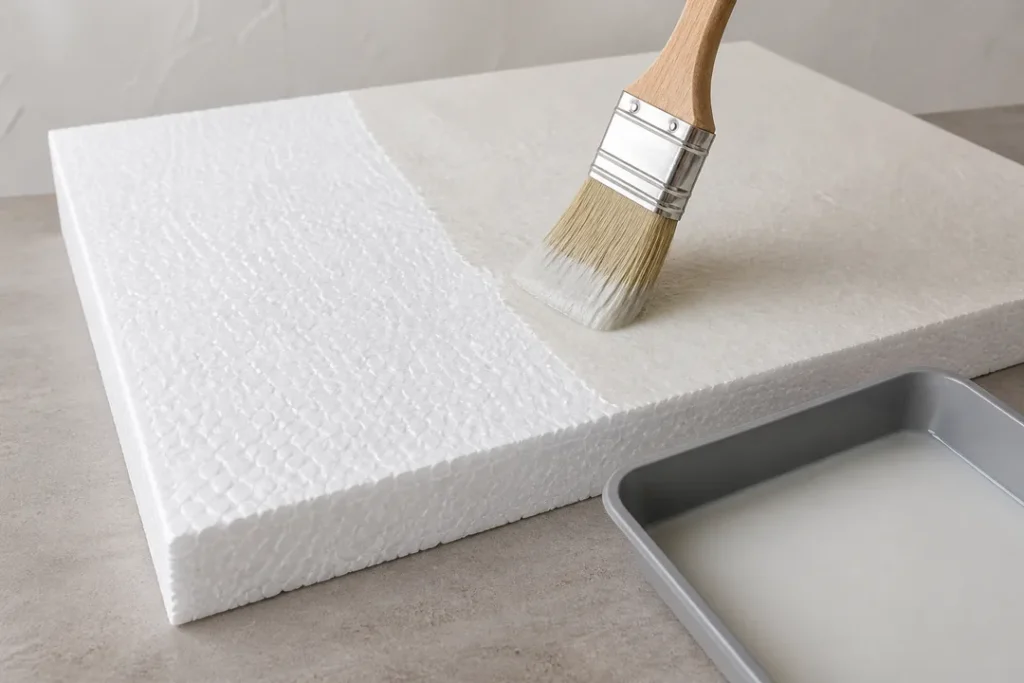
The most common mistake is using solvent-based coatings that attack EPS. Many spray paints, lacquers and polyester resins can melt the foam surface. Always check foam compatibility before application.
Another mistake is applying coating too thick in one pass. Thick layers may crack, sag, dry unevenly or trap moisture. Multiple thin layers usually produce better results than one heavy layer.
A third mistake is skipping surface preparation. Dust, loose beads and rough edges reduce adhesion and create visible defects. Cleaning and sealing are essential steps, especially for professional products.
A fourth mistake is choosing a coating based only on hardness. A very hard coating may seem strong, but if the foam underneath flexes or the coating shrinks, cracking can occur.
Hardness must be balanced with flexibility and adhesion.
A fifth mistake is ignoring end-use conditions. Indoor display foam, architectural trim, outdoor props and packaging inserts all require different coating strategies.
A coating that works for one application may fail in another.
For manufacturers, the biggest mistake is treating coating as decoration only.
In commercial production, coating affects quality, warranty risk, shipping damage, customer perception and repeat business.
Industrial Applications of Coated EPS Foam
Coated EPS foam is used in architectural decoration, construction, signage, themed environments, packaging, displays and custom molded products.
The coating transforms lightweight foam into a more durable and market-ready component.
Architectural foam trim is one of the most common applications. EPS can be cut into crown molding, cornices, columns, caps, bases, panels and façade details.
After coating, these parts can look like plaster, stone or concrete while remaining much lighter.
Props and themed environments use coated foam because large shapes can be produced at low weight. Coating protects the surface and allows artists or manufacturers to create realistic finishes.
Packaging and display products may use coatings to reduce dust, improve appearance and strengthen surfaces. This is useful for premium packaging inserts, retail displays and reusable foam components.
Industrial custom foam products may require coating for cleanliness, abrasion resistance or integration with other components.
The coating system should be selected based on actual handling and operating conditions.
For suppliers, coating capability increases product value.
A company that can cut, mold and coat foam in one controlled process can serve more demanding buyers than a supplier that only provides raw foam blocks.
How to Choose a Foam Coating Supplier
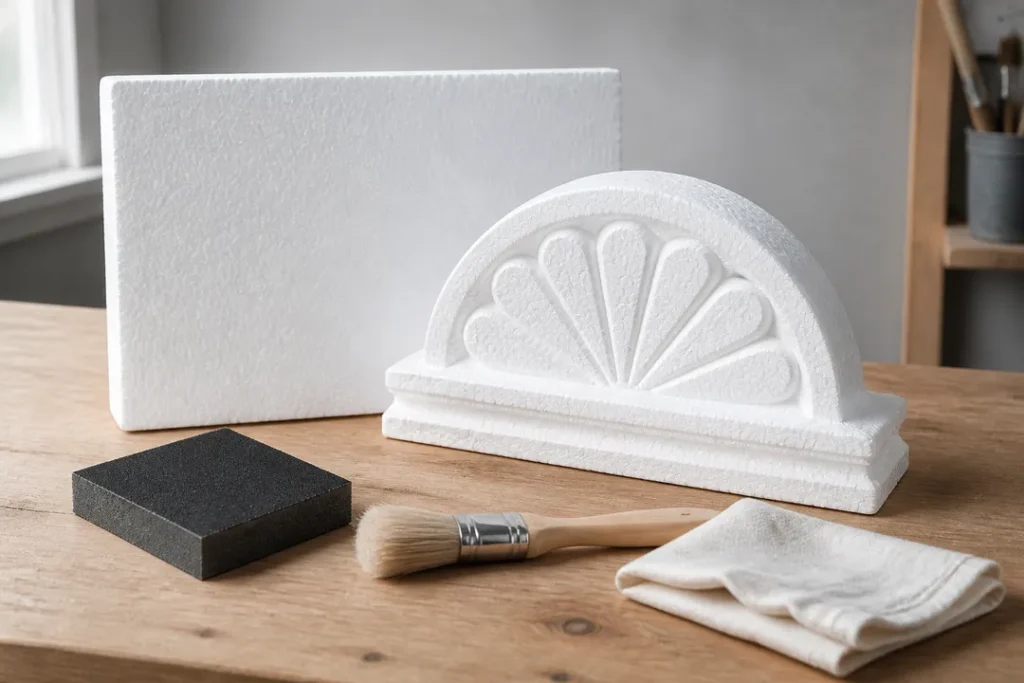
Choosing a foam coating supplier requires more than checking whether they can apply a coating. The supplier should understand foam material, surface preparation, coating chemistry, application method, curing control and quality inspection.
A strong supplier will ask about the application first. Is the product indoor or outdoor?
Will it be handled frequently? Does it need impact resistance? Will it be painted after coating?
Does it require a stone-like finish, smooth finish or flexible protective skin?
These questions help define the correct coating system.
The supplier should also provide samples. A coated foam sample allows buyers to check surface texture, hardness, adhesion, color, edge coverage and durability.
For bulk orders, samples are essential because coating quality cannot be fully judged from photos.
For architectural and export products, packaging experience is important.
Coated foam may be stronger than raw foam, but edges and corners can still be damaged during shipment.
The supplier should design packaging around product geometry and coating hardness.
Quality control should include visual inspection, coating thickness checks, adhesion review, curing verification and packaging inspection.
If the product has strict performance requirements, additional tests may be needed.
The best supplier is not simply the one with the lowest price. It is the one that can recommend the right coating, produce it consistently and prevent problems before shipment.
Conclusion
Coating Styrofoam is the process of applying a protective or decorative layer over EPS foam to improve surface strength, appearance, paintability and durability.
The right coating can turn fragile raw foam into a finished component suitable for architecture, props, displays, packaging and custom industrial products.
The most important rule is compatibility. EPS foam can be damaged by many solvent-based products, so water-based, foam-safe or properly sealed coating systems are usually required.
For simple indoor items, primers and acrylic coatings may be enough. For architectural foam, cementitious or polymer-modified coatings are often better. For props and demanding custom parts, polyurethane, polyurea or epoxy-compatible systems may be considered.
A reliable coating result depends on surface preparation, sealing, controlled application, proper curing and inspection.
Skipping these steps can lead to melting, cracking, poor adhesion, rough texture or shipping damage.
For manufacturers, contractors and B2B buyers, coating should be treated as part of product engineering, not as a final cosmetic step.
If you need coated EPS shapes, crown moldings, props, packaging inserts or custom foam components, the best starting point is to define the application, required finish, durability target, production quantity and packaging method.
With these details, a professional foam manufacturer can recommend the right coating system and production process for stable results.