
In the world of injection molding, lead time is everything. A delayed mold means delayed production, delayed revenue, and potentially lost customers.
Yet controlling mold lead time remains one of the most persistent challenges facing mold manufacturers and their clients alike.
A standard injection molding project—from approved CAD to first production shipment—typically takes 6 to 10 weeks for a single-cavity steel mold, and 4 to 7 weeks for a single-cavity aluminum mold.
Mold manufacturing alone consumes 60 to 70% of the total lead time. Multi-cavity molds, overmolding tools, and molds with complex side actions add another 2 to 4 weeks.
Most of this time is compressible. By understanding where time is lost and implementing targeted strategies, manufacturers can reduce mold lead times by 30 to 50% or more.
Mold Lead Time Breakdown
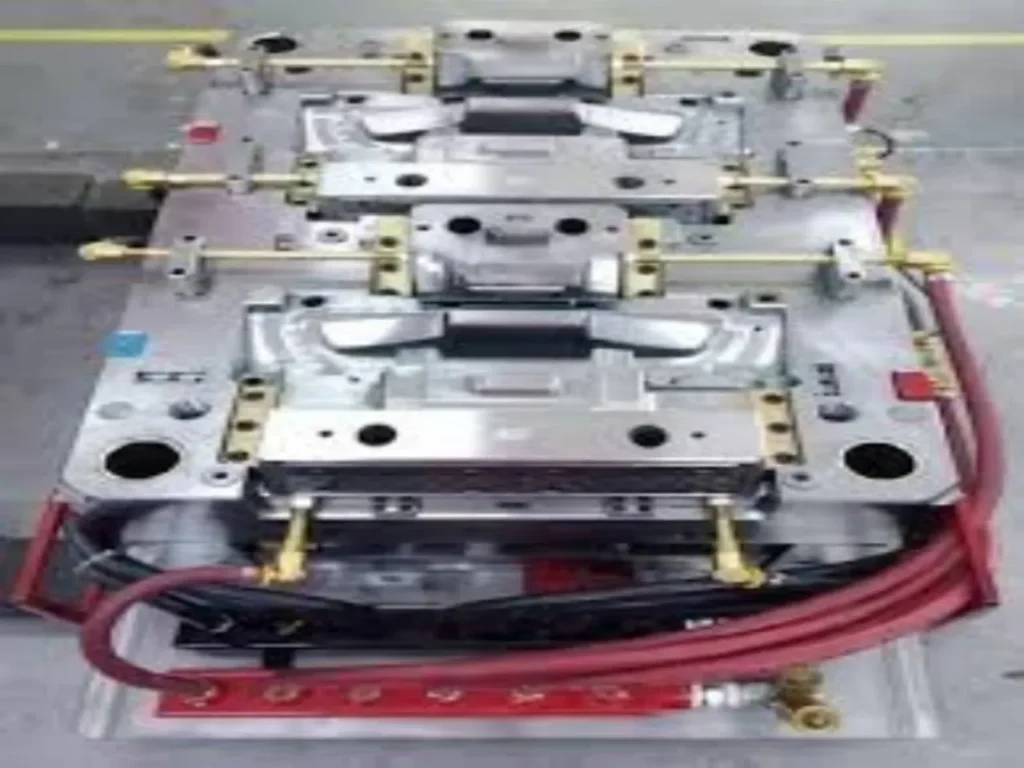
Before you can control lead time, you need to understand where it goes. Mold manufacturing breaks into seven distinct phases, each with a predictable time range:
| Phase | Typical Duration | Compressible? |
|---|---|---|
| DFM Review & Mold Design | 3–7 days | Yes (fast buyer feedback) |
| Material Procurement | 3–10 days | Partially (standard steel in stock) |
| CNC Roughing & Finishing | 7–15 days | Limited (machining time) |
| EDM & Wire Cutting | 3–7 days | Limited |
| Polishing & Assembly | 3–5 days | Partially |
| Mold Trial (T1 Sampling) | 1–3 days | No (requires machine time) |
| Dimensional Inspection | 1–2 days | No |
The longest single phase is CNC machining, which cannot be compressed much beyond running overtime shifts.
However, the DFM review phase is where most time is wasted—not because the supplier is slow, but because the buyer takes days to respond to design change requests.
A DFM review that should take 3 days can easily stretch to 10 days if the buyer’s engineering team reviews changes in weekly meetings instead of in real time.
The Hidden Causes of Lead Time Delays
Understanding why lead times slip is the first step to preventing it. Common causes include:
- Incomplete or unreliable customer data at order placement
- Design rework due to manufacturability issues discovered too late
- Poor casting quality or delayed delivery of mold bases
- Equipment limitations and outdated machining methods
- Inefficient assembly processes
- Extended mold trial and debugging cycles
As one industry analysis notes, “where time gets stuck is often not the processing speed, but the hidden drag from design rework, trial failures, and inspection overruns”.
Optimize the Design Phase
Implement Concurrent Engineering
The traditional sequential (“over-the-wall”) approach—where product designers finish their work and then “throw it over the wall” to mold designers—is a recipe for delays. Concurrent engineering breaks this pattern.
Key actions include:
- Early involvement: Hold design reviews with mold designers, molding engineers, CNC programmers, CAE analysts, and procurement during the design phase
- Early procurement: Source and quote major components (mold base, standard parts) using preliminary BOMs before the design is fully finalized
- Parallel processing: CNC programmers can begin programming as soon as the 3D model is stable, without waiting for all 2D drawings
Concurrent engineering approaches have been developed specifically to involve mold designers early in the product design process, shortening mold design lead time and reducing design efforts.
Standardization and Modular Design
Standardization is one of the most effective ways to reduce lead time.
Creating and using libraries of standard components—ejector pins, screws, interlocks, hot runner interfaces—speeds up design, reduces errors, and simplifies purchasing.
As one industry expert put it, “standardization of mold design is the foundation for improving design efficiency, shortening delivery cycles, and stabilizing mold quality”.
For product families, modularization offers even greater gains: use a standard mold base and only change the core/cavity inserts. This drastically cuts down design and manufacturing time.
Leverage Mold Flow Analysis (CAE)
Mold flow analysis enables “virtual trials” before cutting steel. The benefits are substantial:
- Predict and prevent defects like short shots, sink marks, weld lines, and warpage
- Optimize cooling time and ensure uniform part cooling
- Significantly reduce the probability of major design flaws requiring mold modifications
The cost of simulation validation is far lower than the cost of a single trial rework.
Simulation-predicted deformation can also serve as the basis for correcting mold cavity compensation, rather than relying on trial-and-error “guesses”.
Design for Manufacturability (DFM)
Design the mold with its machining, polishing, assembly, and maintenance in mind. Practical DFM principles include:
- Avoid deep, narrow pockets that are difficult for CNC tools to reach
- Design parts for easy fixturing and parallel processing on multiple machines
- Specify appropriate tolerances and fits to minimize hand-fitting during assembly
Automated DFM tools now provide engineers with instant, actionable design feedback to enhance product quality and speed up time to market. Research has shown that design automation can decrease engineering mold design times by 87% and overall lead times by 33% for applicable parts.
Streamline Manufacturing
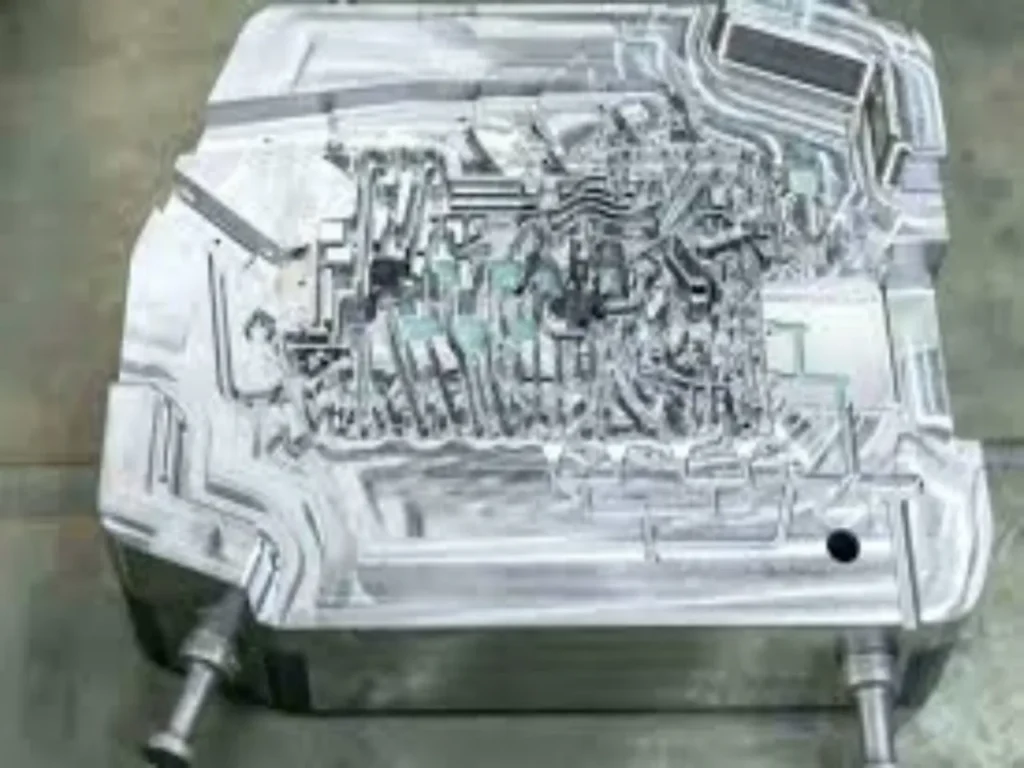
Adopt High-Speed Machining (HSM)
High-speed machining centers can directly finish hardened steel, often eliminating the need for EDM.
This alone can save days from the production cycle. However, HSM is just one tool—any shop seeking to shorten delivery cycles should evaluate all technologies that can accelerate production.
Use Pre-Hardened Mold Steel
Pre-hardened steel eliminates the need for additional heat treatment, which is often time-consuming.
By selecting appropriate materials that don’t require post-machining treatments, manufacturers can shave days off the production cycle.
Invest in High-Precision Equipment
Cutting-edge machinery—CNC machines, EDM, and high-speed milling tools—allows for precise and rapid mold fabrication.
The key benefits are improved accuracy reducing rework and faster machining speeds cutting production time.
Consider Aluminum Tooling
For prototyping and short-run production, aluminum tooling cuts mold build time by 40 to 50%.
While aluminum molds don’t offer the longevity of hardened steel for high-volume production, they are ideal for:
- Product validation and pilot runs
- Low-volume production
- Accelerating decision-making before final tooling is in place
Leverage Additive Manufacturing
Additive manufacturing (3D printing) has emerged as one of the most powerful tools for reducing mold lead times. The numbers speak for themselves:
- Additively manufactured mold cores reduce production setup from weeks or months (with CNC machining) to as little as two to five days
- Metal 3D printing can reduce mold production from the traditional 1-3 months to 1-2 weeks
- One manufacturer reported reducing a mold tool lead time from six to eight weeks to just five days
- A printer knocked lead times down by more than four weeks
Rapid Tooling Applications
Rapid tooling offers lower-cost, faster-to-produce molds and inserts that allow manufacturers to validate designs, produce pilot runs, and accelerate decision-making long before final tooling is in place.
Instead of outsourcing machined mold production and waiting weeks to receive the tool, manufacturers can design, print, and test 3D printed injection molds or inserts in under a day.
Conformal Cooling
One of the most significant advantages of additive manufacturing is the ability to produce conformal cooling channels—cooling lines that follow the contour of the part.
Traditional machining cannot produce these complex geometries. Conformal cooling can:
- Reduce cycle times by 20 to 35%
- Improve part dimension control
- Enable more efficient production
Hybrid Manufacturing Approaches
Companies are increasingly combining additive manufacturing with traditional methods.
Mantle’s automated toolmaking system, for example, uses a metal paste that is 3D printed and CNC machined in one operation, then sintered to become fully dense steel—avoiding rough milling and EDM entirely.
Users of such systems can reduce tooling lead times by over 50%.
Implement Lean Manufacturing
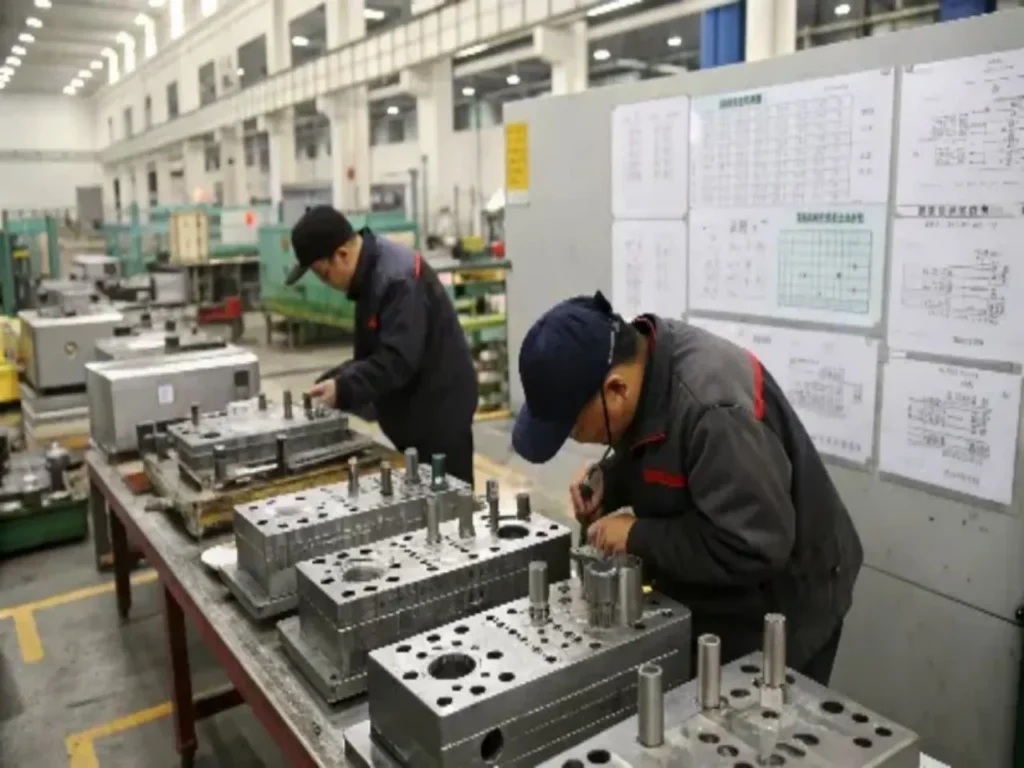
SMED (Single-Minute Exchange of Die)
SMED is a methodology for reducing the time required for tooling changeovers.
The concept is to convert internal setup operations (which can only be done when the machine is stopped) to external operations (which can be done while the machine is running).
Real-world results are impressive:
- One study achieved a 51% reduction in setup time through SMED implementation
- Another implementation reduced setup time from 44 minutes to 22 minutes—a 50% reduction
- Mold change time decreased from 96 to 55 minutes (−43%)
Just-in-Time (JIT) Inventory
JIT inventory systems avoid overstocking while ensuring materials and components are available when needed.
Strong supplier relationships are essential here—a reliable supply chain ensures materials and components are delivered on time.
Continuous Improvement (Kaizen)
Kaizen—the practice of continuous, incremental improvement—should be applied to every stage of mold production.
One company organized a “Mold Delivery Rate Improvement Week” project, adjusting how workshop capacity load was monitored and identifying overdue risks from the front end.
Digitize Project Management
Real-Time Progress Tracking
Digital project management tools provide visibility into every step of mold production. Production floor workers can directly feed back part completion times or mold assembly completion status into the system.
When a control point shows delay, the system can automatically send alert emails to relevant personnel for early detection and resolution.
Advanced Planning and Scheduling (APS)
Mold shop scheduling aims to match production resources to each mold production task, optimizing “batching, sequencing, and resource allocation” to balance shop floor economy with demand satisfaction. APS systems can:
- Visually display all orders, molds, and工序 resources on intuitive Gantt charts
- Automatically reschedule within minutes when new orders are added
- Highlight conflicting resources and delayed work orders
- Alert planners to resources waiting for downstream processes
ERP and PLM Integration
Enterprise Resource Planning (ERP) and Product Lifecycle Management (PLM) systems provide end-to-end visibility.
Through project planning and process control, they can manage the entire mold lifecycle—from order confirmation through design, material procurement, production, debugging, modification, and delivery.
Digital progress optimization has been shown to shorten procurement lead time by 25% and improve overall equipment effectiveness by 14%.
Manage the Supply Chain
Strong Supplier Relationships
A reliable supply chain is non-negotiable. Build long-term partnerships with trusted suppliers to prevent delays.
When suppliers have many customers, relying solely on phone or email follow-up means your order may get bumped by other clients’ orders.
For urgent orders, assigning a dedicated expediter to track progress on-site can ensure on-time delivery.
Standardize Components
Using standard components not only speeds up design but also simplifies purchasing.
Standard parts are typically stocked and available immediately, whereas custom components may have lead times of their own.
Consider Strategic Outsourcing
Some non-critical activities—like mold polishing or secondary finishing processes—can be outsourced to specialized vendors to save time.
However, quality control measures must be in place to ensure outsourced work meets specifications.
Accelerate the Trial Phase
First-Trial Optimization
The mold trial phase is often underestimated. A mold with an eight-week lead time to produce might take another four to five weeks to get ready for production.
Most suppliers don’t allow enough time for mold qualification and process validation.
Strategies to accelerate this phase include:
- Using mold flow analysis to predict behavior before the first trial
- Implementing rigorous inspection protocols to identify issues early
- Running systematic trials that document process windows rather than just “making parts”
- Involving the production team early so they understand the mold’s requirements
Automated Inspection
Modern measurement instruments—CMMs (coordinate measuring machines), profilometers, and optical measurement systems—can dramatically speed up the inspection phase.
The precision and coverage of these instruments determine how many problems are caught during inspection rather than during production.
Address the Human Factor
Daily Stand-Up Meetings
Short, focused daily meetings allow the team to sync progress and quickly address roadblocks. These meetings should be:
- Time-boxed (15 minutes maximum)
- Focused on what was accomplished, what’s next, and what’s blocking progress
- Attended by all key stakeholders
Clear Communication with Customers
One of the biggest—and most overlooked—causes of lead time delays is slow customer feedback.
Every day of delayed feedback adds a day to the schedule. Establish clear expectations with customers regarding:
- DFM review response times (24–48 hours is ideal)
- Sample approval turnaround
- Change order processing
Skilled Labor Development
The moldmaking industry faces a skilled labor shortage. Investing in training and development ensures your team can execute efficiently.
Technologies that automate challenging processes can help optimize existing workforce capacity by reducing the need for manual intervention.
Measuring and Monitoring Lead Time Performance
You can’t control what you don’t measure. Establish key performance indicators for lead time:
| Metric | Target |
|---|---|
| On-time delivery rate | >95% |
| DFM review cycle time | <5 days |
| First-trial success rate | >80% |
| Average mold build time | By mold type |
| Customer response time | <48 hours |
Track these metrics over time to identify trends and areas for improvement. Digital systems that monitor project progress in real time make this significantly easier.
Conclusion: A Systematic Approach to Lead Time Control
Controlling mold lead time is not about a single silver bullet—it’s about a systematic approach that addresses every phase of the mold development lifecycle.
As one industry leader noted, careful planning at the quoting stage can shave several weeks from the mold-build lead time.
The time to start controlling your mold lead time is before the project begins—not after delays have already occurred.
If you have any questions regarding EPS/EPP/ETPU molds, please feel free to contact us at Transfoam; we will provide you with the perfect solution.